Archived: 19 September 2026
Abstract
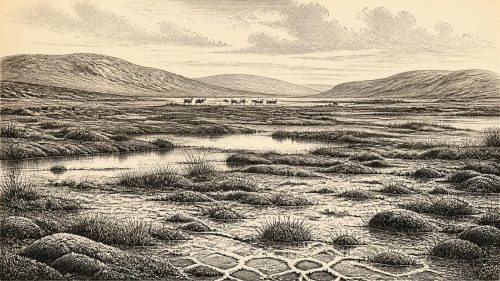
Circa 31,182 BCE, Ireland lay within the unstable Late Pleistocene climate of Marine Isotope Stage 3, rather than a recoverable calendar year. At Derryvree, Fermanagh, organic freshwater sediments between glacial tills indicate an ice-free, treeless, marshy periglacial landscape during an interval broadly encompassing this date. Crag Cave demonstrates recurring climatic shifts, while Aghnadarragh records alternating glacial and non-glacial conditions, including mammoth-associated deposits. Fossils show connections with north-west European cold-adapted fauna. A marked Castlepook reindeer bone may suggest Upper Palaeolithic butchery, but remains unconfirmed. No evidence establishes settlements, polities or sustained human occupation; the record documents intermittent environments and fragile life.
Read Article

Archived: 18 September 2026
Abstract
Around 33,200 cal BP, Ireland lay within the climatically unstable MIS 3 period, with changing ice margins, low sea levels and diverse open, wetland habitats. Intertill deposits at Derryvree, Greenagho and Aghnadarragh preserve evidence of freshwater environments, plants and insects. Southern caves, especially Castlepook, contain mammoth, reindeer, giant deer, carnivores and other Ice-Age fauna, demonstrating connections with north-west Europe. A possibly cut-marked reindeer femur from Castlepook may indicate brief Upper Palaeolithic human activity, but cannot prove settlement, hunting traditions or continuous occupation. No evidence supports reconstructed politics, society, ritual, agriculture or trade. Later ice expansion destroyed or concealed much evidence.
Read Article

Archived: 15 September 2026
Abstract
Around 31,703 BCE, Ireland lay within the climatically unstable Late Pleistocene, as ice expanded before its later maximum. Later glaciation destroyed much evidence, but northern buried sediments preserve pollen, plants and beetles indicating treeless, cold grass-sedge tundra, wet hollows and Arctic-like conditions. Southern caves contain reindeer, giant deer, mammoth, bears, wolves and hyaenas, demonstrating changing habitats and animal movement. A cut-marked Castlepook reindeer bone may suggest transient human activity, but cannot prove settlement or occupation. Shifting seas and ice complicated access to Ireland. No evidence supports societies, trade or institutions. This period is understood through fragmentary deposits and radiocarbon ranges.
Read Article

Archived: 14 September 2026
Abstract
About 31,770 BCE, Ireland lay in the climatically unstable Late Pleistocene, although archaeological dating cannot identify conditions in a single year. Fermanagh sediments, including Aghnadarragh beetles, indicate cold, treeless tundra-like mosaics of grasses, shrubs, wetlands and seasonal pools, with severe winters and brief summers. Ireland was not necessarily fully ice-covered: the British–Irish Ice Sheet was expanding but had not reached its later maximum. Castlepook Cave preserves time-averaged remains of mammoth, reindeer, bear, hyaena and other fauna. A possibly cut-marked reindeer bone suggests early human activity, but cannot demonstrate settlement. Evidence supports environmental reconstruction, not claims about societies, routes or polities.
Read Article




