

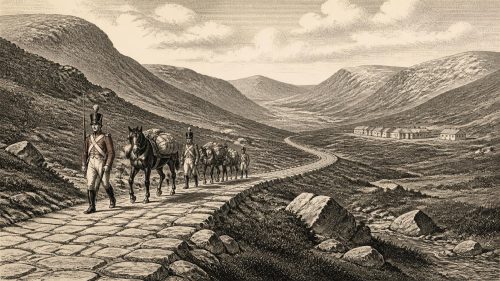
Taylor’s Mountain Road
Archived: 11 October 2026
In 1809, post-Union Ireland remained governed through Dublin Castle, Westminster and local institutions amid war and unresolved Catholic disabilities. Administrative changes followed Arthur Wellesley’s departure for Portugal. Captain Alexander Taylor’s Military Road across Wicklow, completed in October, extended state access to former insurgent terrain. Legislation supported road improvements, Dublin waterworks, Church of Ireland buildings and investigation of bog reclamation. Nelson’s Pillar opened in Dublin, celebrating imperial naval power. Belfast manufacturing collapse prompted charitable relief, while Cork’s Magdalene asylum reflected religious social discipline. Edward Bunting’s music collection preserved and reshaped Irish harp traditions through print, illustrating infrastructure, commemoration and cultural interpretation.



