
Archived: 7 October 2026
Abstract
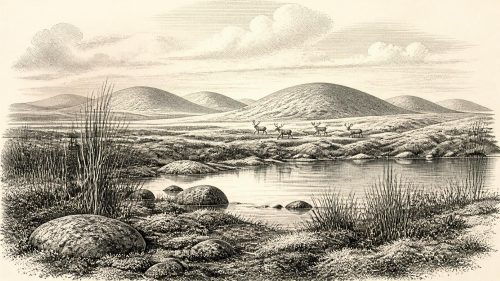
Thirty thousand years ago, Ireland lay within the climatically unstable later Marine Isotope Stage 3, not a precisely datable calendar year. Derryvree sediments in County Fermanagh indicate locally ice-free, periglacial wetlands supporting tundra vegetation between glacial advances. Castlepook Cave, County Cork, yielded a complex fauna including reindeer, mammoth, giant deer, predators and small cold-adapted mammals, accumulated over different times and processes. A cut-marked reindeer femur may record human carcass processing, but its old excavation context prevents firm conclusions about occupation. No evidence establishes settlements, politics, religion or culture. Dating, palaeoecology and zooarchaeology instead reveal environments, animal movements and human presence.
Read Article
Archived: 2 October 2026
Abstract
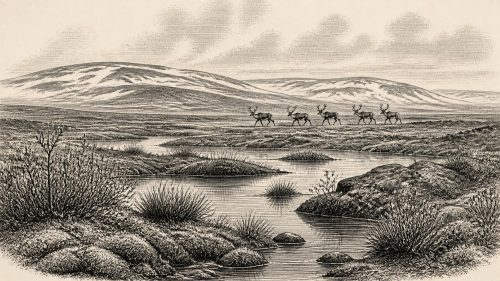
Around 30,368 BCE, Ireland’s environment is best understood through Derryvree, a freshwater organic deposit beneath glacial tills near Maguiresbridge, County Fermanagh. Radiocarbon dating places it broadly within 36,900–31,700 calibrated years BP, rather than at a single year. Pollen, plants, mosses and insects indicate an ice-free, treeless, cold periglacial wetland during Marine Isotope Stage 3, before maximum British-Irish ice cover. Castlepook Cave fauna shows that cold-adapted mammals reached Ireland during this wider period. A possibly butchered reindeer bone suggests, but cannot confirm, brief human presence. No evidence supports permanent settlement, society or economy. Derryvree preserves an ecological record of pre-glacial Ireland.
Read Article
Archived: 1 October 2026
Abstract
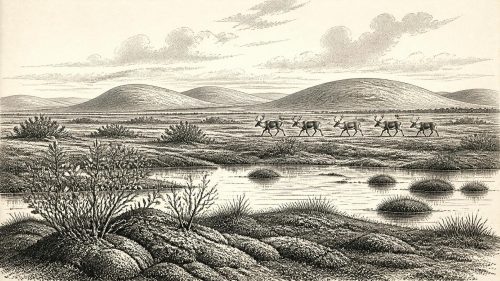
Around 30,398 BCE, Ireland lay within Marine Isotope Stage 3, during later Midlandian glaciation. Derryvree, County Fermanagh, preserves freshwater silts between glacial tills, recording a temporary ice-free tundra wetland of pools, mosses, sedges, dwarf shrubs and cold-adapted plants. Radiocarbon evidence provides broad chronological ranges, not an exact calendar year. Castlepook Cave, County Cork, contains reindeer, mammoth, giant deer, bear, wolf, hyaena and lemming remains, indicating open, severe landscapes and complex food webs. A possibly cut-marked reindeer bone may suggest brief Upper Palaeolithic human activity, but lacks supporting settlement evidence. Ice, changing sea levels and advancing glaciers continually reshaped environmental possibilities.
Read Article
Archived: 1 October 2026
Abstract
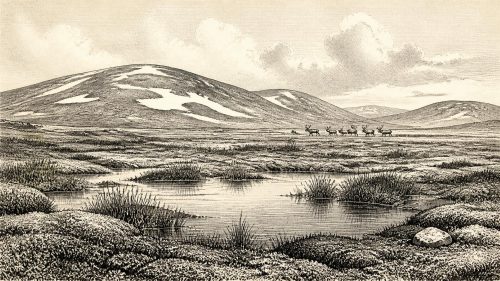
About 30,405 BCE, Ireland was a fluctuating Late Pleistocene environment, not a documented society. Calendar-year precision is impossible; evidence derives from sediments, fossils, cave deposits and ice reconstructions. At Derryvree, County Fermanagh, organic freshwater silts between glacial tills record an ice-free interval, supporting cold-adapted wetland plants in treeless tundra-like conditions. Castlepook Cave, County Cork, preserves vertebrate remains including mammoth, giant deer, reindeer and predators, accumulated across many millennia rather than one moment. A possibly cut-marked reindeer bone suggests, but does not prove, Upper Palaeolithic human activity. Ice advances later buried or erased evidence, leaving a changing landscape interpreted cautiously now.
Read Article
Archived: 24 September 2026
Abstract
30,757 BCE cannot be treated as a precisely recoverable Irish year; evidence instead describes a broad MIS 3 interval. At Derryvree, County Fermanagh, freshwater sediments between glacial tills record a temporary ice-free wetland, with tundra vegetation, insects and seasonal meltwater, before advancing ice buried it. Castlepook Cave, County Cork, preserves mixed animal remains spanning many millennia, including mammoth, reindeer, giant deer, predators and later cold-adapted species, indicating open steppe-tundra. A possibly cut-marked reindeer bone suggests, but cannot prove, brief Upper Palaeolithic human visits. No evidence supports permanent settlement, political structures, religion, trade or agriculture; environmental change dominates the record overall.
Read Article
Archived: 18 September 2026
Abstract
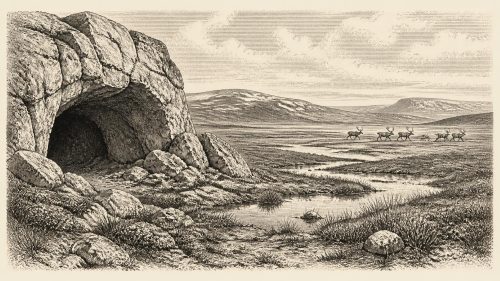
31,259 BCE is a modern chronological reference within Marine Isotope Stage 3, not a recorded Irish year. Ireland then experienced fluctuating cold conditions as ice sheets expanded, while some lowland refuges supported open tundra and steppe. Castlepook Cave, County Cork, preserves a fauna including reindeer, mammoth, giant deer, wolves, Arctic foxes, lemmings and spotted hyaenas, demonstrating cold-stage ecosystems. Derryvree, County Fermanagh, records sedges, herbs, mosses, insects and wetland tundra beneath glacial deposits. A cut-marked reindeer femur may indicate brief human activity, but lacks secure context. No evidence establishes settlement, social organisation, routes, or population; the period remains an ecological frontier.
Read Article

Archived: 9 September 2026
Abstract
Circa 31,901 BCE, Ireland was a cold, seasonally varied Late Pleistocene landscape, not yet wholly covered by the expanding British-Irish Ice Sheet. Derryvree sediments in Fermanagh record open, treeless wetland vegetation, freshwater pools and cold-adapted insects during an ice-free interval, though dates remain broad. Castlepook Cave in Cork preserves mixed remains of mammoth, reindeer, giant deer, hyaena, wolf, Arctic fox and other fauna, accumulated over extended periods and partly modified by carnivores. A possibly butchered reindeer bone suggests fleeting human activity, but no secure settlement evidence exists. Together, the sites document environmental change, ecological connectivity and fragmentary survival of evidence.
Read Article




