

Related Archive: Catholic Church

Bloody Sunday and Direct Rule

Bloody Sunday and Direct Rule

Archived: 8 October 2026

Abstract

In 1972, violence and constitutional change reshaped Ireland. Bloody Sunday in Derry, when British soldiers killed fourteen civilians, intensified nationalist anger and accelerated Northern Ireland’s political crisis. Westminster suspended Stormont in March, imposing direct rule, while paramilitary violence, Bloody Friday and Operation Motorman deepened insecurity. The Republic strengthened emergency powers after violence spread south, including Dublin bombings. Simultaneously, Jack Lynch’s government pursued European integration. Voters overwhelmingly approved the constitutional amendment enabling EEC accession, due in 1973. December referendums also lowered the voting age to eighteen and removed constitutional recognition of the Catholic Church’s special position, signalling a more pluralist State.

Read Article

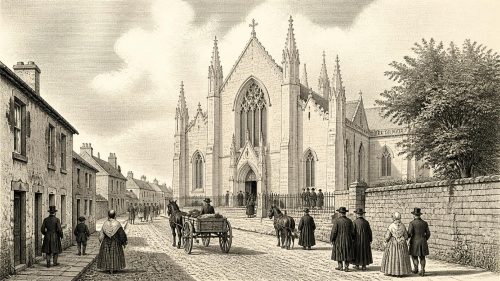
Tuam’s New Cathedral

Tuam’s New Cathedral

Archived: 11 October 2026

Abstract

In 1837, Victoria’s accession prompted an Irish general election in which Daniel O’Connell and his allies demonstrated Catholic political organisation despite a restricted, public franchise. Parliament debated Irish poor relief amid widespread insecurity, but legislation followed only in 1838. Tithe grievances, local crop failures, potato dependence and uneven employment exposed rural vulnerability. Tuam’s completed Catholic cathedral symbolised post-emancipation confidence, although religious divisions endured. Samuel Lewis’s dictionary, Ordnance Survey work and Dublin policing measures reflected administrative control. Ireland remained commercially and imperially connected, illustrated by HMS Terror’s repair at Lough Swilly, yet the Union, unequal landholding, poverty and representation remained unresolved.

Read Article

