Archived: 8 October 2026
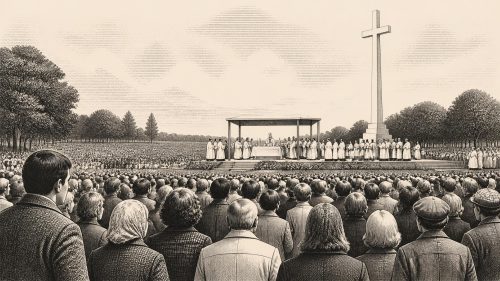
Abstract
In 1979, Ireland confronted industrial disaster, political change, social reform, European integration and Troubles violence. The Betelgeuse explosion at Whiddy Island killed fifty people, exposing risks associated with oil trade. Ireland joined the European Monetary System, elected its first directly elected MEPs and hosted the European Council. Jack Lynch resigned, succeeded by Charles Haughey, whose cabinet included Máire Geoghegan-Quinn. Legislation established Údarás na Gaeltachta and cautiously legalised family planning. IRA attacks killed Lord Mountbatten and eighteen soldiers at Warrenpoint. Pope John Paul II’s visit, altered by security concerns, included an appeal for peace, encapsulating a modernising, divided and unsettled Ireland.
Read Article

Archived: 8 October 2026
Abstract
In 1978, Jack Lynch’s Fianna Fáil government pursued expansionary policies, abolishing domestic rates while increasing borrowing amid unemployment and inflation. Its dismissal of Garda Commissioner Edmund Garvey was ruled invalid, raising concerns about policing and due process. Ireland chose to join the European Monetary System, loosening its automatic link with sterling. Northern Ireland endured violence, including the La Mon bombing, while the Maze dirty protest intensified and Ireland won a human-rights case against Britain. RTÉ 2 began broadcasting, John Treacy won the World Cross Country Championship, and Munster’s 12–0 victory over the All Blacks provided a lasting symbol of confidence.
Read Article
Archived: 8 October 2026
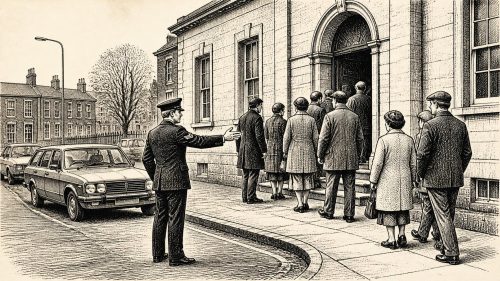
Abstract
In 1977, Fianna Fáil won a record general-election landslide, giving Jack Lynch a nine-seat Dáil majority after campaigning on tax relief, rates abolition and jobs amid inflation and unemployment. Employment equality and youth-work laws strengthened workplace protections. Northern Ireland, under direct rule, remained marked by violence, prison protest and communal division. Ian Paisley’s loyalist-backed May strike, seeking tougher security and majority-rule devolution, failed despite recalling 1974. British authorities maintained services and opposed intimidation. International attention included Jimmy Carter’s policy statement, Lynch’s talks with James Callaghan, and the Nobel Peace Prize for Betty Williams and Mairead Corrigan. Sport remained culturally significant.
Read Article

Archived: 8 October 2026
Abstract
In 1973, Ireland joined the European Economic Community, opening markets, agricultural supports and a less Britain-dependent future, while Irish gained limited Community status. A Fine Gael–Labour coalition replaced Fianna Fáil, and constitutional reforms lowering the voting age and removing denominational preference took effect. Troubles violence affected both jurisdictions and extended to London. Northern Ireland’s border poll, Assembly, constitutional legislation and power-sharing plans sought to replace unionist majority rule, but remained contested. December’s Sunningdale Agreement linked consent, an Executive and a Council of Ireland. Oil-driven inflation complicated European optimism. The year established principles of power-sharing and north-south co-operation amid continuing conflict.
Read Article

Archived: 8 October 2026
Abstract
In 1972, violence and constitutional change reshaped Ireland. Bloody Sunday in Derry, when British soldiers killed fourteen civilians, intensified nationalist anger and accelerated Northern Ireland’s political crisis. Westminster suspended Stormont in March, imposing direct rule, while paramilitary violence, Bloody Friday and Operation Motorman deepened insecurity. The Republic strengthened emergency powers after violence spread south, including Dublin bombings. Simultaneously, Jack Lynch’s government pursued European integration. Voters overwhelmingly approved the constitutional amendment enabling EEC accession, due in 1973. December referendums also lowered the voting age to eighteen and removed constitutional recognition of the Catholic Church’s special position, signalling a more pluralist State.
Read Article

Archived: 8 October 2026
Abstract
In 1971, Ireland underwent modernisation while Northern Ireland descended into deeper conflict. Decimalisation transformed transactions across the island, while censuses recorded populations north and south. Northern reforms included local-government boundaries and a province-wide Housing Executive; southern welfare and health changes also reshaped public services. Brian Faulkner succeeded James Chichester-Clark amid worsening unrest. Internment without trial, introduced in August, alienated nationalists, prompted killings, displacement and the SDLP’s withdrawal from Stormont, and led Ireland to challenge Britain in Europe. Republican and loyalist violence persisted, including the McGurk’s Bar bombing. Meanwhile, European Community negotiations, colour television, broadcasting restrictions and literary publication reflected society.
Read Article

Archived: 8 October 2026
Abstract
1970 marked a decisive hardening of the Northern Ireland conflict and its impact on the Republic. Security reforms replaced the B Specials with the Ulster Defence Regiment, while Ian Paisley’s election and the Alliance Party’s foundation reflected polarised and alternative politics. The British Army’s thirty-four-hour Lower Falls curfew, searches, gun battles and civilian deaths alienated Catholic communities. In Dublin, the Arms Crisis split Fianna Fáil after allegations of illegal arms imports, despite subsequent acquittals. A prolonged bank strike and cement dispute disrupted economic life. Ireland also opened European Community negotiations, while Dana’s Eurovision victory provided a notable all-island cultural moment.
Read Article
Archived: 8 October 2026
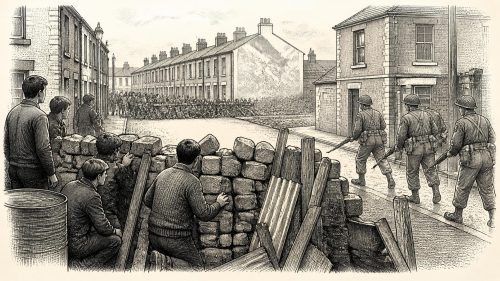
Abstract
In 1969 civil-rights protests against discrimination in Northern Ireland escalated from the Burntollet attack into communal violence. Reform measures, including universal local-government suffrage, failed to restore confidence, while O’Neill resigned and Chichester-Clark succeeded him. August riots produced the Battle of the Bogside, killings, arson and displacement in Derry and Belfast. British troops deployed, initially welcomed by some Catholics, and Belfast’s peace line embodied deepening segregation. Inquiries urged policing reform and abolition of B-Specials, but loyalist resistance continued. Dublin, strengthened by Fianna Fáil’s election victory, addressed the crisis while pursuing development and EEC membership. The IRA split, confirming a political landscape.
Read Article

Archived: 8 October 2026
Abstract
In 1968, Northern Ireland’s civil-rights movement mobilised grievances over housing, employment, gerrymandering, policing and restricted local voting. Austin Currie’s Caledon protest, marches at Dungannon and Derry, and police violence against the banned 5 October Duke Street demonstration brought televised images to audiences across Ireland and Britain. Student activism produced People’s Democracy, while Terence O’Neill’s government offered reforms, though divisions within unionism and campaigners’ dissatisfaction persisted. In the Republic, voters rejected constitutional changes to electoral arrangements. Educational grants and student protests reflected wider social change, while Humanae Vitae intensified debate over contraception, conscience and Church authority in Irish society and politics.
Read Article
Archived: 8 October 2026
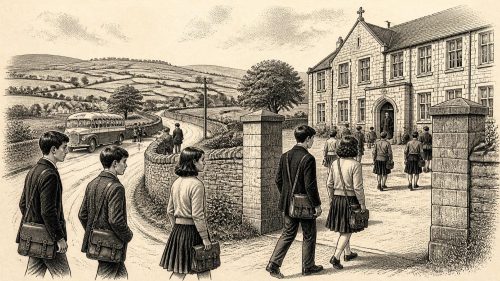
Abstract
In 1967, Jack Lynch’s government renewed Ireland’s application to join the European Economic Community, regarding integration as economically necessary despite dependence on Britain; Charles de Gaulle’s November veto of British entry again stalled progress. Free post-primary education began in September, widening access, particularly for rural pupils, while censorship law limited bans’ duration. Northern Ireland’s Civil Rights Association and Derry Housing Action Committee organised demands over discrimination and housing; Lynch nevertheless met Terence O’Neill in Belfast. Dublin hosted Rosc ’67, pairing international modern art with Irish treasures amid controversy over excluding Irish artists. Patrick Kavanagh died, marking transition in Irish culture.
Read Article
Archived: 8 October 2026
Abstract
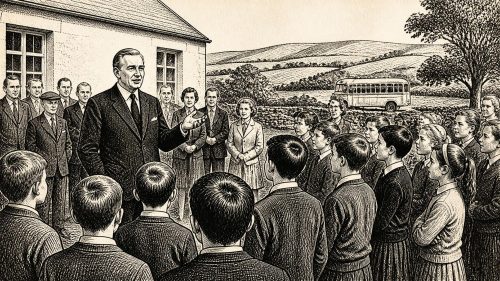
During 1966, Ireland marked the Easter Rising’s fiftieth anniversary with major ceremonies, the Garden of Remembrance’s opening, and the destruction of Nelson’s Pillar. A census recorded population growth and continuing urbanisation, while the Anglo-Irish Free Trade Area signalled export-oriented economic policy despite farmers’ protests over low incomes. Education Minister Donogh O’Malley promised free post-primary schooling and transport from 1967. Seán Lemass resigned as Taoiseach and Jack Lynch succeeded him. De Valera began another presidential term. In Northern Ireland, competing commemorations, UVF violence, sectarian murders and political tensions foreshadowed the coming conflict, underscoring Ireland’s unresolved division amid social and economic change.
Read Article




