

Related Archive: Contested Lordships

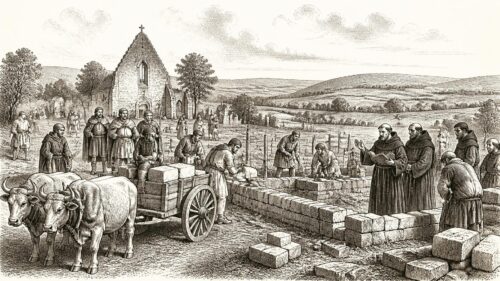
Kilconnell’s Contested Friary

Kilconnell’s Contested Friary

Archived: 23 October 2026

Abstract

Medieval Ireland in 1353 appears through diverse, sometimes conflicting records. The Four Masters date William Buí Ó Ceallaigh’s Franciscan foundation at Kilconnell to this year, although Franciscan tradition proposes 1414 and surviving fabric reflects later patronage. The friary linked Gaelic lordship, Latin Christianity and local social life. Annals record Áed Ó Conchobair’s deposition in Connacht, other dynastic deaths and killings across the midlands and Ulster, while differing chronologies complicate dating. Pope Innocent VI reportedly settled Armagh and Dublin’s primacy dispute. Youghal received trading privileges in England and Wales. Together, these notices reveal politically fragmented yet religiously and commercially interconnected Ireland.


Read Article

Contested Lordships

Contested Lordships

Archived: 26 September 2026

Abstract

In 1204, Ireland remained politically fragmented, with King John’s authority strongest in Anglo-Norman towns, castles and lordships. Justiciar Meiler fitz Henry curbed William de Burgh’s Connacht ambitions, while Cathal Crobhdearg Ua Conchobair negotiated terms to preserve part of his kingdom. In Ulster, John de Courcy’s displacement enabled the de Lacys’ rise, though royal law sought to regulate the outcome. Annals record raids, church plundering, Doire’s burning and Domnall Mac Carthaig’s southern victory. Ecclesiastical disputes at Iona demonstrated clerical power. Dublin fortifications, authorised fairs, and Duiske’s foundation linked royal administration, commerce, settlement and religious patronage amid continuing local conflict across Ireland.

Read Article

