Sitriuc Blinds Braen
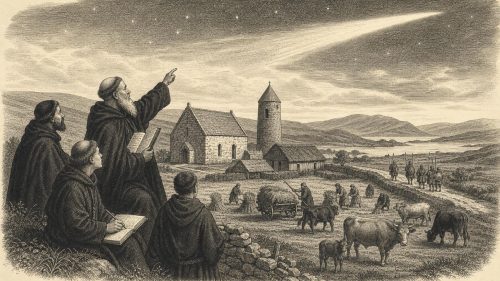
In 1018, four years after Clontarf, Ireland remained fragmented, as rival dynasties, Hiberno-Norse towns and local peoples pursued power through raiding, treachery and alliance. Máel Sechnaill’s authority in Mide was challenged when his steward and an allied king died during conflict in Fir Chell. Sitriuc Silkbeard of Dublin treacherously blinded Braen, son of Leinster’s Máel Mórda, ending his capacity to rule. Northern Uí Néill forces mobilised, while killings and plundering affected Gailenga, Tuatha Luigne and Óentreb. Ecclesiastical deaths reflected churches’ political and cultural importance; Waterford’s Norse king died. Annalists also recorded an autumn comet, revealing learned religious observation amid instability.
View Record
Crag Cave’s Interstadial Drips
Around 31,873 BCE, Ireland lay within the unstable MIS 3 phase of the last Ice Age, not a precisely recoverable calendar year. Ice, sea levels, rivers and vegetation changed repeatedly as conditions alternated between milder interstadials and severe stadials. Fermanagh sediments indicate treeless, cold freshwater wetlands with mosses, sedges and northern insects, while southern caves preserve remains of reindeer, giant deer, bears, hyaenas, foxes and hares. Crag Cave speleothems record episodic milder conditions permitting calcite growth. Human presence remains unproven: a possibly cut-marked Castlepook reindeer bone suggests a contested brief visit, whereas later secure evidence does not establish permanent settlement.
View Record
Fires and Hostages
In 1020, Ireland remained politically fragmented after Clontarf. Máel Sechnaill mac Domnaill led a coalition including Uí Néill, Donnchad mac Briain and Art Ua Ruairc to the Shannon, receiving Connacht hostages and asserting overkingship. Northern and eastern lesser kingdoms experienced blinding, killings and rapid succession disputes. Fires devastated Kildare, Glendalough, Clonard, Clonmacnoise, Swords and Armagh, damaging churches, treasures and settlement districts. Armagh’s blaze then preceded Máel Muire’s death and Amalgaid’s installation as Patrick’s successor; Patrick’s shrine and bell were also plundered. Annals additionally commemorate learned clerics, revealing churches as centres of wealth, scholarship, authority and vulnerability amid violent political competition.
View Record
Hugh de Lacy’s Death
In 1186, Ireland remained politically fragmented despite expanding Anglo-Norman settlement. Hugh de Lacy, lord of Meath, was killed while inspecting castle works at Durrow, an act Irish annals portrayed as vengeance for violation of Columcille’s sanctuary. His death weakened colonial authority while Crown withheld Meath from heir. In Connacht, Conchobar Máenmaige displaced his father, Ruaidrí Ua Conchobair, amid dynastic warfare. Northern factions deposed Domnall Mac Lochlainn, causing violence. Churches, pilgrimage, hagiography, trade and castle-building shaped life. Gaelic and settler economies interacted, but warfare disrupted communities. The year demonstrated that competing Gaelic, royal, ecclesiastical and Anglo-Norman lordships prevented any unified conquest.
View Record
Ports and Power
In 1170 Diarmait Mac Murchada’s restoration in Leinster escalated through Anglo-Norman intervention. Raymond le Gros secured Baginbun, then Richard Strongbow captured Waterford, married Diarmait’s daughter Aífe, and seized Dublin, ending its independent Hiberno-Norse rule. The ports supplied strategic links to Britain, trade and military resources. Allied forces campaigned across Leinster and Mide, devastating ecclesiastical centres, while Ruaidrí Ua Conchobair retaliated by killing Leinster hostages, including Diarmait’s son. Wider conflicts persisted in Munster and the north. Rural communities, towns and religious houses suffered warfare, although commerce and reform continued. By year’s end, eastern conquests transformed power without establishing durable settled lordship.
View Record
Shandon Cave’s Bear Horizon
31,884 BCE is a modern, uncertain calendar conversion within Marine Isotope Stage 3, preceding the Last Glacial Maximum. Ireland experienced variable cold conditions, with shifting ice, periglacial terrain and habitable ice-free areas. Shandon Cave, County Waterford, contains a brown-bear bone whose calibrated range overlaps this period, demonstrating late-Pleistocene animal presence but not exact-year occupation. Cave finds from Shandon and Castlepook indicate intermittent access for mammals including reindeer, horse, mammoth, predators and bears across open, sparsely vegetated habitats. Possible cut marks on a Castlepook reindeer bone suggest, but cannot prove, a brief human visit. No evidence supports settlement or migration routes.
View Record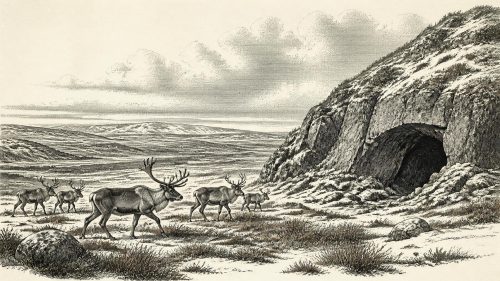
Castlepook’s Cold-Stage Fauna
“31,996 BCE” is a modern retrospective label, not a date anyone living then could have...
View Record
Leinster’s Turning Point
In 1042, Leinster underwent a decisive political upheaval when Murchad mac Dúnlainge, king of Leinster, was killed at Mag Muilchet. His defeat ended the Uí Dúnlainge dynasty’s effective provincial claim and enabled Diarmait mac Máel na mBó of Uí Chennselaig gradually to establish supremacy, supported by Osraige. Conflict included the burning of Ferns and destructive retaliation at Glenn Uissen, illustrating warfare’s assault on ecclesiastical centres. In Mide, Flann mac Máel-Sechnaill was murdered amid dynastic rivalry. Sitriuc Silkbeard died, symbolising Dublin’s changing Hiberno-Norse era. Church deaths, pilgrimage to Rome, and Ailill of Muckno’s death in Cologne demonstrate Ireland’s European religious connections.
View Record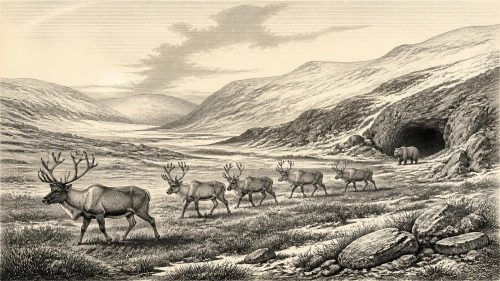
Shandon Cave Fauna
“31,980 BCE” is a modern chronological label, not a date that prehistoric people in Ireland...
View Record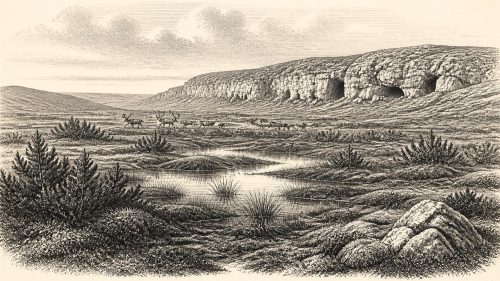
Reindeer by the Awbeg
At roughly 31,863 BCE, Ireland experienced an unstable MIS 3 cold phase, with open, wet, treeless tundra recorded at Derryvree and intermittent milder conditions indicated by Crag Cave calcite. The Last Glacial Maximum was approaching, but Ireland was not uniformly ice-covered. Castlepook Cave in County Cork preserves diverse cold-stage fauna, including reindeer, mammoth and hyaena, accumulated over extended periods. A reindeer femur, dated broadly around 33,000 years ago, bears a possible cut mark suggesting human carcass processing. Without secure context, tools or campsites, this indicates only tentative, mobile Upper Palaeolithic visits. Ongoing investigation may clarify Ireland’s fragmentary pre-glacial human record.
View Record