Archived: 31 October 2026
Abstract
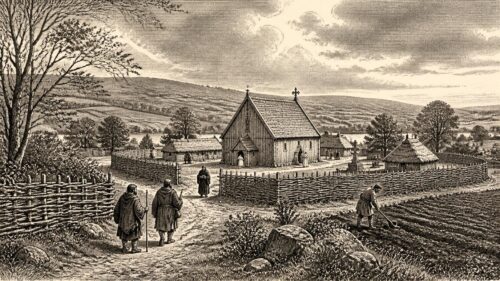
In 763, Domnall Midi of Clann Cholmáin, king of Tara, died at Durrow on 20 November, ending a southern Uí Néill ascendancy. Niall Frossach of Cenél nÉogain then began to rule, restoring the leading overkingship to the northern Uí Néill amid a contested political order rather than a unified monarchy. Annals also record Connacht’s severe but unexplained defeat at Cuilnech Mór and fighting between Munster peoples. Deaths of abbots and clerics at several major churches reveal an extensive ecclesiastical network. A daytime darkening of the sun was noted, though its cause and meaning remain unknown. Kingship, warfare and church intertwined.
Read Article
Archived: 31 October 2026
Abstract
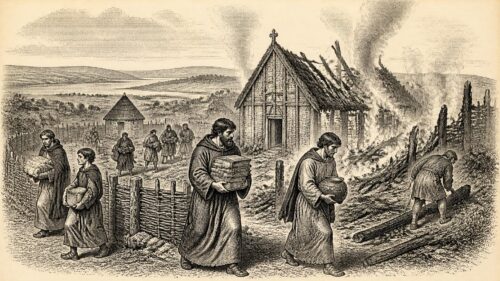
For Ireland in 756, the annals offer no single, all-embracing story. Instead, they preserve a sharp cluster of incidents: the burning of the great church settlement of Bangor on St Patrick’s Day; a military expedition which brought Leinster forces into Mag Muirthemne; the death of a Connacht overking; fighting in the midlands and Connacht; and a catastrophic wreck on Lough Ree. Read together, these terse notices reveal an island in which kingship, ecclesiastical authority and movement by water were all deeply consequential. They also demand care. Medieval annals did not record every event, and they often give outcomes without causes.
Read Article
Archived: 31 October 2026
Abstract
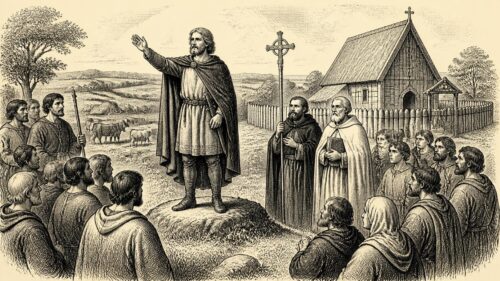
In 753 CE, Domnall Midi of Clann Cholmáin enforced the law of Colum Cille, publicly combining royal authority with the saint’s protection, privileges and ecclesiastical claims. The act reflected Ireland’s fragmented political order, where rulers, kin groups and churches negotiated power. Annals also record a solar eclipse, deaths of abbots and churchmen across Ireland, the death of Echaid, king of Uí Moccu Uais, slaughter among Connacht groups, and Ferblae’s death as a learned man. These terse notices reveal interconnected religious, political and economic communities. Chronological differences among annals require caution, although the eclipse is securely dated to 9 January 753.
Read Article


