Archived: 1 October 2026
Abstract
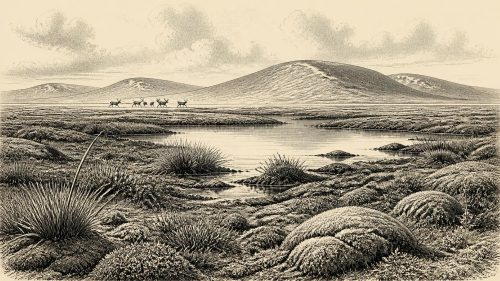
About 30,401 BCE, Ireland experienced unstable Late Pleistocene conditions during the Midlandian cold stage, not a recordable historical year. Derryvree sediments in Fermanagh document an ice-free freshwater interval between glacial advances, supporting tundra-like wetland life. Crag Cave calcite records episodic warmer phases amid severe climatic shifts. Castlepook Cave near Doneraile preserves diverse MIS 3 fauna, including reindeer, mammoth and predators, although its deposits span long periods. A cut-marked reindeer femur may indicate human handling around 33,000 years ago, but cannot prove settlement, routes or society. Lower sea levels altered geography, while later ice likely destroyed evidence of brief human visits.
Read Article
Archived: 22 September 2026
Abstract
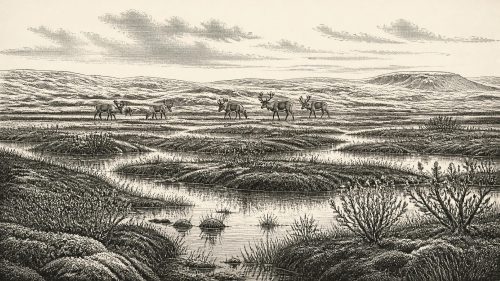
Around 30,869 BCE, Ireland was in the later Marine Isotope Stage 3, a period reconstructed through geological and palaeontological evidence rather than annual history. Derryvree, County Fermanagh, preserves freshwater sediments between glacial tills, indicating an ice-free, treeless, cold wetland with tundra vegetation. Castlepook Cave, County Cork, yielded cold-stage fauna, including mammoth, reindeer, giant deer and predators, though remains accumulated over time. An incised reindeer femur may record human butchery, suggesting possible transient Upper Palaeolithic visitors. However, no settlement, tools, hearths or social institutions are evidenced. Later glaciation transformed landscapes and erased most traces, requiring cautious interpretation of deep Irish prehistory.
Read Article

Archived: 10 September 2026
Abstract
Around 31,832 BCE, Ireland lay within the climatically unstable MIS 3, before the Last Glacial Maximum, with changing ice, exposed shelves and open periglacial habitats. Derryvree sediments in Fermanagh indicate treeless tundra wetlands, while Castlepook Cave near Doneraile preserves mammoth, giant deer, reindeer, bear, wolf and hyaena remains accumulated over time. These finds demonstrate intermittent suitable habitats and animal movements, not a complete landscape or settled population. An incised reindeer femur, dated roughly 33,000 years ago, may record stone-tool butchery and fleeting human activity. However, poor stratigraphic context and absent associated artefacts mean permanent occupation and cultural traditions remain unproven.
Read Article





