Archived: 17 October 2026
Abstract
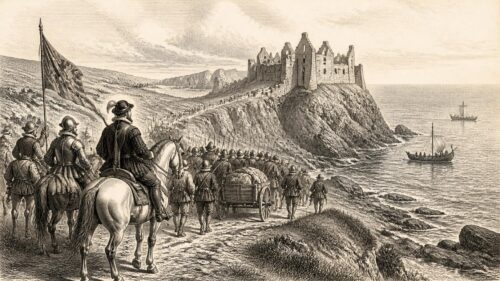
In 1584 Sir John Perrot became lord deputy, pursuing Elizabethan efforts to convert military victory into durable government. He appointed Richard Bingham in Connacht and John Norris in Munster, where the Peyton Survey prepared forfeited Desmond lands for plantation amid famine and displacement. Negotiations revived towards the Composition of Connacht, while O’Reilly territory was organised as County Cavan. Perrot captured Dunluce but failed to subdue Sorley Boy MacDonnell or secure Ulster. Dermot O’Hurley’s execution highlighted confessional repression. Galway extended harbour defences, and Stanihurst published Latin history. Crown authority expanded through surveys, counties and garrisons, yet remained contested, costly and insecure.
Read Article

Archived: 19 October 2026
Abstract
In 1513, Ireland experienced interconnected struggles over lordship, succession and regional power. Gearóid Mór FitzGerald’s death weakened his extensive political system, although his son Gerald succeeded as earl and deputy governor. In Tír Eógain, Art Óg O’Neill secured inauguration with local and Kildare support amid contested succession. Aodh Dubh O’Donnell besieged Sligo, influenced control of Dunluce and visited James IV of Scotland before Flodden ended Scottish royal intervention. Raiding, burning and maritime violence affected coastal and rural communities. Meanwhile, Franciscan scholarship, ecclesiastical deaths and aristocratic patronage demonstrated enduring religious, learned and charitable networks across a politically fragmented yet connected Ireland.
Read Article





