
Archived: 6 October 2026
Abstract
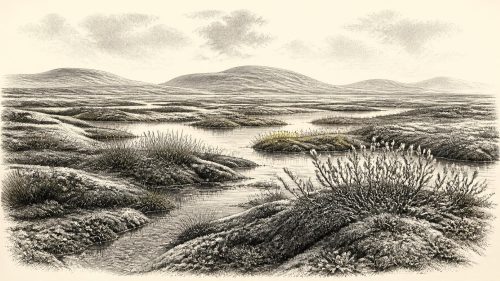
Around 30,200 BCE, Ireland lay within the unstable MIS 3 phase of the last Ice Age, and no precise event or island-wide conditions can be identified. Derryvree, County Fermanagh, preserves freshwater silts between glacial tills, indicating a locally ice-free, treeless periglacial wetland during a broad Late Pleistocene interval. Castlepook Cave, County Cork, yielded mixed deposits containing mammoth, reindeer, giant deer, hyaena, wolf and other cold-adapted fauna, demonstrating intermittent ecological connections with Britain and Europe. A possibly cut-marked reindeer bone may indicate early human butchery, but lacks secure context. Evidence depicts shifting ice, wetlands, open ground and uncertain human presence overall.
Read Article
Archived: 5 October 2026
Abstract
Modern date 30,230 BCE is only a filing label; Derryvree’s radiocarbon-dated organic silts instead represent a broad interval around 34,950–29,750 BCE. Exposed between lower and upper glacial tills, they record an ice-free Fermanagh basin with freshwater, tundra vegetation and intensely seasonal conditions during MIS 3. Plants indicate wetlands, shallow pools and treeless cold-country mosaics. Castlepook Cave preserves a time-depth fauna including mammoth, reindeer, giant deer, predators and lemmings, showing varied cold-stage habitats. A possibly butchered reindeer bone suggests episodic human visitation, but lacks secure associated tools or occupation. Later ice buried and reshaped such landscapes; Derryvree remains an environmental archive.
Read Article

Archived: 27 September 2026
Abstract
At Derryvree, County Fermanagh, freshwater silts sealed between glacial tills record a locally ice-free episode during Marine Isotope Stage 3. Radiocarbon dating of organic material, though incapable of fixing events to 30,610 BCE, places the deposit broadly within 36,900–31,700 calibrated years before present. Its wetland flora, insects and sediments reveal treeless tundra, cold shallow water and short growing seasons. Castlepook Cave, County Cork, preserves fauna including mammoth, reindeer, hyaena and Arctic fox, indicating cold open habitats. A possibly cut-marked reindeer bone suggests, but does not prove, fleeting human activity. Evidence supports an intermittently habitable, environmentally unstable Ireland, without settled communities.
Read Article

Archived: 25 September 2026
Abstract
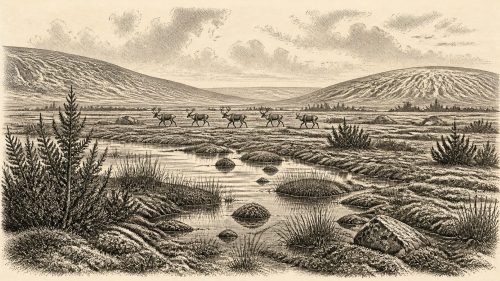
Around 30,714 BCE, Ireland has no recoverable historical events, only fragmentary Late Pleistocene environmental evidence from Marine Isotope Stage 3. Derryvree, County Fermanagh, preserves organic freshwater silts, plants and insects indicating cold, open, treeless wetland during a variable interval between ice advances. Other deposits and Kerry speleothems confirm changing non-glacial conditions, while low sea levels altered routes without proving a land bridge. Castlepook Cave, County Cork, yielded diverse fauna, including reindeer, mammoth, horse and carnivores. A reindeer femur possibly cut by a stone tool suggests brief human activity, but cannot establish settlement, population continuity, culture or a securely dated occupation.
Read Article
Archived: 14 September 2026
Abstract
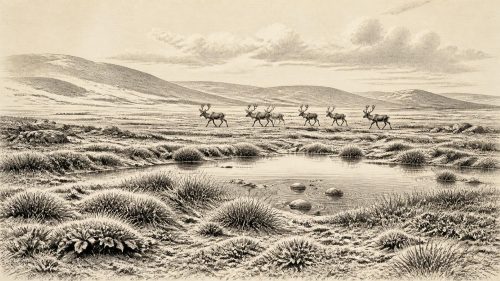
31,773 BCE is a modern chronological label within unstable MIS 3, not a recoverable Irish year. Derryvree, County Fermanagh, preserves freshwater silts between tills, dated broadly to later MIS 3, showing cold, treeless, periglacial wetlands existed between glacial episodes. Castlepook Cave, County Cork, contains a long, mixed record of Ice-Age mammals, including mammoth, reindeer, giant deer, bear and hyaena, rather than a single contemporaneous fauna. A marked reindeer femur may indicate human carcass processing, but no associated tools, settlement or population evidence survives. Lower seas altered access, while major ice expansion later covered much of Ireland during subsequent glacial maximum.
Read Article
Archived: 9 September 2026
Abstract
Around 31,867 BCE, Ireland formed part of a climatically unstable late Last Glacial Period landscape, rather than a recognisable historical year. Fermanagh deposits at Derryvree and Greenagho indicate local freshwater, tundra and periglacial conditions before major ice-sheet expansion. Open vegetation supported changing assemblages of cold-stage mammals, documented especially by mixed cave remains at Castlepook, County Cork. A cut-marked reindeer bone there may suggest brief human activity around 33,000 years ago, but cannot establish permanent settlement. Lower sea levels altered possible routes, without proving a land bridge. Later glaciation destroyed or obscured evidence, leaving environmental fragments rather than evidence of societies.
Read Article





