
Archived: 15 September 2026
Abstract
31,664 BCE is a modern label for a late Marine Isotope Stage 3 horizon, not a datable Irish event. Environmental evidence from Derryvree and Crag Cave indicates fluctuating cold conditions, open tundra wetlands and episodically milder intervals. Castlepook Cave preserves a diverse, time-mixed pre-Last Glacial Maximum fauna, including mammoth, reindeer, giant deer, hyaena, wolves and lemmings, demonstrating ecological links with north-west Europe. Ancient DNA may extend this picture, though remains provisional. A marked reindeer femur may indicate Upper Palaeolithic butchery, but cannot prove settlement. Ireland lacked communities or institutions; human visits remain uncertain amid changing ice, sea routes and landscapes.
Read Article

Archived: 10 September 2026
Abstract
Around 31,810 BCE, Ireland lay within a changing Late Pleistocene landscape as the British–Irish Ice Sheet began expanding. Evidence from Derryvree, County Fermanagh, indicates treeless tundra, freshwater habitats and cold-adapted plants during an earlier ice-free interval. Castlepook Cave in north Cork produced remains of mammoth, reindeer, giant deer, bears, wolves, foxes, lemmings and spotted hyaenas, demonstrating intermittent links with continental fauna. A marked reindeer femur may indicate human butchery around 31,000 BCE, but lacks securely associated tools or occupation evidence. Any human presence remains hypothetical. Lower sea levels altered routes, while advancing ice later reduced habitable land and destroyed evidence.
Read Article
Archived: 9 September 2026
Abstract
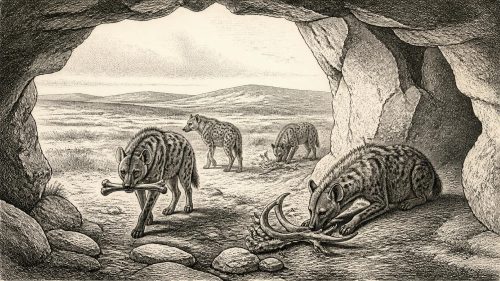
Castlepook Cave near Doneraile, County Cork, preserves a disturbed, important Late Pleistocene animal archive rather than evidence for a dated event in 31,920 BCE. Fossils, individually dated across approximately 45,700–19,950 years ago, include mammoth, giant deer, reindeer, bear, spotted hyaena, wolf, Arctic fox and lemmings. Gnawed bones indicate repeated hyaena use, not a local fauna. Revised dating suggests giant deer and hyaenas may have vanished locally before 40,000 years ago. A reindeer femur possibly bearing butchery marks suggests an early Upper Palaeolithic human visit, but proves neither settlement nor community. These changing landscapes supported habitats before ice-sheet advance erased evidence.
Read Article





