Archived: 26 September 2026
Abstract
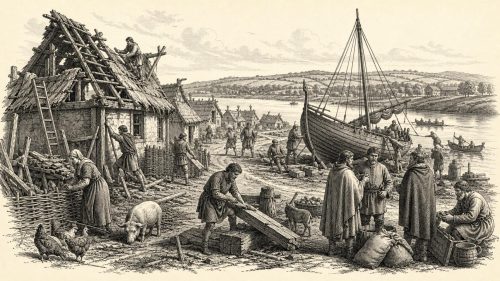
In 1037, Ireland remained a fragmented political landscape, where provincial kings, local dynasties and churches competed for power. Annals, despite differing dates and detail, record blinding, assassination, raiding and ecclesiastical violence across Leinster, Meath, Connacht and the north. Osraige’s Donnchad mac Gilla Pátraic displaced a Leinster rival, while Diarmait mac Máel na mBó strengthened his position and was linked to Waterford’s burning. Waterford’s ruler died amid internal and external conflict. Kings made pilgrimages, but churches were also plundered and sanctuary violated at Lorrha. Trade, farming and craft continued despite disorder. Exceptionally wet, stormy weather compounded an unstable year for communities.
Read Article
Archived: 26 September 2026
Abstract
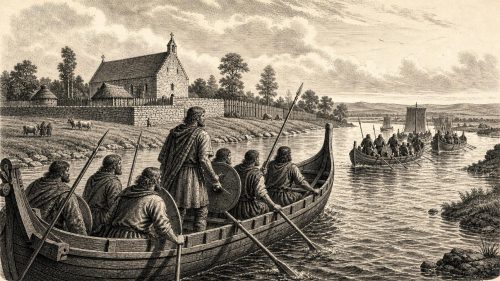
In 1035, Ireland comprised competing regional kingdoms, with no universally accepted high king since 1022. Annals record raids, killings and church plundering, though clerical priorities obscure ordinary life. Donnchad mac Briain defeated Bréifne raiders after their attack on Clonfert, demonstrating the Shannon’s military importance. In Dublin, Sitriuc Silkbeard killed Waterford’s Ragnall ua Ímair and raided Ardbraccan; Mide’s Conchobar retaliated against Swords. Other conflicts involved Leinster, Mide and Donegal, often for cattle, captives and prestige. Churches were political and economic targets, while farming, craftsmanship, learning and trade continued. Archaeology reveals interconnected Gaelic and Hiberno-Norse communities, and annalistic dating remains sometimes uncertain.
Read Article

Archived: 26 September 2026
Abstract
In 1026, Ireland’s contested politics reflected the unsettled aftermath of Brian Bóruma and Máel Sechnaill’s deaths. Donnchadh mac Briain asserted Munster’s wider ambitions by taking hostages in Mide, Brega, Dublin, Leinster and Osraige, while hosting Patrick’s successor at Cenn Corad. Northern king Flaithbertach Ua Néill raided Mide, crossing ice to ravage Inis Mochta. Dublin remained a wealthy Hiberno-Norse power, alternately submitting and fighting. Leinster, Osraige and Mide saw killings, raids and shifting local leadership. Church offices, pilgrimages to Irish centres and Rome, and road building at Clonmacnoise demonstrate how religion, infrastructure and lordship sustained fragile regional power overall across Ireland.
Read Article

Archived: 26 September 2026
Abstract
In 1025, Ireland lacked a universally recognised high king after Máel Sechnaill mac Domnaill’s death, and authority was contested through campaigns, hostages, raids and alliances. Flaithbertach Ua Néill entered Brega and Dublin, securing Irish hostages, before Domnall Got countered and recovered Brega’s hostages. Violence included the killing of Brega’s ruler Gerr Gaela, Connacht heir Niall Ua Conchobair, and a Uí Fiachrach Aidne leader, alongside raids between Fernmag and Fir Manach. Termonfeckin was plundered and burned. Annals also recorded Munster rulers, pilgrims and numerous senior churchmen’s deaths, demonstrating churches’ political, economic and cultural importance amid fragmented regional rivalries throughout the island.
Read Article

Archived: 26 September 2026
Abstract
In 1022, the death of Máel Sechnaill mac Domnaill, king of Mide and foremost post-Clontarf claimant to Ireland’s high-kingship, exposed the weakness of island-wide authority. He died at Cró Inis on Lough Ennell, honoured by churches and remembered for royal generosity, though later accounts elaborate his final rites. His loss, following the death of his heir in 1021, intensified succession disputes. Warfare continued: Waterford’s Sitriuc was killed, Ulaid defeated Dublin at sea and attacked Airgialla, while regional rulers and heirs fell. Kildare was plundered, churchmen and poets died, and Irish kingship, trade, maritime power and ecclesiastical wealth remained closely intertwined.
Read Article

Archived: 26 September 2026
Abstract
In 1020, Ireland remained politically fragmented after Clontarf. Máel Sechnaill mac Domnaill led a coalition including Uí Néill, Donnchad mac Briain and Art Ua Ruairc to the Shannon, receiving Connacht hostages and asserting overkingship. Northern and eastern lesser kingdoms experienced blinding, killings and rapid succession disputes. Fires devastated Kildare, Glendalough, Clonard, Clonmacnoise, Swords and Armagh, damaging churches, treasures and settlement districts. Armagh’s blaze then preceded Máel Muire’s death and Amalgaid’s installation as Patrick’s successor; Patrick’s shrine and bell were also plundered. Annals additionally commemorate learned clerics, revealing churches as centres of wealth, scholarship, authority and vulnerability amid violent political competition.
Read Article

Archived: 26 September 2026
Abstract
In 1019, five years after Clontarf, Ireland remained politically fragmented despite Máel Sechnaill’s high-kingship. Donnchad mac Briain survived a sword attack that severed his right hand, while the death of Munster’s heir Mathgamain weakened Dál Cais networks. Sitriuc Silkbeard’s Dubliners raided Kells, killing inhabitants and carrying off captives and spoils. Lightning burned Kildare, and attackers violated Durrow’s stone church to seize and kill Mael Muad. Dynastic killings affected Ailech, Leinster and smaller kingdoms; northern raids, revenge killings and disease in Ára compounded insecurity. Annals portray churches as wealthy, vulnerable institutions and record interconnected sacred authority, warfare, succession and local life.
Read Article
Archived: 26 September 2026
Abstract
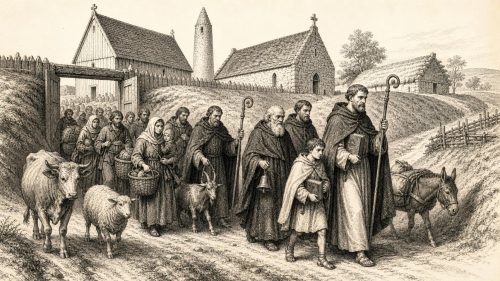
In 1015, Ireland remained unsettled after Clontarf, which had killed Brian Bóruma, Leinster’s Máel Mórda and key heirs. Máel Sechnaill mac Domnaill, aided by Flaithbertach Ua Néill, reasserted authority by plundering Leinster, taking cattle, tribute and hostages; later sources also associate campaigning with Dublin. In Munster, Donnchad mac Briain fought rivals while local kings suffered killings and deaths. Scarcity and dissension disrupted churches, with Emly vacated, Lorrha invaded and other sites plundered. Norse-Gaelic raiders seized 150 captives from western islands. Deaths, betrayals and interdynastic violence across Connacht, Bréifne and the north underscored a fragmented, dangerous political reconstruction after Brian's death.
Read Article
Archived: 26 September 2026
Abstract
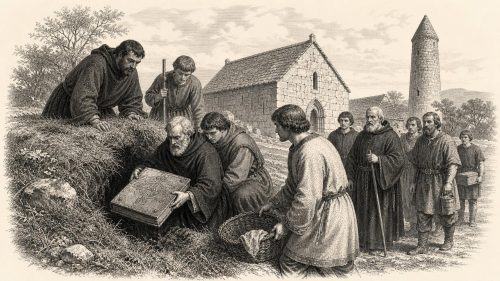
In 1007, Brian Bóruma reinforced his authority by campaigning towards Armagh, securing Ulaid hostages and involving Norse allies. Ulaid suffered rival killings, revenge and violations of church sanctuary, alongside intervention by Flaithbertach Ua Néill. In Mide, the displaced high king Máel Sechnaill revived Tailtiu’s assembly, installed a Columban successor and funded Clonmacnoise’s altar-front through local levies, asserting ceremonial kingship. At Kells, the Great Gospel of Colum Cille, probably the Book of Kells, was stolen for its precious cover but recovered. Ecclesiastical obits reveal religious networks. The annals depict Ireland as politically fragmented, wealthy, and shaped by power, sanctity and violence.
Read Article




