Archived: 26 September 2026
Abstract
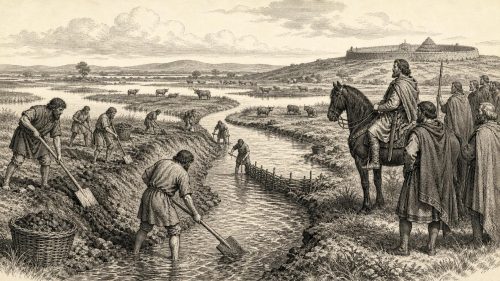
In 1139, Ireland remained politically fragmented, with Tairdelbach Ua Conchobair’s high-kingship dependent on force, alliances and hostages. He demonstrated authority by diverting the River Suck through marshes, strengthening Connacht’s eastern frontier, and by blinding a rival. Across Ireland, dynastic feuds brought killings, church burnings, plundering and violated sanctuary, while Munster’s Uí Briain exploited Cormac Mac Carthaig’s recent death. Church leaders negotiated peace between Munster and Leinster, and Malachy began his journey towards Rome, linking reformers with continental Christianity. Dublin’s religious life developed, poets and clerics died, and ordinary people directly bore warfare, tribute and labour demands during the troubled year.
Read Article

Archived: 26 September 2026
Abstract
In 1118, Diarmait Ua Briain’s death intensified Munster’s succession crisis and enabled Toirdelbach Ua Conchobair of Connacht to reshape southern politics. After fighting near Glanmire, where Brian Ua Briain was killed, Toirdelbach allied with Tadc and Cormac Mac Carthaig. He allocated Desmond to Mac Carthaig and Thomond to Diarmait’s sons, securing obedience through hostages and weakening Uí Briain supremacy. He also attacked Kincora and extended influence over Dublin, Leinster and Osraige. Regional warfare continued elsewhere. Royal deaths, church affairs, learning and burdens of military hostings reflected a society unsettled by conflict. The unstable partition nevertheless established Munster’s enduring political division.
Read Article
Archived: 26 September 2026
Abstract
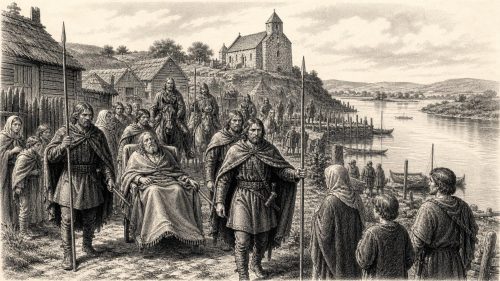
In 1114, Muirchertach Ua Briain’s illness shattered his dominance of Ireland, enabling his brother Diarmait to seize Munster and confine him at Killaloe. Domnall Ua Lochlainn led a northern coalition into Munster, but its campaign ended in a year’s truce, influenced by the independent Connacht king, Tairdelbach Ua Conchobair. Tairdelbach suppressed rivals, raided Meath and consolidated Connacht. Elsewhere, warfare, killings, depositions and blinding exposed unstable successions. Church reform coexisted with monastic institutions, whose leaders’ deaths and fires were recorded. Raids, forced provisioning and livestock disease damaged communities. No settlement emerged: Uí Briain power waned as Connacht became a decisive rival.
Read Article

Archived: 26 September 2026
Abstract
In 1109, rival Irish overkings Muirchertach Ua Briain and Domnall Ua Lochlainn mobilised major coalitions, while Murchad Ua Máel Sechlainn of Mide, allied to Ua Briain, raided Bréifne. The invaders seized cattle, captives and booty but failed to secure hostages; Aed Ua Ruairc retaliated, and Ardbraccan was burnt. Cellach of Armagh prevented confrontation between the principal armies at Sliab Fuait, arranging a one-year truce. Ua Lochlainn subsequently compelled Ulaid submission through hostages, amid continuing local feuds. Annals also note clerical deaths, church learning, severe weather, fasting, plentiful apples, crop-destroying mice, and vulnerability to warfare and environmental disruption throughout the island.
Read Article

Archived: 26 September 2026
Abstract
In 1103, Ireland remained divided between Muirchertach Ua Briain, dominant in the south, and Domnall Ua Lochlainn of Ailech. Muirchertach led a coalition from several kingdoms, including Dublin, against the Ulaid and Domnall, but divided his forces after campaigning near Armagh. On 5 August Domnall defeated the remaining coalition at Mag Coba, killing regional kings and nobles and capturing royal insignia. The victory checked southern ambitions without ending Muirchertach’s power. Later that month Ulaid killed Norway’s King Magnus Barelegs, ending his Irish expansion. Annals also note churchmen, learning, scholarship, rural life, economies, Dublin trade, local conflicts, and a rare birth.
Read Article

Archived: 26 September 2026
Abstract
In 1094 Muirchertach Ua Briain, king of Munster, recovered influence across Ireland amid rivalry with Domnall Ua Lochlainn. After campaigning involving Dublin, Meath, Leinster and northern forces, he expelled Gofraid Méránach, probably Godred Crovan, from Dublin, securing its maritime wealth. Domnall Ua Máel Sechlainn of Meath was killed and Muirchertach divided Meath between dependent rivals. His authority nevertheless met limits: Connacht’s Síl Muiredaig defeated Munster-backed forces at Fidnach, and one expedition failed to obtain hostages. Armagh’s abbot visited Munster successfully, while violence, severe weather and scarcity compounded disruption. Dublin’s trade and crafts endured. The year redistributed power without unifying Ireland.
Read Article

Archived: 26 September 2026
Abstract
1091 Ireland remained divided among provincial dynasties, ecclesiastical centres and Hiberno-Norse towns, while Muirchertach Ua Briain of Munster and Domnall Ua Lochlainn of Ailech contested supremacy. Muirchertach raided Meath and the midlands, but Connacht attacked Munster and Dublin passed to Gofraid son of Mac Arailt, strengthening Irish Sea power. In Leinster, Énna killed rival Murchad. Domnall defeated and killed Donn Sléibe Ua hEochada of Ulaid, consolidating northern dominance. Armagh suffered a major fire, then Máel Ísu died and Domnall grandson of Amalgaid succeeded him. Treacherous killings reflected political insecurity, although favourable weather produced abundance, sustaining rural and urban communities alike.
Read Article

Archived: 26 September 2026
Abstract
In 1088, Muirchertach Ua Briain’s Munster faced renewed rivals after his father’s death. While he campaigned in Leinster, Connacht forces defeated Munster fleets, and his brother Diarmait’s coastal raid ended disastrously after relics were seized. Leinster’s attack on Waterford failed, while southern townsmen suffered defeat near Cork. Domnall Ua Lochlainn secured Connacht’s submission from Ruaidrí Ua Conchobair, then led a northern-Connacht invasion deep into Munster, devastating settlements and destroying Kincora, the Ua Briain stronghold. Raiding damaged cattle-based rural livelihoods, while ports supplied maritime power. Scholarly and dynastic deaths reflected Ireland’s fractured kingship and interlinked political, ecclesiastical, commercial and agricultural worlds.
Read Article

Archived: 26 September 2026
Abstract
In 1086, Toirdelbach Ua Briain, Munster’s dominant ruler and effective overlord of much of Ireland, died at Cenn Corad after illness. Munster was briefly divided among his sons Tadc, Muirchertach and Diarmait; Tadc soon died and Muirchertach expelled Diarmait, but inherited no uncontested national supremacy. Warfare continued across Leinster, Dublin’s Norse-Gaelic sphere, the midlands, Ulster and south-west, demonstrating resilient local dynasties and shifting alliances. Notable deaths included kings, bishops and Máel Ísu Ua Brolcháin, Armagh scholar and bilingual poet. The annals chiefly record elites, while broader evidence depicts a rural, cattle-based economy linked through churches, towns, trade and military obligations.
Read Article

Archived: 26 September 2026
Abstract
In 1081, Tairdelbach Ua Briain, Munster's dominant king, secured Ulaid's submission, though authority remained negotiated and unstable. Donn Sléibe Ua hEochada killed Ua Mathgamna, king of Ulaid, at Downpatrick, amid wider northern dynastic violence. In Mide, Máel Sechnaill killed a Calraige chief, later linked to alleged plunder of Clonmacnoise. Hiberno-Norse or Scandinavian-background raiders plundered Aran, while fires devastated Cork, Killaloe, Mungret and churches. Clerical obituaries illustrate ecclesiastical learning and saintly successions. Beyond annalistic elites, rural farming, craft production and Hiberno-Norse trade sustained interconnected communities despite political conflict, maritime raiding and local disasters throughout the island's diverse, layered social order overall.
Read Article

Archived: 26 September 2026
Abstract
In 1079, Tairdelbach Ua Briain, king of Munster, demonstrated wide but negotiated power across Ireland. He campaigned through Dublin and Mide, where Máel Sechnaill submitted under the guarantee of Patrick’s successor and the Bachall Ísu, and intervened in Connacht, expelling Ruaidrí Ua Conchobair and plundering western districts. Regional warfare included cattle raiding and the assertion of authority at Carman’s assembly. Five Jewish visitors arrived by sea with gifts for Tairdelbach, the earliest recorded reference to Jews in Ireland, but were sent away. Deaths of church leaders and scholars highlighted Clonmacnoise, Armagh and learned networks linking a fragmented yet connected island.
Read Article

Archived: 26 September 2026
Abstract
In 1076, Ireland experienced fragile kingship, regional warfare, religious losses and food scarcity. Murchad Ua Mael Sechlainn claimed Tara’s supremacy at Kells but was killed after three days and nights by Amlaíb of Gailenga; Amlaíb was subsequently slain, reportedly through Colum Cille’s justice. Tairdelbach Ua Briain invaded Connacht, imprisoned Ruaidrí Ua Conchobair, then released him as a dependent ruler, demonstrating Munster’s limited ascendancy. Northern and midland rulers were killed in conflicts, including at Devenish. Churchmen, Gormlaith, queen of Munster, and scholars died. Scarcity threatened farming communities, while Ua Briain control of Dublin strengthened their power. The annals portray unstable authority.
Read Article
Archived: 26 September 2026
Abstract
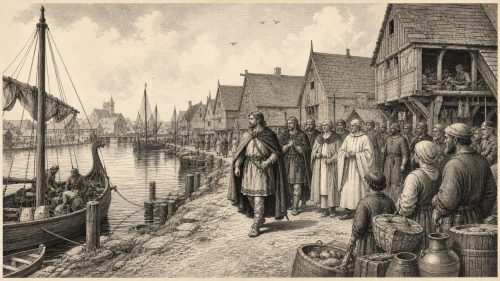
In 1075, Tairdelbach Ua Briain, king of Munster, led a broad coalition northwards seeking hostages from Airgíalla and Ulaid, but his heir Muirchertach was defeated at Ard Monann near Ardee, exposing limits to Ua Briain power. Nevertheless, Tairdelbach secured Dublin after Gofraid's exile and Domnall's brief reign, installing Muirchertach in the commercially and strategically vital Hiberno-Norse city. Annals also record deaths among northern rulers and churchmen, fires at Louth and Clonard, and Dublin's ecclesiastical links with Canterbury. Rural farming, woodland resources and urban craft and trade underpinned political and religious institutions; an abundant mast crop highlighted the economy sustaining them.
Read Article

Archived: 26 September 2026
Abstract
In 1074, Ireland’s annals emphasised ecclesiastical affairs, dynastic violence and unstable political authority rather than major warfare. Tairdelbach Ua Briain maintained an expanding, but negotiable, supremacy over Munster, Leinster, Dublin and other regions following earlier campaigns. Donnchad Ua Cellaig of Uí Maine and Ragnall Ua Madadáin, heir of Ailech, were killed amid succession struggles. On 6 May, fire devastated Armagh’s churches, bells and settlement divisions. After Bishop Dúnán’s death, Dublin sent Gilla Pátraic to Canterbury, where Lanfranc consecrated him and received his obedience. Clerical deaths across Ireland reveal interconnected churches whose religious, economic and social roles sustained wider local communities.
Read Article

Archived: 26 September 2026
Abstract
In 1071, Diarmait mac Máel na mBó’s southern Irish dominance weakened after dynastic losses, while his ally and foster-son, Tairdelbach Ua Briain of Munster, increasingly supplied the military force behind their authority. Tairdelbach took Leinster and Mide hostages for Diarmait, raided midland rivals, and mobilised Munster to build Shannon bridges at Áth Caille and Killaloe, improving strategic communications. Violence, depositions and killings affected Ulaid, Donegal and the midlands. Kildare, Glendalough and Clondalkin were burned amid Leinster instability. Despite warfare, farming, craft production, trade and ecclesiastical learning continued, as Tairdelbach’s infrastructure, diplomacy and campaigns foreshadowed his rising power in southern Ireland.
Read Article

Archived: 26 September 2026
Abstract
In 1070, Ireland’s fragmented political order was reshaped by dynastic losses, regional expansion and recurrent violence. Murchad, Diarmait mac Maíl na mBó’s heir and Dublin’s ruler, died, while Diarmait’s son Glún Iairn was killed, weakening Leinster’s succession. Tairdelbach Ua Briain of Munster secured hostages in Leinster and eastern Ireland, and Osraige’s king submitted to him. Killings, executions and blinding affected rulers and heirs across Ulster, the midlands and Connacht. Churches remained influential but vulnerable to conflict, notably at Termonn Da-Beóc. Clerical deaths and Clonmacnoise improvements reveal active religious networks. Despite warfare, farming, trade and urban life in Dublin continued there.
Read Article

Archived: 26 September 2026
Abstract
In 1068, Irish annals portray Tairdelbach Ua Briain’s growing ascendancy amid fragmented regional kingship. His rival cousin Murchad Ua Briain was killed during a raid in Tethba, strengthening Tairdelbach’s control of Munster. An ordinance credited to him promised security sufficient for livestock to remain unprotected at night. Visiting Leinster, he acquired Brian Bóruma’s sword and a Saxon royal standard from Diarmait mac Maíl na mBó, reflecting dynastic and Irish Sea politics linked to English exiles. Northern rulers died violently, while Armagh’s successor successfully visited Munster. Church deaths, Clonfert’s disruption, trade, farming and manuscript culture reveal political, ecclesiastical and maritime networks.
Read Article

Archived: 26 September 2026
Abstract
In 1065, Ireland’s fragmented kingdoms saw raids, succession struggles and reprisals. Forces led by Áed Ua Ruairc and Diarmait Ua Cellaig plundered Clonmacnoise and Clonfert, using vessels moved from the western sea to the Shannon. Áed Ua Conchobair of Connacht defeated them, recovered boats and pursued rival dynasties; church chroniclers presented this as saintly judgement. Killings in Ulster, including Donnchad Ua Mathgamna at Bangor, reflected internal conflict and contested sacred authority. In Mide and Munster, further deaths and Murchad Ua Briain’s attack at Kincora exposed political instability. Ecclesiastical obituaries, trade, farming and nut abundance reveal a connected society beyond warfare.
Read Article

Archived: 26 September 2026
Abstract
In 1064, annalists recorded a redistribution of power in Ireland. Donnchad mac Briain, son of Brian Bóruma, was deposed from Munster, travelled penitentially to Rome and died there. His nephew Toirdelbach Ua Briain, backed by foster-father Diarmait mac Máel na mBó of Leinster, secured kingship through campaigns, hostage-taking and cattle raids against southern rivals. Diarmait’s authority embraced Dublin and Irish Sea connections following Echmarcach mac Ragnaill’s death. Northern dynastic deaths affected Telach Óc and Ailech, while Armagh lost its successor of Patrick, Dub dá Leithe. Clerical and scholarly deaths underline the year’s cultural change, while warfare inflicted hardship without unity.
Read Article

Archived: 26 September 2026
Abstract
In 1060, Donnchad mac Briain, weakened by earlier defeats, apparently submitted to Diarmait mac Maíl na mBó of Leinster, transferring treasure and acknowledging his supremacy, though Ireland remained politically fragmented. Diarmait’s family projected power through Dublin and the Irish Sea. Ecclesiastical centres were contested and vulnerable: Armagh’s abbacy provoked armed conflict, Kells and Leighlin burned, and Clonmacnoise suffered a raid. Regional rulers died or were killed, while religious figures, notably Conn na mBocht, were remembered for charity and administration. A plentiful mast crop supported pig husbandry within a rural economy where cattle, churches and trading towns underpinned wealth and authority.
Read Article

Archived: 26 September 2026
Abstract
In 1058, Toirdelbach Ua Briain and Diarmait mac Máel na mBó led Leinster, Osraige and Hiberno-Norse forces against Munster’s Donnchad mac Briain. Limerick was burned, perhaps by its defenders, and Diarmait defeated Donnchad at Sliabh gCrot in the Galtees, accelerating his decline. Emly’s church and monastic settlement also burned, while churchmen, regional rulers, poets and ascetics figured in annalistic notices. In Mide, Gallbrat Ua Cerbaill was killed amid dynastic rivalry. Dublin crews joined Magnus Haraldsson’s unsuccessful English expedition, demonstrating Irish Sea connections. The fragmented records portray interconnected warfare, religion, commerce and politics across Ireland and neighbouring lands during the year.
Read Article
Archived: 26 September 2026
Abstract
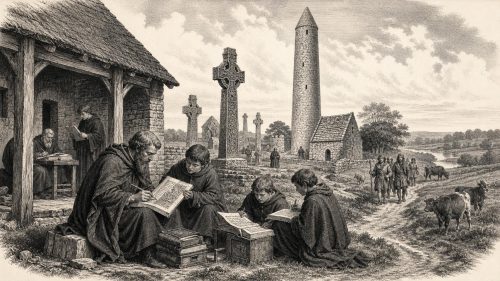
In 1056, Ireland remained divided among competing provincial rulers, as Diarmait of Leinster, Donnchad of Munster, Áed of Connacht and Conchobar of Mide pursued fragile power. Annals record dynastic killings, disputed raids and major cattle seizures, including captives, while a Christmas raid ended in drownings. Churches were influential communities, marked by deaths of prominent clergy, notably Armagh's Áed Ua Forréid. Scholar Flann Mainistrech of Monasterboice died, whereas Marianus Scotus joined Cologne's Irish monastery, illustrating international learned links. Rural farming supported cattle wealth, while Dublin's trade underpinned Leinster. Lightning deaths and storm-related disaster underscored life's vulnerability. Sources vary in reliability, dating.
Read Article

Archived: 26 September 2026
Abstract
In 1053, Irish annals depict widespread warfare, raids and political murder rather than a decisive national conflict. Donnchad mac Briain of Munster faced his nephew Toirdelbach Ua Briain, supported by Connacht, while Diarmait mac Máel na mBó defended Dublin’s interests after yielding hostages to an opposing expedition. Diarmait retaliated in Brega and Mide, taking cattle and captives. Killings, betrayals and raids affected Fermanagh, Lurg, Airgialla and Ulster. Churchmen died and ecclesiastical sites suffered, yet churches sustained administration and learning. Rural cattle-based society and maritime towns endured insecurity. The year foreshadowed Donnchad’s eventual displacement from Munster amid continuing political fragmentation thereafter.
Read Article

Archived: 26 September 2026
Abstract
In 1052, Diarmait mac Máel na mBó, overking of Leinster, captured Dublin after raiding and burning Fine Gall, forcing its Hiberno-Norse ruler, Echmarcach mac Ragnaill, overseas. Control of the port gave Diarmait maritime, commercial and military resources, weakening the position of Munster’s Donnchad mac Briain. Elsewhere, Áed Ua Conchobair ravaged Conmaicne, while conflict claimed regional rulers and Domnall Bán Ua Briain was killed around 1051–52. Ecclesiastical rivalry brought murder at Armagh and a contested abbacy at Emly; prominent clergy and ex-king Bran died. A violent December storm damaged houses and woods. Dublin’s seizure reshaped southern Irish power for decades thereafter.
Read Article

Archived: 26 September 2026
Abstract
In 1047, Ireland endured exceptional winter weather, remembered as the Great Snow, which persisted into March and killed people, livestock and wildlife. Resulting scarcity devastated Ulster, prompting hungry Ulaid groups to seek refuge in Leinster. Political conflict continued: Áed Ua Conchobair killed Niall Ua Ruairc in Corann, strengthening his Connacht kingship amid a longer dynastic feud; northern forces raided Brega; and Muirchertach of Uí Bresail was treacherously slain at Armagh. Ecclesiastical obits recorded leaders, lectors and a Kildare female coarb, while a bishop died on pilgrimage at Iona. The year clearly reveals regional rule, warfare, religious networks and rural vulnerability.
Read Article
Archived: 26 September 2026
Abstract
In 1046, Ireland remained politically fragmented, with regional rulers relying on alliances, military strength and lesser kings’ submission. Art Uallach Ua Ruairc, king of Connacht, was killed by Cenél Conaill, enabling Áed in Gaí Bernaig Ua Conchobair’s succession. Northern, midland and Munster elites also suffered killings, exposing conflict beneath provincial overkingship. Dublin’s inhabitants expelled Ímar mac Arailt and restored Echmarcach mac Ragnaill, linking Irish politics to the Irish Sea world. Ecclesiastical life continued through clerical successions, pilgrimage and Ardfert’s lightning damage. Annals preserve elite events, while farming, trade, churches and local communities sustained everyday life amid raids, obligations and insecurity.
Read Article
Archived: 26 September 2026
Abstract
In 1045, Irish annals depict a politically fragmented island ruled by competing Gaelic dynasties and Hiberno-Norse Dublin. Deaths of regional kings destabilised succession, while Ímar of Dublin killed Ulaid forces and heir Ragnall Ua hEochada on Rathlin. Ulaid retaliated or pressured Dublin by burning Swords and Fingal. Muirchertach Ua Néill’s raid in Brega ended in tidal disaster at Casán Linne. Munster saw aristocratic killings and rivalry beneath Donnchad mac Briain. Churches at Clonfert and elsewhere suffered violence, fire and exactions, despite their influence. A crop failure compounded insecurity, although farming, Dublin trade, monastic institutions and scholarly annal-writing sustained durable networks.
Read Article

Archived: 26 September 2026
Abstract
In 1044 Ireland remained politically fragmented, with provincial kings, local dynasties, Norse-Irish Dublin and influential churches competing through raids, tribute, hostages and violence. Northern rulers avenged the unexplained profanation of Patrick’s Bell by seizing cattle and captives, demonstrating how sacred legitimacy supported political gain. Dublin’s Ímar mac Arailt attacked Patrick’s shrine and campaigned in the north. Clonmacnoise suffered plundering, while later tradition reports restitution by Donnchad mac Briain. Dynastic killings, blinding and regional defeats reshaped alliances across Ireland. Annals also record religious deaths, learning and rural life, revealing cattle, captives and monasteries as central sources of wealth, authority and conflict.
Read Article

Archived: 26 September 2026
Abstract
In 1042, Leinster underwent a decisive political upheaval when Murchad mac Dúnlainge, king of Leinster, was killed at Mag Muilchet. His defeat ended the Uí Dúnlainge dynasty’s effective provincial claim and enabled Diarmait mac Máel na mBó of Uí Chennselaig gradually to establish supremacy, supported by Osraige. Conflict included the burning of Ferns and destructive retaliation at Glenn Uissen, illustrating warfare’s assault on ecclesiastical centres. In Mide, Flann mac Máel-Sechnaill was murdered amid dynastic rivalry. Sitriuc Silkbeard died, symbolising Dublin’s changing Hiberno-Norse era. Church deaths, pilgrimage to Rome, and Ailill of Muckno’s death in Cologne demonstrate Ireland’s European religious connections.
Read Article

Archived: 26 September 2026
Abstract
In 1041, Ireland remained politically fragmented despite Donnchad mac Briain’s claims to wider kingship. Leinster’s struggle between Murchad mac Dúnlainge and Uí Chennselaig brought raids, the death of Domnall Remur, Ferns’s burning, and Diarmait mac Maíl na mBó’s devastating retaliatory attack on Glenn Uisen. Rivalries also produced blinding, killings and sanctuary violations at Timahoe and Kildare, while assassinations, raids and battles disturbed Osraige, northern regions and Munster. Annals also record learned churchmen’s deaths, ecclesiastical organisation and church-building. Cattle raiding underpinned warfare and wealth, although farming, commerce and learning continued. The selective record portrays violence alongside resilient institutions, foreshadowing Diarmait’s dominance.
Read Article




