
Archived: 9 October 2026
Abstract
In 1893, Gladstone’s second Home Rule Bill proposed an Irish legislature within the Union, retaining Westminster supremacy, imperial responsibilities and Irish representation. Despite Commons approval, it was overwhelmingly rejected by the Lords, exposing constitutional limits and intensifying unionist fears. On 31 July, Douglas Hyde, Eoin MacNeill and others founded the non-sectarian Gaelic League in Dublin to revive spoken Irish through classes, publications and branches, amid language decline. The year also reflected religious and social organisation: Archbishop Michael Logue became cardinal, St Mel’s Cathedral was consecrated, Margaret Lyttle began a girls’ club, and the National Labour League highlighted rural workers’ grievances.
Read Article

Archived: 10 October 2026
Abstract
In 1887 Arthur Balfour’s Unionist administration combined coercion with limited land reform amid depressed farm incomes and organised tenant resistance. The Criminal Law and Procedure Act proclaimed districts and outlawed the Irish National League, while the Land Law Act revised protections, rents and purchase provisions. The Plan of Campaign mobilised tenants, notably on the Kingston estate near Mitchelstown. On 9 September, RIC police fired on a crowd, killing Michael Lonergan and mortally wounding John Shinnick and John Casey. The shootings intensified controversy over public meetings and policing. Meanwhile, The Times attacked Parnell, while antiquarian scholarship asserted Ireland’s distinct cultural heritage.
Read Article
Archived: 10 October 2026
Abstract
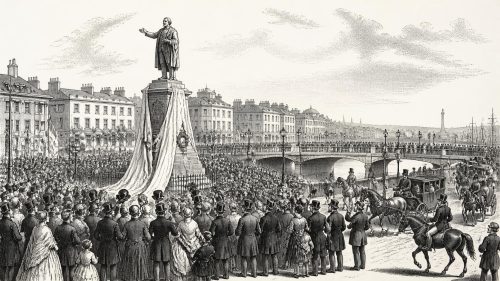
1882 in Ireland combined attempted settlement, assassination, land relief, coercion, injustice, and nationalist reorganisation. Informal negotiations between Parnell and Gladstone’s government secured nationalist releases and promised arrears relief, prompting Forster’s resignation. Days later, Irish National Invincibles murdered Chief Secretary Lord Frederick Cavendish and under-secretary Thomas Henry Burke in Phoenix Park, damaging constitutional nationalism. The government responded with the Prevention of Crime Act and the limited Arrears of Rent Act. At Maamtrasna, inadequate interpretation imperilled Irish-speaking defendants; Myles Joyce was executed and posthumously pardoned. Parnell’s supporters founded the Irish National League, while Dublin unveiled O’Connell’s monument, affirming constitutional public national aspirations.
Read Article




