Archived: 10 October 2026
Abstract
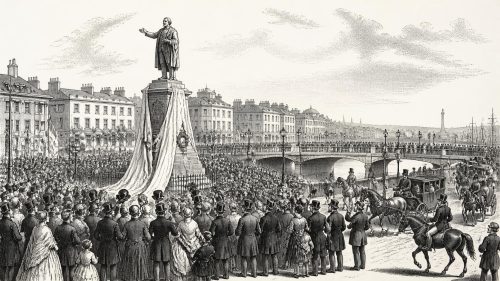
1882 in Ireland combined attempted settlement, assassination, land relief, coercion, injustice, and nationalist reorganisation. Informal negotiations between Parnell and Gladstone’s government secured nationalist releases and promised arrears relief, prompting Forster’s resignation. Days later, Irish National Invincibles murdered Chief Secretary Lord Frederick Cavendish and under-secretary Thomas Henry Burke in Phoenix Park, damaging constitutional nationalism. The government responded with the Prevention of Crime Act and the limited Arrears of Rent Act. At Maamtrasna, inadequate interpretation imperilled Irish-speaking defendants; Myles Joyce was executed and posthumously pardoned. Parnell’s supporters founded the Irish National League, while Dublin unveiled O’Connell’s monument, affirming constitutional public national aspirations.
Read Article
Archived: 11 October 2026
Abstract
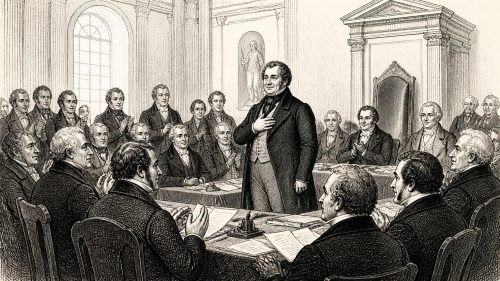
In 1841, Ireland’s census recorded 8,175,124 people, revealing a populous, unequal society where most families occupied modest cottages or single-room cabins and depended heavily on agriculture and potatoes. The general election returned Peel’s Conservatives, while Daniel O’Connell maintained repeal agitation despite restricted franchises and sectarian political division. Dublin’s reformed council elected O’Connell Lord Mayor on 1 November, the first Catholic to hold the office for over 150 years, marking expanded but limited civic participation. Poor Law workhouses embedded institutional relief, inadequately serving widespread vulnerability. Belfast combined industrial growth with confessional cooperation, while the Irish Archaeological Society published texts, reflecting recovery.
Read Article
Archived: 11 October 2026
Abstract
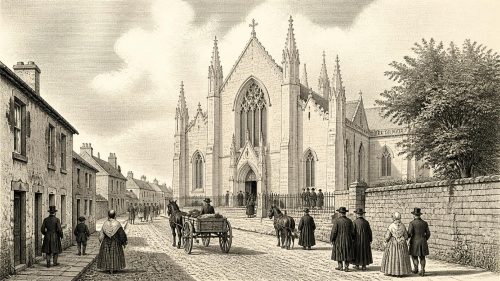
In 1837, Victoria’s accession prompted an Irish general election in which Daniel O’Connell and his allies demonstrated Catholic political organisation despite a restricted, public franchise. Parliament debated Irish poor relief amid widespread insecurity, but legislation followed only in 1838. Tithe grievances, local crop failures, potato dependence and uneven employment exposed rural vulnerability. Tuam’s completed Catholic cathedral symbolised post-emancipation confidence, although religious divisions endured. Samuel Lewis’s dictionary, Ordnance Survey work and Dublin policing measures reflected administrative control. Ireland remained commercially and imperially connected, illustrated by HMS Terror’s repair at Lough Swilly, yet the Union, unequal landholding, poverty and representation remained unresolved.
Read Article
Archived: 11 October 2026
Abstract
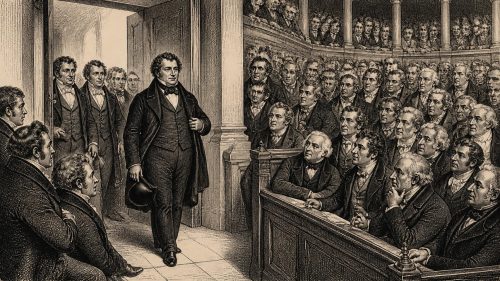
In 1830 Daniel O’Connell took his Westminster seat, embodying Catholic Emancipation after the 1829 Relief Act, while its limitations remained stark. The raised £10 franchise disfranchised many former forty-shilling freeholders, and Ireland remained governed under the Union. O’Connell’s Waterford election followed William IV’s accession and a general election, amid emerging British reform debates. Resistance to tithes supporting the Church of Ireland intensified, particularly late in the year, reflecting religious inequality and rural hardship. Distress, insecure agricultural work and market grievances sharpened tensions. Belfast’s July Orange riots exposed northern sectarian divisions. Contemporary diaries and records reveal political life extending beyond Parliament.
Read Article

Archived: 11 October 2026
Abstract
In 1829, Catholic Emancipation transformed Irish constitutional politics after Daniel O’Connell’s 1828 Clare election and the Catholic Association’s mass mobilisation forced Wellington’s government to act. The Roman Catholic Relief Act, assented to on 13 April, enabled Catholics taking a new oath to enter Parliament and many public offices, though it preserved the Protestant state settlement and excluded them from certain positions. Simultaneously, the Irish election law raised the county freehold qualification from forty shillings to £10, disfranchising many poor Catholic voters. O’Connell’s pre-Act election required a Clare by-election, which he won unopposed. Protestant opposition persisted; Gerald Griffin’s novel reflected society.
Read Article

Archived: 11 October 2026
Abstract
Daniel O’Connell’s decisive County Clare by-election victory at Ennis in 1828 exposed the contradiction of allowing Catholic freeholders to vote while barring Catholic MPs from taking Westminster oaths. Challenging ministerial supporter William Vesey Fitzgerald, O’Connell secured 2,057 votes to 982, aided by priests, organisers and disciplined popular mobilisation. Though unable to take his seat, he forced government and parliament to confront Catholic exclusion. The campaign demonstrated constitutional agitation’s power amid rural poverty, contested education, coercive criminal law, and uneven economic development. Belfast’s new Botanic Garden and expanding trade statistics reflected urban and administrative ambitions, while Clare transformed local politics nationally.
Read Article

Archived: 11 October 2026
Abstract
George IV’s accession in 1820 left Ireland under the Union, with limited property-based representation and Catholic exclusion from Parliament. Henry Grattan’s death removed a leading advocate of Catholic relief. Post-war depression and private-bank failures disrupted credit, trade and livelihoods, while Cork’s North Cathedral burned. The Dublin Gas Act, completion of the Lough Allen Canal, local schooling and the Royal Dublin Society reflected gradual improvement. Irish people also participated in Antarctic exploration and Cape Colony migration. In December, County Dublin freeholders at Kilmainham challenged an official loyal address, condemning the king’s treatment of Queen Caroline and Ireland’s distress, foreshadowing O’Connell’s mobilisation.
Read Article
Archived: 11 October 2026
Abstract
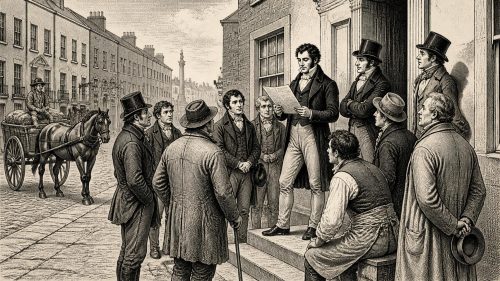
In 1810, nine years after Union, Ireland’s Catholics remained excluded from Parliament and offices despite earlier relief. Henry Grattan’s unsuccessful Westminster initiative exposed disputes over a proposed veto on episcopal appointments. Daniel O’Connell, opposing such control, issued a Dublin circular encouraging county committees to correspond with the Catholic Committee, strengthening constitutional, national organisation. Authorities nevertheless feared representative associations under the Convention Act. Parliament’s Unlawful Oaths (Ireland) Act punished coercive combinations amid rural insecurity. Meanwhile, agriculture dominated livelihoods, while Ulster linen connected production and Belfast commerce to wartime markets. Print, learned culture and Irish historical interests accompanied a contested public life.
Read Article




