Archived: 14 October 2026
Abstract
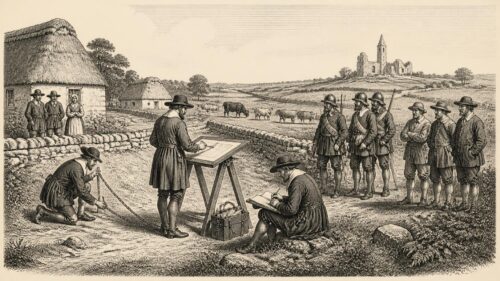
In 1656, Cromwellian Ireland was being reorganised through Sir William Petty’s Down Survey, which recorded land, boundaries and value to distribute forfeited estates among soldiers and adventurers. Field books enabled officials to assess claims while reserving specified public and ecclesiastical lands. This administrative project underpinned confiscation and the uneven, coercive transplantation of Catholic landholders to Connacht and Clare, affecting rural society beyond formal removals. Henry Cromwell sought firmer Protestant civil government amid army and religious divisions, while war with Spain heightened security concerns. Catholic communities endured repression; Quakers faced persecution. Ussher’s death, Ware’s Patrick edition, and Molyneux’s birth reflected continuity.
Read Article
Archived: 16 October 2026
Abstract
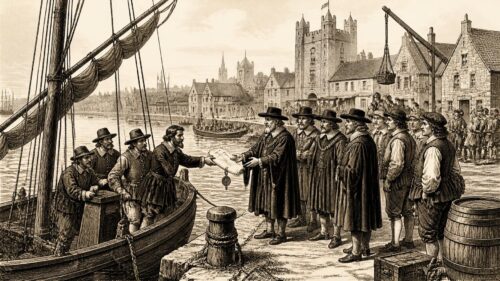
In 1626, Lord Deputy Falkland governed Ireland amid fiscal, religious and landholding tensions. Charles I restored Waterford’s charter, withdrawn after civic officers refused the oath of supremacy, enabling Catholic municipal leadership within Protestant legal constraints for an alleged £3,000. The Crown advanced plantation in Upper Ossory, reshaping contested Fitzpatrick lands. To fund 5,500 troops during war with Spain, Falkland offered proposed Graces, including land-title security, reduced recusancy penalties and officeholding opportunities for Catholics. Protestant bishops, led intellectually by James Ussher, opposed toleration. Aodh Mac Cathmhaoil became Catholic archbishop of Armagh, dying in Rome; Niall Garvach O’Donnell died imprisoned in Tower.
Read Article
Archived: 16 October 2026
Abstract
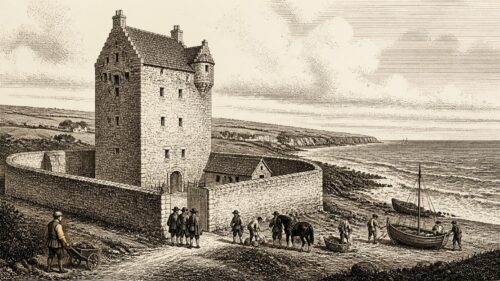
Charles I’s accession in 1625 retained Henry Cary, Viscount Falkland, as lord deputy of an Irish administration dependent on London yet weakened by faction, financial shortages and religious division. Fears of war with Spain exposed decayed coastal defences and unpaid troops; Falkland’s cess shifted military costs onto communities. James Ussher became archbishop of Armagh, strengthening the Protestant establishment despite enduring Catholic networks and no settlement on toleration. Oaths imposed on Connacht officeholders demonstrated administrative expansion. Land disputes after Robert Ponte’s killing in Wicklow illustrated plantation pressures. Ballygally Castle reflected continuing settlement in Ulster, while Moryson’s writing preserved conquest-era attitudes enduring.
Read Article

Archived: 16 October 2026
Abstract
In 1624, Lord Deputy Falkland’s government used proclamations to extend royal control over Irish religion, commerce, arms, dress and settlement, although enforcement proved uneven. A January order expelling Catholic clergy was soon suspended, revealing resilient networks sustained by patrons and continental links. Regulations on logwood, cattle markets, customs, weights and measures sought more governable trade and communities. Ulster policy balanced Protestant plantation ambitions with dependence on Irish tenants, while reforms targeted deficiencies in the Londonderry scheme. Elite succession and peerage reinforced crown connections. Ussher and Messingham mobilised Irish Christian history for Protestant and Catholic claims, amid continuing Gaelic cultural debate.
Read Article

Archived: 16 October 2026
Abstract
In 1623, Lord Deputy Viscount Falkland sought to reduce Irish administration’s costs while reinforcing royal control over revenue, land and religion. Correspondence recorded poverty and efforts to improve customs income. June orders promoted Protestant conformity through oaths, regulated school staff and action against recusants, though obedience remained uneven. Malcolm Hamilton’s consecration as Church of Ireland archbishop of Cashel demonstrated reliance on Protestant networks shaped by Ulster settlement; James Ussher’s republished scholarship supported confessional claims. In October, commissioners investigated timber waste in crown-claimed Ranelagh, linking woodland, survey, law and income. These measures reveal tensions beneath apparent peace, not a settled kingdom.
Read Article

Archived: 16 October 2026
Abstract
In 1622, James I’s Irish Commission investigated administration, revenue, courts, church provision, military costs, landholding and plantation policy during the replacement of Lord Deputy Oliver St John by Viscount Falkland. Commissioners documented Ulster’s plantation, where British settlement, construction and Protestant institutions often fell short, while Irish tenants remained important. Complaints revealed insecurity among Gaelic landholders and elites. Falkland arrived in September amid demands for economy and authority. At his inauguration, Bishop James Ussher urged enforcement against recusancy, provoking Catholic opposition and criticism within the Church of Ireland. The year exposed financial weakness, contested power, incomplete colonisation and persistent religious division.
Read Article
Archived: 16 October 2026
Abstract
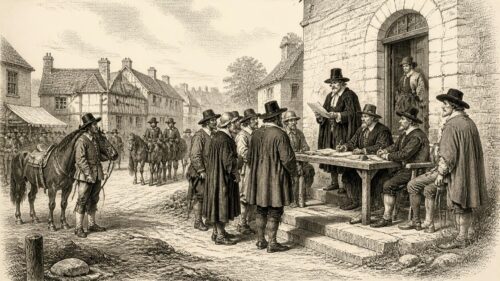
In 1621, Ireland remained unsettled despite the absence of war, as Crown policies on land, religion, revenue and loyalty generated grievances. Parliamentary criticism of Deputy Oliver St John, together with the Pale gentry’s petition, prompted investigations leading towards the Commission of 1622. Plantation patents and the Crown inquest asserting title to Upper Ossory, including Offerlane, extended ambitions beyond Ulster. Preparations to inspect the Ulster Plantation exposed doubts about settlement and administration. James Ussher’s advancement to Meath symbolised strengthened Protestant authority amid Catholicism. Galway’s detention of a privateering vessel revealed Atlantic diplomatic entanglements, while reports of starlings reflected contemporary providential anxieties.
Read Article
Archived: 16 October 2026
Abstract
In 1615, Chichester’s government confronted the abortive Macosquin conspiracy amid Ulster Plantation’s insecure transformation. Alleged Gaelic plotters lacked arms, coordination and foreign support, yet officials feared renewed war and used torture, trials and executions; eleven of seventeen defendants were acquitted. Plantation surveys revealed incomplete settler obligations and continuing dependence on Irish tenants, while landholding and local life were nonetheless changing profoundly. The final 1613 parliament passed a highways measure before dissolution, as proclamations regulated markets and currency. Church convocation adopted 104 strongly Calvinist Irish Articles, probably shaped by James Ussher, while visitation exposed the established church’s weak reach. Coercion persisted.
Read Article




