
Archived: 8 October 2026
Abstract
In 1955, Ireland faced emigration, unemployment and rural decline under John A. Costello’s coalition government, despite claims of economic improvement. Farmers established the National Farmers’ Association in Dublin, seeking stronger influence over agricultural policy. Ireland joined the United Nations on 14 December, gaining an independent diplomatic platform while retaining neutrality and confronting partition. The BBC’s Divis transmitter introduced television broadcasting to Northern Ireland, extending media connections across the island. Radio Éireann launched its first soap opera, theatre provoked controversy and presented Beckett, and fire destroyed Cork Opera House. The year balanced domestic insecurity, institutional development, cultural change and international assertion.
Read Article

Archived: 8 October 2026
Abstract
Ireland in 1954 experienced political change, economic pressure, religious mass devotion and cultural innovation. Fine Gael’s John A. Costello led a minority inter-party government after Fianna Fáil’s electoral losses, amid concerns over employment, emigration, farming and housing. New legislation addressed development, land, housing and health, while Tayto and the Evening Press began trading. Marian Year pilgrimages made Knock a major national destination. The Gough Barracks arms raid signalled renewed republican militancy. Michael Manning’s execution at Mountjoy became the state’s last. Brendan Behan’s The Quare Fellow, Christy Brown’s My Left Foot and the first modern Bloomsday reflected increasingly challenging cultural voices.
Read Article

Archived: 8 October 2026
Abstract
In 1951, Noel Browne’s resignation over the Mother and Child Scheme exposed conflicts between social reform, Catholic authority, medical interests and governmental caution. The inter-party government then fell amid agricultural disputes; May’s election returned Fianna Fáil as largest party, enabling Éamon de Valera to lead a minority administration. The census recorded 2,960,593 people, as emigration largely offset natural increase amid economic insecurity. Welfare pensions rose, agricultural workers gained half-holidays, and electrification and peat development continued. The Arts Act established An Chomhairle Ealaíon. In Northern Ireland’s Westminster poll, Unionists retained dominance despite Nationalist victories and a narrowly contested West Belfast seat.
Read Article
Archived: 8 October 2026
Abstract
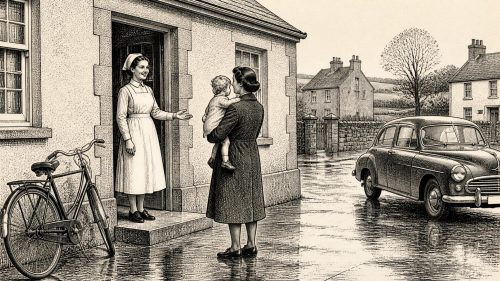
In 1950, Ireland combined republican independence with economic dependence on Britain, persistent poverty, emigration and partition. Dr Noël Browne’s June memorandum proposing free healthcare for mothers and children exposed conflict between universal welfare, medical interests, Catholic authority and parental rights, foreshadowing his 1951 resignation. Tuberculosis remained severe despite expanded State treatment. Legislation reorganised social welfare, improved agricultural workers’ rights, addressed housing, and strengthened transport and industrial development. Ireland appointed its first ambassador to London and signed the European Convention on Human Rights. Cultural events included Alfred Chester Beatty’s arrival and George Bernard Shaw’s death. Social and economic problems remained unresolved.
Read Article
Archived: 8 October 2026
Abstract
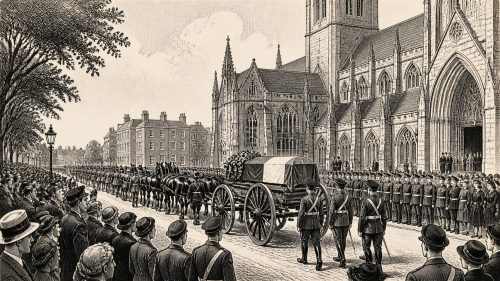
In 1949 Ireland became a republic, ending the Crown’s remaining external role, while Britain’s Ireland Act reinforced Northern Ireland’s constitutional position within the United Kingdom. Southern political leaders united publicly against partition, but efforts to link reunification with NATO membership failed. Post-war recovery remained uneven, with shortages, emigration, rural poverty and extensive state regulation continuing alongside electrification, statistical development and welfare administration. Housing, health and public services expanded gradually. Douglas Hyde’s funeral honoured a founder of cultural nationalism whilst exposing denominational divisions in public ceremony. The year combined republican assertion with enduring partition, social constraints, institutional growth and cultural ambition.
Read Article

Archived: 8 October 2026
Abstract
In 1948, Fianna Fáil lost its Dáil majority after sixteen years, enabling John A. Costello to lead the First Inter-Party Government, supported by Clann na Poblachta, Labour and others. The coalition addressed post-war housing, welfare, health, employment and agricultural trade, while Ireland joined European recovery co-operation and concluded a British trade agreement. Costello’s September Canadian announcement preceded the Republic of Ireland Act, enacted in December. Although effective only in 1949, it repealed the External Relations Act, ended the Crown’s remaining external role and authorised presidential functions. Partition remained unchanged, while An Taisce’s foundation and Olympic return suggested national civic renewal.
Read Article




