

Related Archive: Ormond Bridge

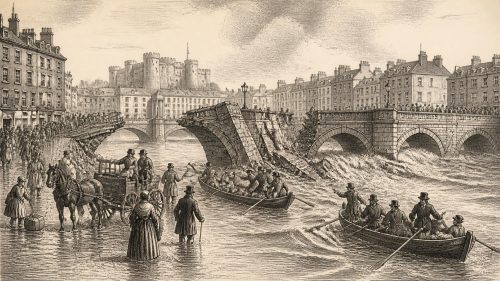
Ormond Bridge’s Winter Torrent

Ormond Bridge’s Winter Torrent

Archived: 11 October 2026

Abstract

In 1802, Ireland adjusted to Union government as its first Westminster election exposed restricted representation and Catholic exclusion. The Treaty of Amiens briefly eased fears of French intervention, yet official vigilance persisted and Robert Emmet’s return signalled surviving revolutionary ambition. Social initiatives addressed poverty and disease: Edmund Rice began educating poor Catholic boys in Waterford, Cork opened a fever hospital, Dublin’s dispensary aided the poor, and Belfast’s library gained Linen Hall premises. In December, torrential rain flooded Dublin, bursting rivers and destroying Ormond Bridge. These events revealed a society experiencing constitutional change, unresolved grievances, voluntary reform, urban hardship and vulnerability.

Read Article

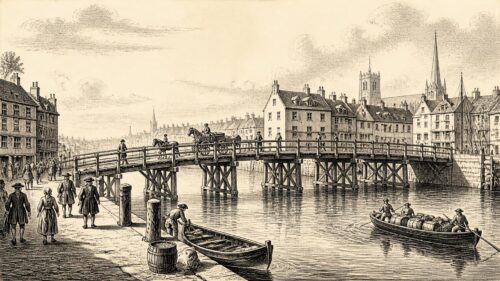
Ormond Bridge, Arran’s Deputyship

Ormond Bridge, Arran’s Deputyship

Archived: 14 October 2026

Abstract

In 1682, James Butler, duke of Ormond, retained the lord lieutenancy while his son Richard, earl of Arran, governed from Dublin Castle as lord deputy, maintaining Butler influence under Whitehall’s authority. No parliament met, leaving administration to council, courts, revenue and patronage. Dublin expanded with timber Ormond and Arran Bridges across the Liffey, improving commerce and commemorating the family. Appointments included William Sheridan as bishop of Kilmore and Ardagh, John Lyndon as Third Serjeant-at-Law, and baronetcies. Beneath stability lay Protestant dominance, Catholic exclusion, land settlements, debt disputes and confessional tensions. Ormond’s dukedom affirmed favour but emphasised Ireland’s dependence on court.

Read Article

