


Related Archive: Poynings’ Law

Hanoverian Succession

Hanoverian Succession

Archived: 31 October 2026

Abstract

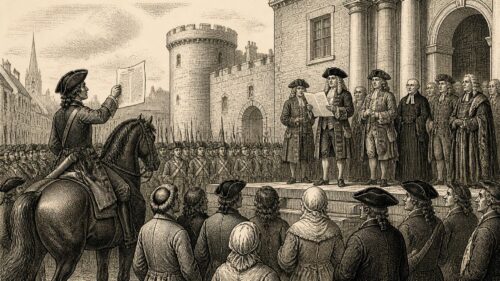
In 1714, Ireland experienced the formal succession from Queen Anne to George I, while Protestant rule remained insecure and unequal. A prorogued, restricted parliament left Dublin Castle dependent on proclamations, magistrates, clergy and military networks. Before and after Anne’s death, officials targeted robbery, Catholic arms and clergy, Jacobite recruitment, non-jurors, seditious print and rural violence, revealing fears rather than evidence of rebellion. George was proclaimed across Ireland on 6 August, followed immediately by Catholic disarmament and liturgical changes. Notices also regulated peace, foreign coin and public worship. The year’s records show Hanoverian authority consolidated through ritual, surveillance and penal control.

Read Article

Poynings Mission

Poynings Mission

Archived: 19 October 2026

Abstract

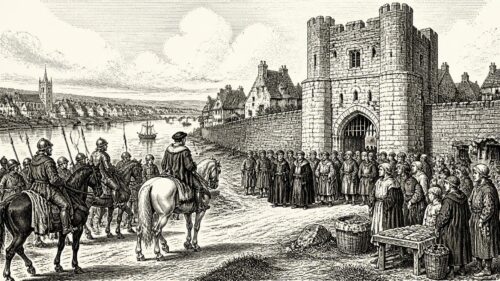
In 1494 Henry VII sent Sir Edward Poynings to Ireland to strengthen Tudor control, counter Yorkist support and reduce reliance on Gerald FitzGerald, earl of Kildare. Landing in October, Poynings led an Ulster expedition, securing submissions from O’Hanlon and Magennis, but relations with Kildare deteriorated. His Drogheda parliament, opened in December and continuing into 1495, began legislation, including the measure later called Poynings’ Law, restricting Irish parliamentary initiative. Elsewhere, regional lordships remained autonomous: dynastic killings, sieges around Sligo, conflicts in Fermanagh and Cavan, raiding and hostage-taking continued. Church, trade and daily life were shaped by warfare, contested authority and insecurity.

Read Article

