Archived: 19 October 2026
Abstract
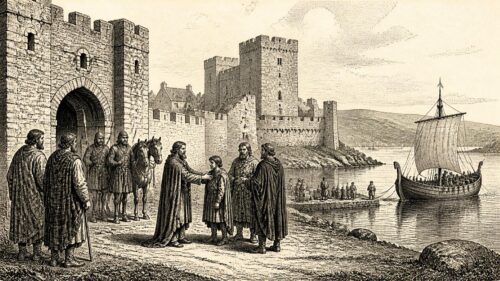
In 1507, Ireland comprised overlapping systems of royal lordship, Gaelic dynasties, churches, learned families and corporate towns. The Annals of Ulster, strongest for the north, records Henry Ó Néill’s death, an Ó Domhnaill attack on Dungannon, and conflict at Carrickfergus, where Niall Ó Néill was captured, released after sixteen hostages were demanded, then seized the castle and mayor. Clogher monastery and Achadh Beithe church burned, while clerics, a brehon and several poets died. Kildare exercised limited deputy authority, and Galway maintained civic government. These events reveal power secured through kinship, pledges, warfare, learning, patronage and institutional resilience across the island.
Read Article
Archived: 19 October 2026
Abstract
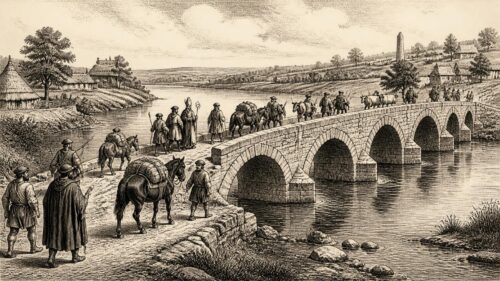
In 1506 Turlough O’Brien, his brother Donnell and the bishops of Killaloe and Kilfenora built a bridge at Port Croise across the Shannon, demonstrating Thomond’s resources, ecclesiastical partnerships and strategic influence near Limerick. Meanwhile, Gerald FitzGerald’s lord-deputyship remained powerful but limited, as Henry VII contemplated an unrealised expedition. Dublin civic authorities defended Dominican hay against Kilmainham’s prior. Northern Ireland saw cattle raids, succession struggles, killings and Scottish mercenary involvement, devastating communities. Annals also record church officials, merchants, nobles and scholar Páidín Ó Maol Chonaire alongside lightning damage at Trim. Together these events reveal medieval Ireland’s regional, interconnected and contested order.
Read Article

Archived: 19 October 2026
Abstract
In 1497, Ireland remained divided among competing Gaelic and Anglo-Irish lordships despite Henry VII’s nominal authority and Kildare’s Dublin administration. Perkin Warbeck briefly landed at Cork but gained no support before departing for Cornwall. In the south-east, Piers Ruadh Butler killed Sir James Ormond, strengthening his territorial position. Conn Ó Domhnaill succeeded in Tír Chonaill in May, yet succession conflict, defeat and invasion brought his death in October. Local peace-making and raiding continued elsewhere. A severe island-wide famine caused hunger, mortality and extraordinary food prices for communities. Religious developments included regulation of Lough Derg pilgrimage and Franciscan reform at Carrickfergus.
Read Article
Archived: 19 October 2026
Abstract
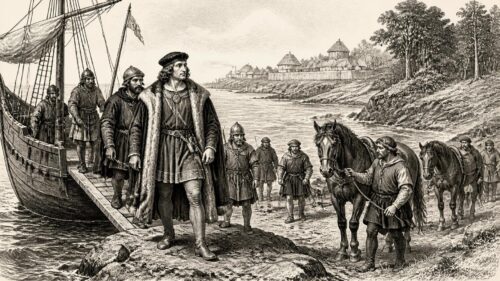
In 1496 Henry VII restored Gerald FitzGerald, eighth earl of Kildare, as lord deputy, ending the immediate crisis of direct Tudor rule. Landing at Howth with royal favour and a new marriage, Kildare accepted conditions including Poynings’ Law, while his heir remained in England. Efforts to dig defensive boundaries around the Pale reflected insecure frontier government. Elsewhere, MacMahon feuds in Oriel, O’Donnell conflicts and regional successions demonstrated fragmented authority. Severe weather destroyed crops and cattle, causing widespread dearth and disrupting husbandry. Annals nevertheless recorded musicians, learned families and religious patrons, revealing cultural prestige amid warfare, political competition and agricultural hardship.
Read Article

Archived: 19 October 2026
Abstract
In 1495, Sir Edward Poynings sought to strengthen Henry VII’s authority in Ireland through the Drogheda parliament, whose measures restricted Irish legislative initiative, while arresting the eighth earl of Kildare; his attainder was reversed later that year. Perkin Warbeck, backed by Desmond and Cork interests, failed after Waterford’s eleven-day land-and-sea defence, preserving a loyal harbour. Elsewhere, Aodh Ruadh Ó Domhnaill’s Scottish alliance and warfare around Sligo, conflicts in Breifne, and lordly rivalries demonstrated fragmented power. Church councils, monasteries, guesthouses, learned families and physicians reveal institutions supporting society. The year exposed Tudor ambitions but confirmed fragmented Irish power across the island.
Read Article
Archived: 19 October 2026
Abstract
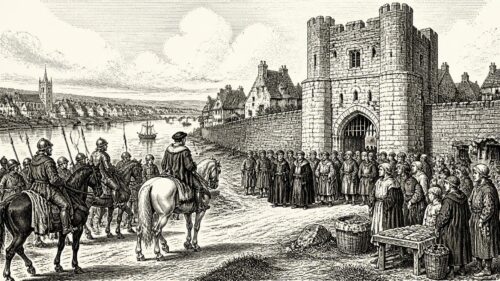
In 1494 Henry VII sent Sir Edward Poynings to Ireland to strengthen Tudor control, counter Yorkist support and reduce reliance on Gerald FitzGerald, earl of Kildare. Landing in October, Poynings led an Ulster expedition, securing submissions from O’Hanlon and Magennis, but relations with Kildare deteriorated. His Drogheda parliament, opened in December and continuing into 1495, began legislation, including the measure later called Poynings’ Law, restricting Irish parliamentary initiative. Elsewhere, regional lordships remained autonomous: dynastic killings, sieges around Sligo, conflicts in Fermanagh and Cavan, raiding and hostage-taking continued. Church, trade and daily life were shaped by warfare, contested authority and insecurity.
Read Article
Archived: 19 October 2026
Abstract
In 1493, Conn Ó Néill’s treacherous killing by his brother Henry Óg triggered a contested succession in Tír Eóghain. Backed respectively by Ó Domhnaill and by Uí Chatháin and Uí Mhealláin, Domhnall Clárach and Henry Óg fought at Glasdromainn, where Henry prevailed, though instability continued. Ó Domhnaill’s later Ulster hosting ravaged territories but won no settlement. Across Ireland, killings, raids, burnings and changes of lordship affected Leinster, Offaly, Breifne and Connacht. Gerald FitzGerald, earl of Kildare, visited Henry VII amid political scrutiny. Annals also recorded deaths of clerics, poets and aristocratic women, revealing cultural ties and piety during the year.
Read Article
Archived: 19 October 2026
Abstract
In 1492, Ireland endured famine, disease and conflict amid Henry VII’s attempt to weaken Gerald FitzGerald, earl of Kildare. Suspected because of Yorkist links and Perkin Warbeck’s Cork landing, Kildare was replaced in government by Archbishop Walter Fitzsimons and Sir James Ormond. The changes intensified rivalries across the Pale, Leinster, the midlands and East Breifne, where Gaelic and Anglo-Irish lords fought, raided and contested succession. Poor weather damaged grain before famine; a hot summer and sweating sickness compounded insecurity. Ulster saw truces, killings, imprisonments and raids. Ecclesiastical life continued, while Thaddeus MacCarthy died returning from Rome. Central authority remained fragile.
Read Article
Archived: 19 October 2026
Abstract
In 1490, Ireland’s fragmented political order was shaped by local warfare, disputed succession and negotiated authority. Feidhlimidh Fionn Ó Conchobhair Ruadh defeated rival kinsmen near Croghan before dying, prompting Ruaidhrí’s election and further instability in Connacht. Raids, cattle seizures and crop destruction burdened communities. In Ulster, Ó Néill factions fought over castles, Aodh Óg Ó Domhnaill seized Ballyshannon, and Conn Ó Néill and Aodh Ruadh Ó Domhnaill maintained an armed stalemate. Henry VII summoned Kildare, whose indispensability reflected Dublin’s limited reach. Papal appointments, learned deaths, maritime links and a cautiously reported earthquake reveal an interconnected, unsettled society across the island.
Read Article
Archived: 19 October 2026
Abstract
In 1486 Ireland remained politically fragmented, with Kildare dominating the English lordship around Dublin while Gaelic and Anglo-Irish powers contested local authority. Ulster saw raids, killings, captures and burnings among Maguire, MacMahon, Ó Néill and allied groups, including the capture of a castle at Belfast. Connacht experienced disputed kingship, lordship successions and a significant battle involving Aodh Ruadh Ó Domhnaill and Mac William. Archbishop Octavian de Palatio convened a northern synod at Drogheda, while Roland FitzEustace founded an Observant Franciscan friary near Kilcullen. Abundant apples contrasted with severe salt scarcity and high horse prices, linking conflict, markets and everyday life.
Read Article





