
Archived: 26 September 2026
Abstract
In 1143 Tairdelbach Ua Conchobair, Connacht’s dominant king, deposed Murchad Ua Máelshechlainn of Mide despite sacred guarantees, installed his son Conchobar, and provoked clerical condemnation. His authority was equally strained by the imprisonment of another son, Ruaidrí, despite ecclesiastical sureties, and by Munster’s contested incursion into south Connacht. In the north, Muirchertach Mac Lochlainn was temporarily expelled. Annals also record raids, destructive fires at major settlements, and church land transactions. The year revealed intertwined kingship, ecclesiastical power and local economies, while highlighting unreliable chronologies and conflicting annalistic accounts. Religious reform advanced through Mellifont and St Malachy alongside older sacred customs.
Read Article
Archived: 29 October 2026
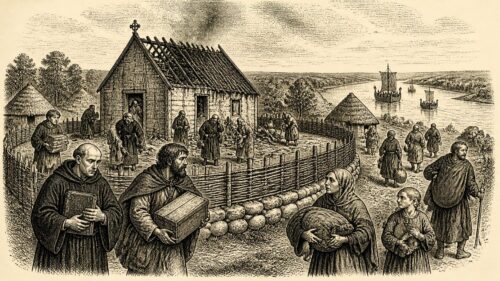
Abstract
In 836, annalistic evidence depicts Ireland facing overlapping political, ecclesiastical, raiding and environmental pressures. Feidlimid mac Crimthainn of Munster seized and blockaded Kildare, apparently supporting Diarmait’s rival claim to Armagh against Abbot Forannán. Diarmait meanwhile carried Patrick’s law and insignia through Connacht, asserting Patrician authority. Scandinavian raiders plundered and partly burned Kildare, attacked southern Brega, devastated Connacht and defeated the northern Déisi. Connacht also suffered internal conflict at Drong. A remarkable abundance of nuts and acorns obstructed streams. Death notices for leading clerics reveal institutional continuity amid disruption, without suggesting permanent Viking settlement or Irish political unity at this time.
Read Article





