Archived: 26 September 2026
Abstract
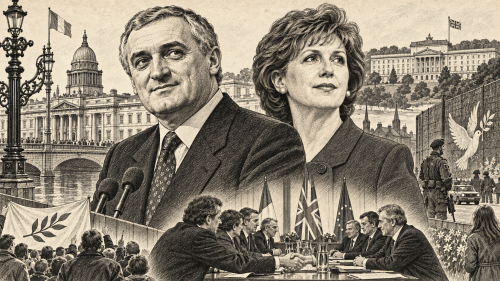
In 1997, Ireland underwent major political, social and economic change. Bertie Ahern became Taoiseach after Fianna Fáil formed a coalition with the Progressive Democrats, as rapid growth and falling unemployment strengthened the emerging Celtic Tiger. Divorce became legally available under the 1996 Act, reflecting changing social attitudes. The IRA restored its ceasefire, enabling Sinn Féin to join Stormont talks chaired by George Mitchell, despite unionist opposition. Mary McAleese, Belfast-born, was elected President and promoted reconciliation through “Building Bridges”. European integration, investment and social partnership supported expansion, though benefits were uneven. These developments established conditions for following year’s Good Friday Agreement.
Read Article
Archived: 26 September 2026
Abstract
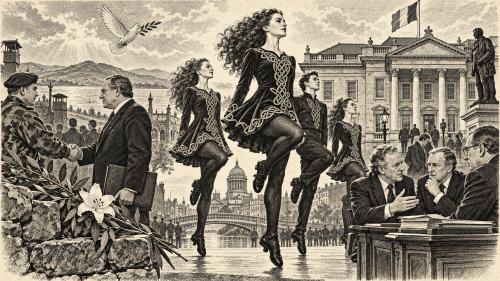
In 1994 Ireland underwent major political, cultural and economic change. Riverdance, premiered during Dublin’s Eurovision interval, transformed Irish dance into a globally successful expression of modern cultural confidence. The IRA’s August cessation of military operations, followed by an October loyalist ceasefire, reduced organised violence and created opportunities for negotiations, though disarmament, constitutional issues and political participation remained unresolved. Taoiseach Albert Reynolds, influential in advancing the peace process, resigned after the Fianna Fáil–Labour coalition collapsed amid controversy over Brendan Smyth and Harry Whelehan. John Bruton then led a Fine Gael–Labour–Democratic Left coalition. Meanwhile, falling unemployment, investment and exports signalled national recovery.
Read Article
Archived: 26 September 2026
Abstract
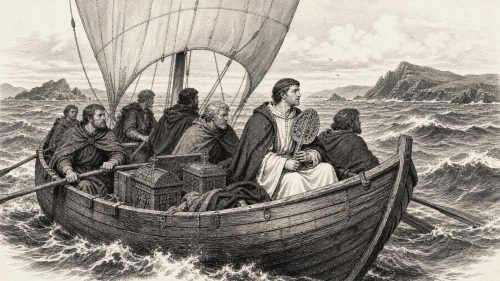
In 1034, Ireland lacked an uncontested high king, as regional dynasties, churches and maritime networks shaped a fragmented political landscape. Donnchad mac Briain of Munster ravaged Osraige, challenging its ruler’s expanding Leinster authority, while Flaithbertach Ua Néill resumed control of Ailech after his son’s death. Killings and treachery destabilised Connacht, Brega, Tethba and neighbouring regions. Ecclesiastical losses included leading figures at Cork, Mungret and Clonmacnoise, and Kells’s lector drowned returning from Scotland with companions and relics. Amlaíb, Dublin’s royal pilgrim, was killed en route to Rome. Annals reveal elite conflict and religious connections, while rural communities bore warfare’s economic burdens.
Read Article




