
Archived: 15 October 2026
Abstract
In 1640, Ireland remained formally peaceful, but Charles I’s war against Scotland exposed mounting political divisions. Parliament granted four subsidies and discussed an enlarged army, then challenged the government’s methods of taxation and collection. Christopher Wandesford, succeeding Strafford as lord deputy, lacked his authority and repeatedly prorogued parliament. The Commons’ November remonstrance denounced Strafford’s arbitrary administration, monopolies, financial exactions and land policies, linking Irish grievances to his Westminster impeachment. Wandesford’s removal of parliamentary journal entries worsened distrust. His death in December, followed by Bishop John Atherton’s execution, weakened government further. Theatre and Gaelic scholarship continued amid crisis, foreshadowing 1641’s upheaval.
Read Article
Archived: 16 October 2026
Abstract
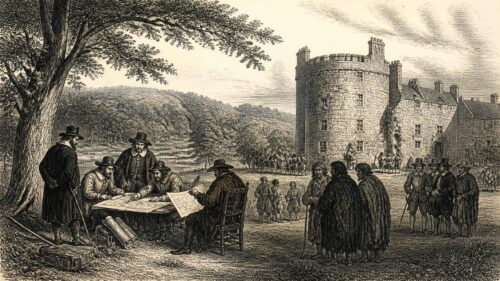
In 1637 Thomas Wentworth’s administration strengthened royal control in Ireland through ceremony, land investigations, economic regulation and institutional reform. His provincial progress projected authority, while the Commission for Defective Titles unsettled proprietors and enabled Christopher Wandesford’s crown-backed acquisition of Castlecomer, displacing the Brennan community. Proclamations regulated cloth, currency, land titles and licensed trade, supporting revenue and English commercial standards. Dublin gained building projects and a chartered Goldsmiths’ Company; Trinity received Laudian statutes. Church discipline pressured Presbyterians, despite William Bedell’s Irish-language work. Meanwhile, Mícheál Ó Cléirigh and Franciscan patrons sustained Gaelic Catholic scholarship through Leuven. Apparent order masked grievances and insecurity.
Read Article
Archived: 16 October 2026
Abstract
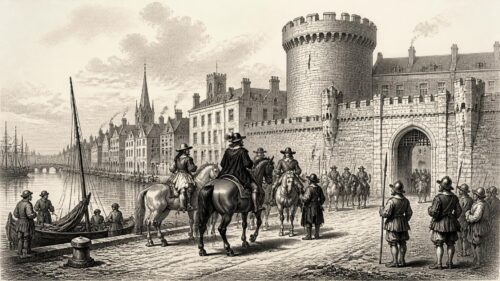
In 1633 Thomas Wentworth arrived as Charles I’s lord deputy, replacing interim rule by the lords justices and initiating a centralised Irish administration. Facing heavy debts and limited revenue, he prioritised customs, trade regulation, provincial accounts and a self-financing government, while cautiously managing Catholic and Protestant interests. He promoted allies, including Christopher Wandesford, John Bramhall and the earl of Ormond, and prepared for a future parliament. Church developments included St Columb’s Cathedral’s completion and inquiries into ecclesiastical resources. Meanwhile, the Four Masters continued preserving Gaelic history in Donegal. The year established stronger royal direction amid confessional, social and cultural divisions.
Read Article





