Archived: 30 October 2026
Abstract
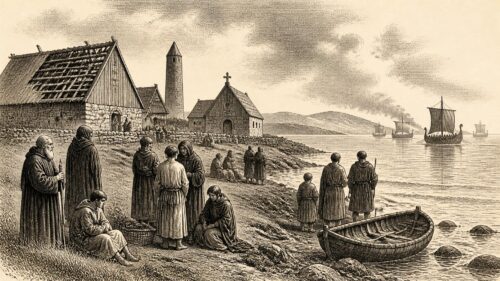
In 806, though annalistic dating varies, Ireland experienced pestilence, political upheaval, ecclesiastical losses and attacks on religious sites. A great mortality was recorded alongside abundant woodland mast, without identifying the disease. Áed Oirdnide promulgated Patrick’s law, reinforcing links between royal authority and Armagh, while Fínshnechtae regained Leinster and Flaithnia of Uí Fhailgi was killed. Leading churchmen died, and Tír dá Glas was burned for unknown reasons. Most notably, pagan seaborne raiders killed sixty-eight members of Iona’s Columban community. The massacre exposed monasteries’ maritime vulnerability, although Iona and its Irish-connected Columban network survived and remained influential throughout the Irish Sea world.
Read Article
Archived: 31 October 2026
Abstract
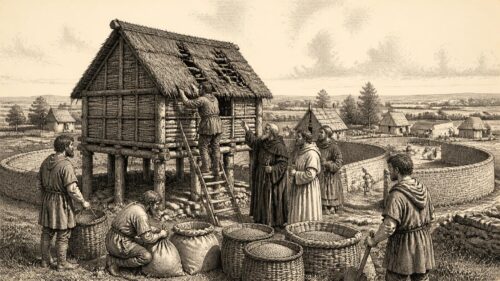
In 751, Irish annals recorded regional political and ecclesiastical change rather than a national event. Half the stored grain at Clonard, a major Meath monastery, was destroyed in uncertain circumstances, exposing the dependence of religious communities upon agricultural production, estates and redistribution. Flann of Uí Fhailgi and Fergus of southern Brega died, creating potential succession openings without recorded conflict. Numerous abbots, bishops, rulers and learned figures also died across Ireland, illustrating the reach of connected churches and monastic networks. The evidence does not establish famine, epidemic, warfare or Viking activity. Instead, 751 reveals fragmented kingship, clerical influence and material vulnerability.
Read Article
Archived: 31 October 2026
Abstract
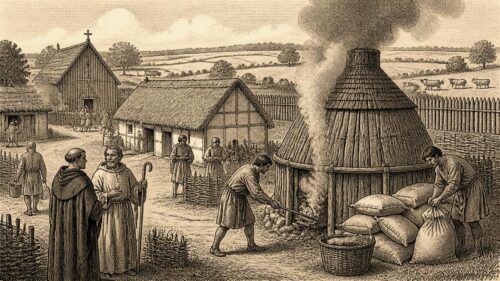
In 750 CE, the Annals of Ulster recorded that half the grain stores at Cluain Ioraird, or Clonard, County Meath, burned in a kiln or drying-house. The cause, quantity lost and consequences remain unknown, but the notice demonstrates the importance and vulnerability of a church settlement dependent on food, labour and reserves. Clonard, an established midland church linked later with learning, operated within networks of land, obligation and regional power. That year also saw the deaths of kings of Uí Fhailgi and southern Brega, illustrating fragmented political authority. The fire reveals material foundations supporting religious life, hospitality and institutional survival.
Read Article


