Archived: 26 October 2026
Abstract
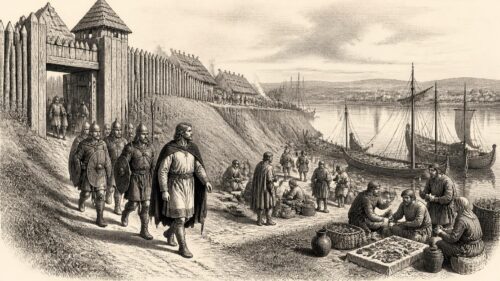
For Ireland, 979 is a year best approached through a small but unusually revealing cluster of annalistic notices. No surviving source supplies a continuous narrative, and none explains every motive or consequence. Yet the recorded capture of Domnall Claen, king of Leinster, by the foreigners of Dublin exposes the political weight of the Hiberno-Norse town at the mouth of the Liffey. Deaths and killings among rulers in Offaly, Dál Araide and Cenél Conaill show, at the same time, that power remained fragmented across many regional kingdoms. Notices of a Kildare church leader, a Clonmacnoise scholar-cleric and a foremost man of
Read Article
Archived: 26 October 2026
Abstract
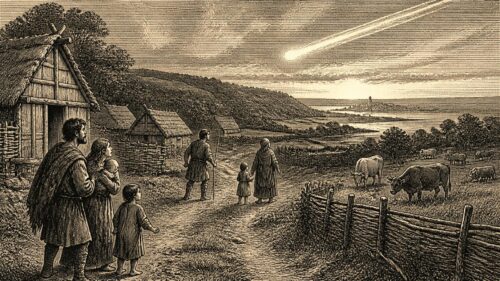
Conventionally assigned to 961, though annalistic chronologies differ, the year is chiefly marked by a reported fiery arrow travelling across Leinster from the south-west towards Áth Cliath, killing people and livestock. Its nature and stated thousand deaths remain unverifiable, but the notice records an exceptional environmental shock affecting agrarian communities and Dublin’s hinterland. The annals also note deaths of rulers in Uí Briúin Seóla, Dartraige and Cashel, the latter two killed by their own people, revealing unstable regional lordship. Ecclesiastical leaders at Clogher, Cork and Lismore died, underscoring churches’ institutional importance. Together, the entries depict politically fragmented, interconnected tenth-century Ireland.
Read Article
Archived: 27 October 2026
Abstract
In 958, Ireland’s annalists recorded no single battle that reordered the island, no spectacular raid on a famous monastery, and no weather disaster on the scale sometimes preserved in their terse notices. Yet the year mattered. It marked the death of Tuathal son of Augaire, overking of Leinster, at a moment when authority in the province was being contested between rival Irish dynasties and negotiated under the shadow of Viking Dublin. It also brought a cluster of deaths among abbots, bishops and church administrators. Taken together, these entries reveal an Ireland in which political succession, ecclesiastical office and regional power
Read Article
Archived: 28 October 2026
Abstract
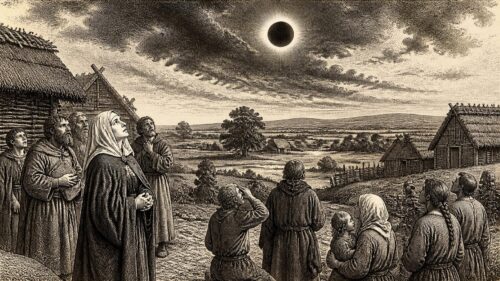
On 16 June 885, a total solar eclipse, recorded as daylight darkening and stars appearing, provides a secure chronological anchor for conflicting Irish annalistic dates. The year also brought major losses at Kildare: Abbess Tuileflaith, Bishop Scannal and Muiredach son of Bran, king of Leinster and abbot, died, while a secret killing was reported without explanation. Máel Pátraic, king of Airgialla, was slain by associates. Other royal and ecclesiastical deaths affected Brega, Meath, Clonfert and Glasnevin. No campaign or Viking raid is attested. An alleged speaking infant at Craeb Laisre shows annalists preserved marvels alongside wider political and religious change.
Read Article
Archived: 28 October 2026
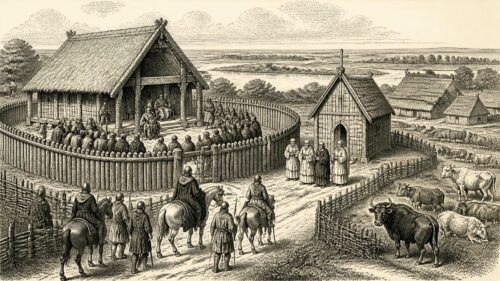
Abstract
In 884, Domnall mac Muirecáin, king of the Leinstermen and member of the Uí Fháeláin branch of Uí Dúnlainge, was killed by his associates in circumstances unrecorded by the annals. His death destabilised Leinster’s contested overkingship; Muiredach mac Brain succeeded briefly, while Domnall’s brother Cerball later gained power. Cairpre mac Dúnlaing, ruler of western Life, also died, though no connection is known. Scannlán, bishop of Kildare, died, affecting a major ecclesiastical institution. These changes occurred amid pressure from Osraige, Tara and Dublin’s Scandinavian power. The sparse records reveal political vulnerability but provide no evidence for a wider campaign or conspiracy.
Read Article
Archived: 28 October 2026
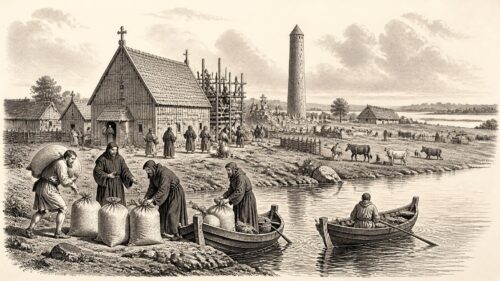
Abstract
In 876, the Annals of Inisfallen record the deaths of Rechtabra son of Bran, king of Leinster, and Eógan, abbot of Clonmacnoise. Rechtabra’s death potentially unsettled Leinster’s contested kingship, where succession depended upon kinship, alliances and support rather than primogeniture. Eógan’s death affected a major church whose religious, economic and political influence extended across Ireland. Rural production, estate obligations and riverine communications nevertheless continued. Uncertain Annals of Ulster notices, conventionally placed in 877 but internally dated 876, describe Rhodri of Gwynedd’s flight to Ireland and Scandinavian conflict at Strangford Lough. Records portray institutional transition within a changing Irish Sea world.
Read Article
Archived: 30 October 2026
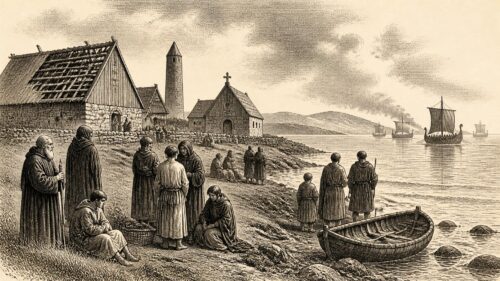
Abstract
In 806, though annalistic dating varies, Ireland experienced pestilence, political upheaval, ecclesiastical losses and attacks on religious sites. A great mortality was recorded alongside abundant woodland mast, without identifying the disease. Áed Oirdnide promulgated Patrick’s law, reinforcing links between royal authority and Armagh, while Fínshnechtae regained Leinster and Flaithnia of Uí Fhailgi was killed. Leading churchmen died, and Tír dá Glas was burned for unknown reasons. Most notably, pagan seaborne raiders killed sixty-eight members of Iona’s Columban community. The massacre exposed monasteries’ maritime vulnerability, although Iona and its Irish-connected Columban network survived and remained influential throughout the Irish Sea world.
Read Article
Archived: 30 October 2026
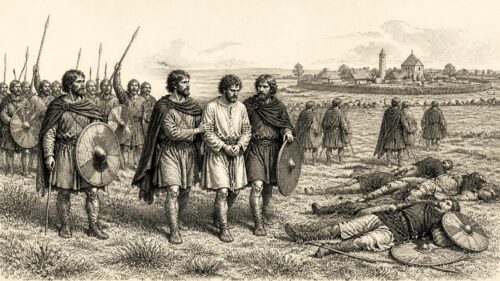
Abstract
In 782, Ruaidrí son of Fáelán defeated his cousin Bran son of Muiredach at the Curragh near Kildare, killing allies including Mugrón of Uí Fhailgi and capturing Bran. The Leinster struggle involved rival Uí Dúnlainge branches and allied regional interests, amid wider pressure from Donnchad Midi of Tara, Bran’s father-in-law. In Connacht, King Artgal son of Cathal adopted the pilgrim’s staff, declaring a journey to Iona for the following year. Annals also record numerous ecclesiastical deaths, illustrating monastic administration and influence. Careful chronology is essential, since Four Masters entries are misdated; 782 reveals clearly intertwined dynastic, religious and maritime connections.
Read Article
Archived: 31 October 2026
Abstract
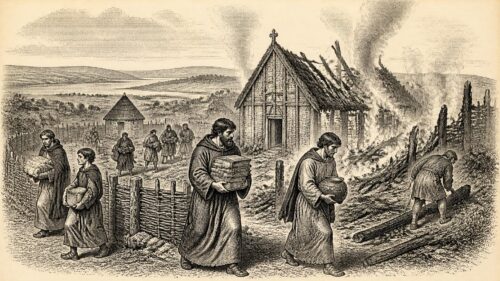
For Ireland in 756, the annals offer no single, all-embracing story. Instead, they preserve a sharp cluster of incidents: the burning of the great church settlement of Bangor on St Patrick’s Day; a military expedition which brought Leinster forces into Mag Muirthemne; the death of a Connacht overking; fighting in the midlands and Connacht; and a catastrophic wreck on Lough Ree. Read together, these terse notices reveal an island in which kingship, ecclesiastical authority and movement by water were all deeply consequential. They also demand care. Medieval annals did not record every event, and they often give outcomes without causes.
Read Article
Archived: 1 November 2026
Abstract
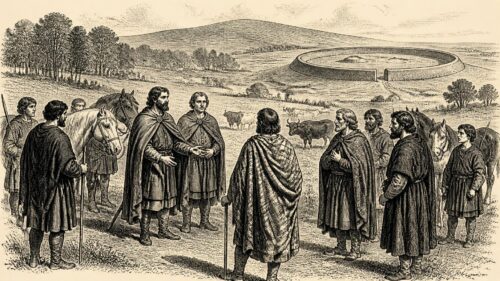
In 719, Leinster suffered internal conflict after the death of overking Cellach Cualann. At Findabair, probably Fennor in Meath, his son Áed was killed in an encounter among the Leinstermen, though sources do not identify combatants or circumstances. Murchad of Uí Dúnlainge held Leinster’s overkingship amid rivalry with Cellach’s Uí Máil kin. Uí Néill forces devastated Leinster five times, reflecting pressure associated with Fergal of Cenél nÉogain and foreshadowing later campaigns. Other annals record killings, violence affecting Armagh, an ecclesiastical death, and a Dál Riata sea-battle. A possibly dry summer compounded raiding’s threat to farming, cattle, lordship and vulnerable communities.
Read Article
Archived: 2 November 2026
Abstract
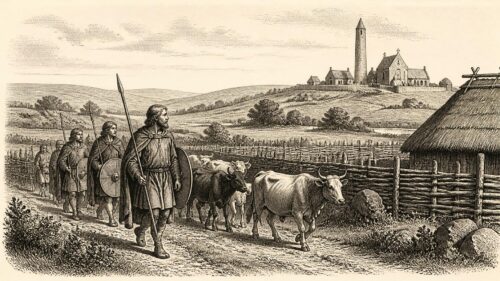
In 692 CE, Ireland’s surviving annalistic record centres on Leinster and its western neighbour Osraige. The firmest items are terse but consequential: Dirath, bishop of Ferns, died; Bran, grandson of Faelán and king of Leinster, also died; and a battle between the Osraige and the Laigin cost the life of Faelchar, grandson of Máel Odor. These entries occur under the following annal heading in the Annals of Ulster, whose calendrical apparatus explicitly equates that heading with AD 692. The precision is important. Irish annals preserve a sequence of notices copied and reshaped over centuries, and their year numbers do not
Read Article
Archived: 3 November 2026
Abstract
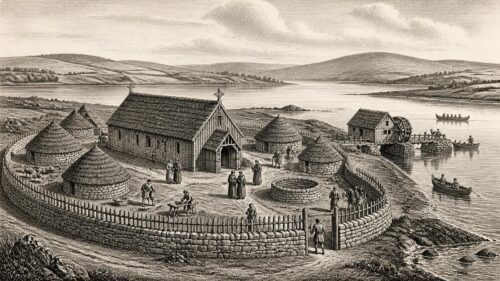
In 644 CE, Ireland’s surviving annalistic tradition presents a compact but revealing cluster of deaths, warfare and disputed royal authority. Yet the date must be handled with care. The notices now grouped under 644 were copied into chronicles centuries after the events, and the parallel annals do not always place them in the same numbered year. What can responsibly be said is that, around this calendar year, the political order was unsettled after the death of Domnall mac Áedo, a major northern Uí Néill ruler, while Leinster, Osraige, Munster and the north-east each appear in the record through named people
Read Article
Archived: 4 November 2026
Abstract
In 639 CE, the most significant Irish development that can be placed with reasonable confidence in this calendar year was the death of Áed Dub, bishop and abbot of Kildare. His obituary is brief, but it illuminates a great deal: in seventh-century Leinster, an important church could be led by a member of a ruling dynasty, and religious office could be an instrument of regional authority as well as pastoral care. The year’s surviving notices also record deaths at Nendrum and Leighlin, the killing of a man named Congal son of Dúnchad, the death of Ailill son of Áed Rón,
Read Article





