Archived: 28 October 2026
Abstract
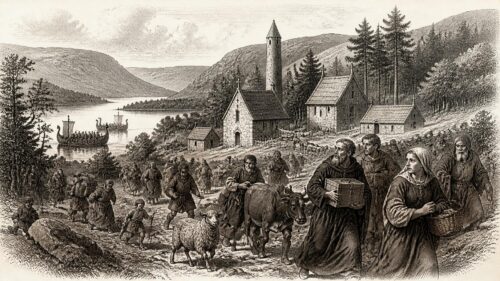
In 890, Scandinavian raiders, described in the annals as Gaill, plundered the ecclesiastical centres of Ardbraccan, Donaghpatrick, Dulane and Glendalough. Although the record supplies few details, the attacks exposed the vulnerability of wealthy, politically connected monasteries in Meath, Leinster and the Wicklow uplands. Probably operating within Dublin’s sphere, the raiders exploited river, coastal and overland routes amid shifting Irish-Scandinavian alliances. The raid occurred during Flann Sinna’s contested kingship and demonstrated limits to Tara’s influence. Plundering disrupted religious, economic and social life without proving wholesale destruction. Further raids followed in 891, while Dublin’s Scandinavian settlement was expelled in 902 by allies.
Read Article
Archived: 29 October 2026
Abstract
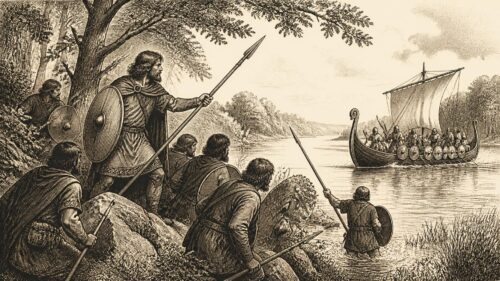
In 834, Irish annals recorded Scandinavian raids, local resistance, political killings, ecclesiastical deaths and a destructive fire, though their chronology and detail remain uncertain. Dúnadach son of Scannlán, king of Uí Fidgenti, defeated foreigners, demonstrating that Munster rulers could repel raiders. Glendalough, Slane and Finnabair Abha were plundered, illustrating the vulnerability of wealthy church communities across Ireland. Much of Clonmacnoise burned, but the cause is unknown. Deaths of Leinster’s king Cellach and other rulers altered local politics, while leading clerics died. Fragmentary records portray overlapping violence, instability and institutional continuity rather than a simple Viking conquest of Ireland in 834.
Read Article
Archived: 29 October 2026
Abstract
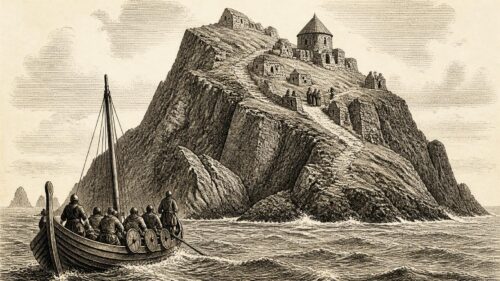
In 824 Scandinavian raiders attacked two Irish religious communities, Bangor in Ulaid and Sceilig off Kerry. At Bangor, they plundered the monastery, destroyed an oratory and violently disturbed the shrine and relics of its founder, Comgall, damaging a centre of dynastic and ecclesiastical prestige. At remote Sceilig, Étgal was captured and died of hunger and thirst, providing a rare named victim. Annalistic dating confirms both incidents despite manuscript chronological complications. The raids demonstrate mobile maritime danger across northern Irish Sea and Atlantic routes, not a unified campaign or permanent settlement. They marked early Viking-age insecurity; permanent Scandinavian bases came later.
Read Article
Archived: 29 October 2026
Abstract
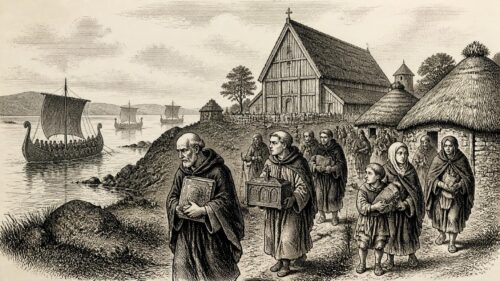
In 823, the Irish annals record Viking raiders attacking Bangor, breaking Comgall’s shrine, plundering its oratory and killing churchmen, though the monastery survived. Feidlimid of Munster and Armagh’s bishop asserted Patrick’s law in Munster, while Feidlimid also burned Galinne and suffered defeat at Mag Aí against Cathal of Uí Maine. Conflict around Clonmacnoise involved resignations, deaths, the killing of a tanist-abbot and compensation in churches. In the north, Niall son of Áed displaced Murchad as ruler of Ailech. Other deaths, including Tethba’s king and lightning fire at Armagh, underline Ireland’s interconnected yet contested ecclesiastical and political landscape across the island.
Read Article
Archived: 29 October 2026
Abstract
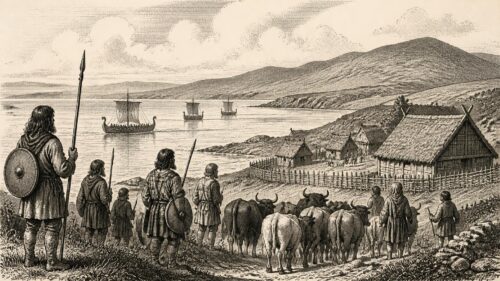
In 813, Dúnadach, king of Umall in modern County Mayo, and Coscrach son of Flannabra were killed when heathen seaborne raiders defeated local forces. The annals provide no details of the battle, loot, or lasting conquest, but place it amid western coastal fighting following Irish resistance in 812. The year also saw Daire’s law promulgated among the Uí Néill, probably protecting cattle, a vital economic resource. Obituaries for rulers and church leaders illustrate dispersed political and ecclesiastical authority. These events depict Ireland as a landscape of vulnerable coasts, regional kingdoms, valuable herds and religious communities, rather than a unified state.
Read Article
Archived: 30 October 2026
Abstract
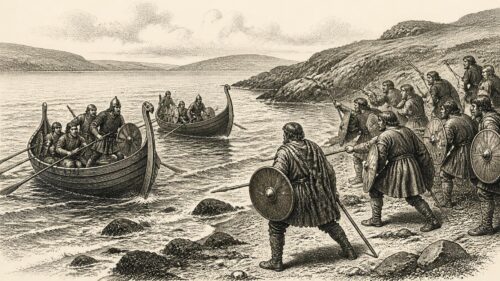
In 811, annalistic evidence records Scandinavian raiding and Irish political religious activity across Ireland. Men of Umall killed raiders, while Scandinavians defeated the Conmaicne; Cobthach of Loch Léin likewise slew raiders in Munster. These mobile incursions brought no proven permanent settlement. Muirgius son of Tomaltach, king of Connacht, led a southern hosting, though its destination and outcome remain unknown. Daire's law was promulgated in Connacht, demonstrating ecclesiastical and secular cooperation. Deaths of prominent abbots, bishops and regional kings highlighted interconnected religious institutions and fragmented political authority. The year reveals local resistance, royal ambition, church privilege, and pressures on coastal communities.
Read Article


