-
O’Brien’s Organisation
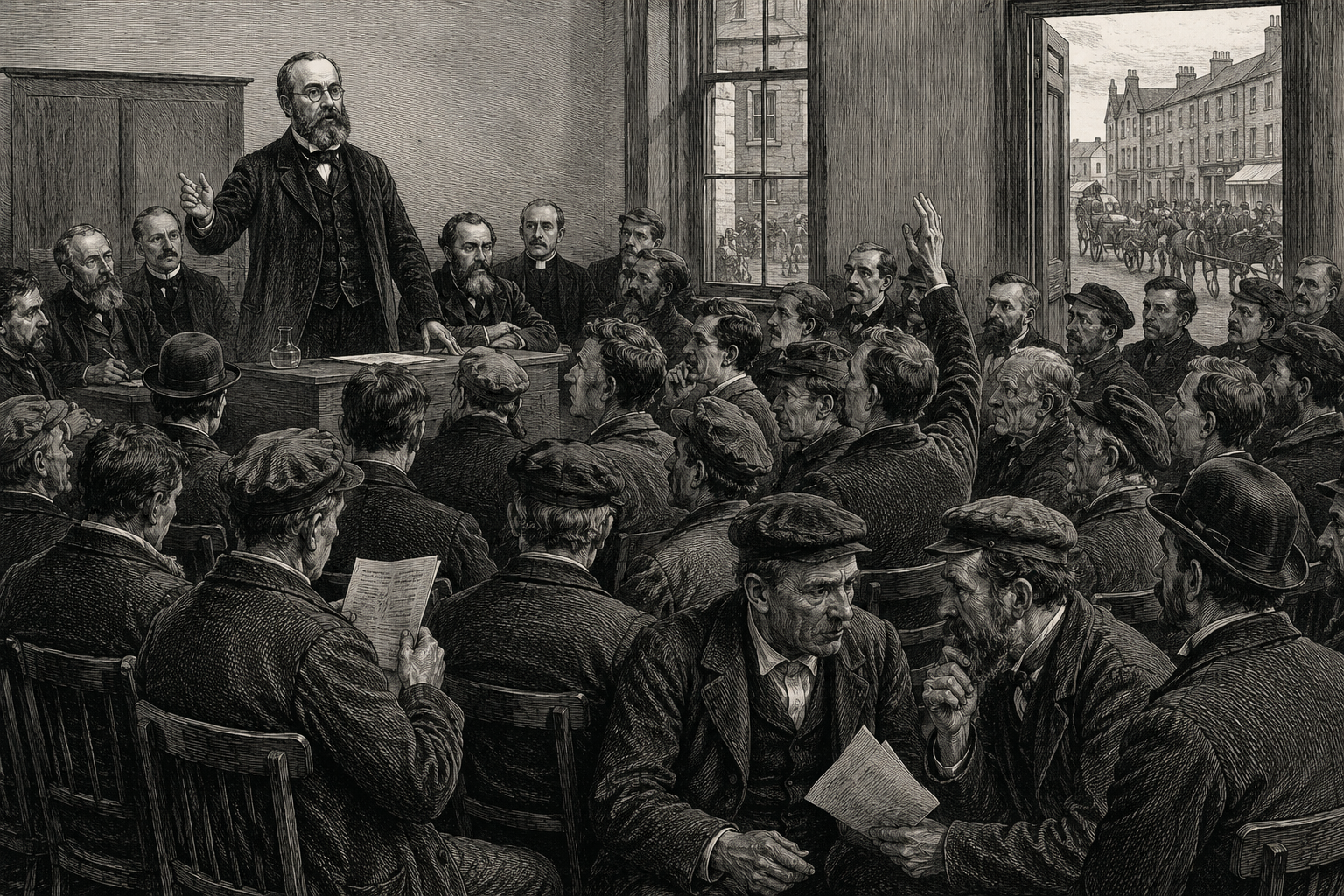
Read Article: O’Brien’s OrganisationWilliam O’Brien has emerged as the chief organiser behind the renewed strength of constitutional nationalism, using the United Irish League to rebuild political activity from the parish upwards. In Limerick city and county, where land grievances, tenant insecurity and memories of eviction remained powerful, the League offered nationalists more than occasional election meetings. Local branches could collect subscriptions, arrange public gatherings, promote approved candidates and carry agrarian complaints into the councils of the Irish Parliamentary Party. O’Brien’s method placed rural organisation beside Westminster representation, giving farmers, labourers, traders and clergy a practical part in the reunited nationalist movement.
O’Brien founded the United Irish League at Westport, County Mayo, on 23 January 1898, while the parliamentary party remained divided by the bitter quarrels that followed Charles Stewart Parnell’s downfall. He concentrated first upon the congested western districts, where smallholders and landless families lived beside large grazing farms. The League demanded the restoration of evicted tenants, enlargement of uneconomic holdings and wider access to land. Its meetings and branch system rapidly supplied constitutional nationalism with a purpose that factional leaders had failed to provide. Agrarian organisation became the instrument through which O’Brien sought both social reform and political reunion.
The League’s advance strengthened O’Brien’s hand in negotiations among nationalists and helped make continued parliamentary division increasingly difficult to defend. John Dillon, Michael Davitt, Timothy Harrington and other prominent figures became associated with the organisation, although they did not always agree upon its direction. In January 1900 the parliamentary factions reunited and selected John Redmond as chairman. O’Brien did not take the formal leadership of the party, but the movement he had constructed gave the reunion an organised popular foundation. The National Convention in Dublin on 19 and 20 June adopted rules that connected local branches with a national governing structure.
O’Brien’s achievement also created fresh tensions. He believed the reunited movement should remain answerable to organised nationalist opinion and should pursue the land question with determination. Some parliamentarians feared that League organisers, popular conventions and local campaigns might weaken the authority of elected members. Land agitation further exposed the organisation to accusations of intimidation, particularly where graziers, disputed farms or boycotts were involved. O’Brien’s supporters maintained that disciplined combination was necessary because parliamentary speeches alone had not relieved rural distress. The reunion therefore concealed an unresolved question: whether the League existed chiefly to serve the parliamentary party or to direct its programme.
For Limerick nationalists, O’Brien’s organisational design offered a way to connect local concerns with national policy without abandoning constitutional politics. Rural branches could bring pressure concerning holdings, rents, evicted families and land purchase, while city supporters could assist fundraising, elections and public meetings. The League’s success rested upon its ability to make national politics visible in ordinary communities rather than confining it to Westminster. O’Brien had converted agrarian dissatisfaction into a disciplined political network, but its durability would depend upon cooperation between local activists and parliamentary leaders. In Limerick, as elsewhere, reunion now required organisation as well as declarations of unity.
Primary Sources
- United Irish League, Constitution and Rules Adopted by the Irish National Convention, 19th and 20th June 1900, Dublin, Swan & Co., 1900; National Library of Ireland, Pamphlet Volume A17405; Thomas Bradley Papers, MS 33,561/2(12). This four-page document verifies the Convention dates, the League’s formal rules and its relationship with the Irish Parliamentary Party. (catalogue.nli.ie)
- William O’Brien Papers, University College Cork, correspondence from Edward Haviland Burke to William O’Brien, 31 January 1900, references AKA.57–62. The letters can verify contemporary negotiations and reactions surrounding nationalist reunion and the developing political authority of the United Irish League. (Cambridge University Press & Assessment)
- Correspondence from Timothy McCarthy to William O’Brien, 22 January 1900, University College Cork, William O’Brien Papers, reference AKA.45; together with Michael Davitt to William O’Brien, 23 January 1900, National Library of Ireland, MS 914, folios 785–788. These documents illuminate political manoeuvring immediately before the parliamentary factions reunited. (Cambridge University Press & Assessment)
- Irish People, 23 June and 30 June 1900. These contemporary newspaper issues reported upon the United Irish League and the National Convention held in Dublin, providing evidence of the organisation’s programme and reception. Exact page and column should be confirmed before formal citation. (Cambridge University Press & Assessment)
- William O’Brien, An Olive Branch in Ireland and Its History, London, 1910, particularly pages 123–124. O’Brien’s own account provides a primary retrospective statement of his intentions, his understanding of the League and his role in nationalist reunion, though it should be read alongside contemporary correspondence and newspapers. (Cambridge University Press & Assessment)
-
National Network
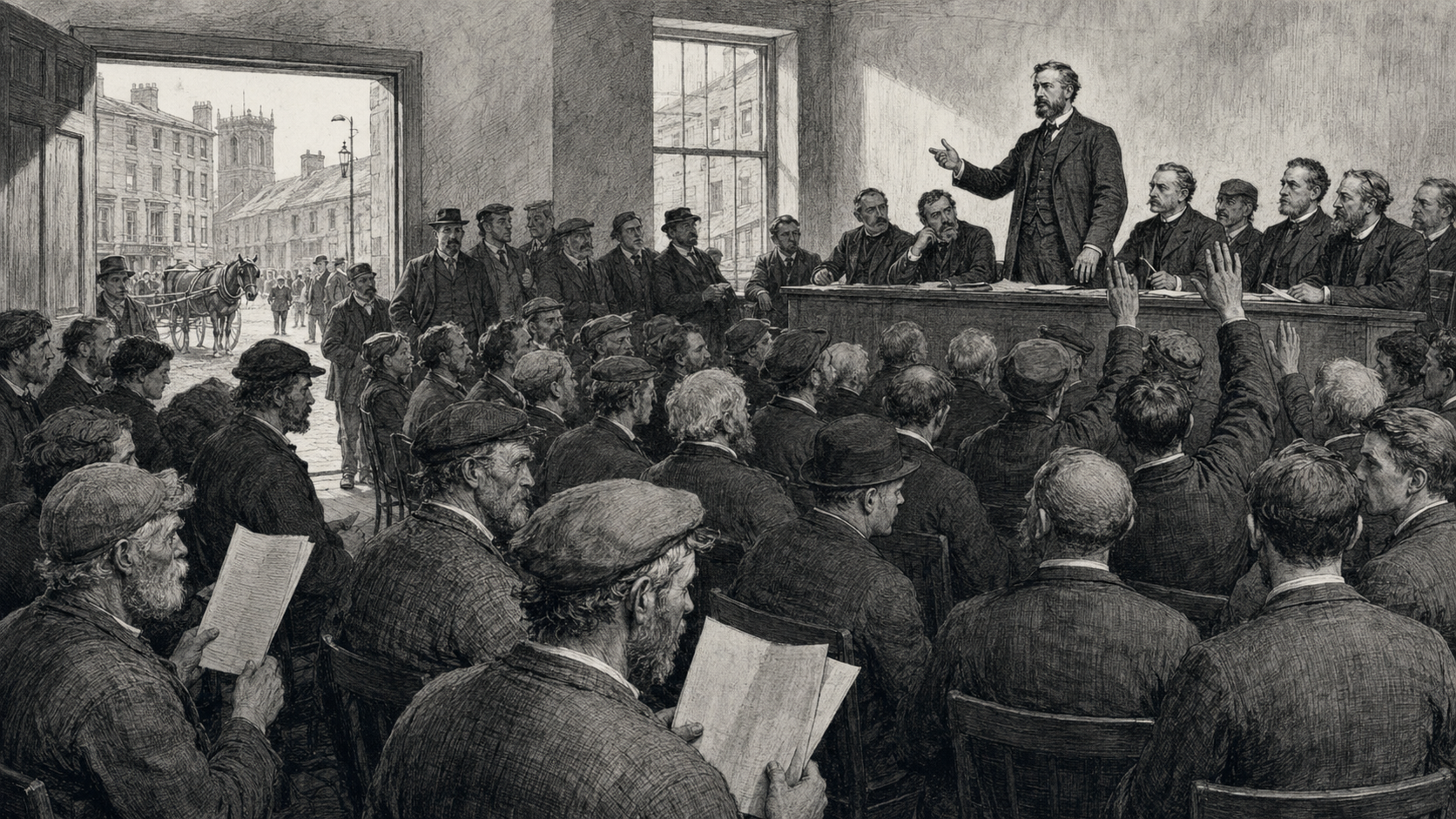
Read Article: National NetworkParliamentary nationalism has acquired a powerful new local organisation following the acceptance of the United Irish League as the principal popular body supporting the reunited Irish Parliamentary Party. For nationalists throughout Limerick city and county, the arrangement promises to connect political representation at Westminster with campaigns concerning tenant rights, land purchase and the division of grazing estates. League branches may now provide farmers, labourers, shopkeepers and local political organisers with a direct influence upon nationalist policy and parliamentary candidate selection. The development places organised public opinion behind John Redmond’s leadership while preserving the land question as a central concern of Irish political life.
The United Irish League was established by William O’Brien at Westport, County Mayo, in January 1898, when parliamentary nationalism remained divided following the fall of Charles Stewart Parnell. O’Brien sought to revive popular agitation by concentrating upon the condition of small farmers, evicted tenants and landless families, particularly in western counties where extensive grazing farms stood beside crowded holdings. Public meetings, branch organisation and pressure upon occupiers of disputed land allowed the League to spread rapidly. Its success demonstrated that constitutional nationalism could not depend solely upon speeches delivered in the House of Commons but required an active organisation rooted in parishes, towns and rural communities.
The League’s growing strength helped compel the divided nationalist factions to settle their disputes and reunite under John Redmond during the opening months of 1900. William O’Brien supplied much of the movement’s popular energy, while organisers including John O’Donnell assisted the creation of branches across Ireland. The National Convention assembled in Dublin on 19 and 20 June adopted a constitution and rules establishing a representative structure for the organisation. The arrangement linked local branches with county and national leadership, giving the League an important role in raising funds, organising meetings, promoting parliamentary candidates and maintaining discipline throughout the broader Home Rule movement.
The alliance nevertheless contains possible causes of disagreement. O’Brien regarded the League as an expression of popular authority capable of directing parliamentary representatives, while Redmond and other members of the Irish Party believed that elected MPs must retain control of national policy. Agrarian agitation also brought controversy wherever League branches employed boycotting, public denunciation or pressure against graziers and disputed landholders. Government officials and unionist representatives accused the organisation of encouraging intimidation, charges which League supporters rejected as attempts to discredit lawful combination. The question of whether parliamentary leaders would govern the League, or the League would govern parliamentary leaders, remained unresolved beneath the public declaration of unity.
In Limerick, the League’s structure offered constitutional nationalists a means of joining local land grievances to the demand for Irish self-government. County communities containing tenant farmers, agricultural labourers and families affected by eviction or inadequate holdings could use local branches to carry their concerns beyond the parish. City nationalists could organise meetings, subscriptions and electoral work in support of Redmond’s parliamentary programme. The League therefore created a political road running from Limerick farms, market towns and urban meeting rooms to Westminster itself. Its influence would depend upon whether it could balance agrarian demands, party unity and disciplined constitutional action without reopening the factional divisions it had helped overcome.
Primary Sources
- United Irish League, Constitution and Rules Adopted by the Irish National Convention, 19th and 20th June 1900, printed in Dublin by Swan & Co., 1900; National Library of Ireland, pamphlet volume A17405, Thomas Bradley Papers, MS 33,561/2(12). This verifies the dates of the convention and the formal constitution adopted for the League’s national organisation. (catalogue.nli.ie)
- Correspondence between William O’Brien and John Redmond, 1900, John Redmond Papers, National Library of Ireland, MS 15,212/5. The correspondence concerns Redmond’s election, the United Irish League, the National Convention, party organisation and League finances, and can verify relations between the parliamentary leadership and the popular movement. (catalogue.nli.ie)
- Letter from William O’Brien, Mallow Cottage, Westport, to John Redmond, 26 June 1900, John Redmond Papers, National Library of Ireland, one item, three pages. The letter discusses O’Brien’s efforts to organise political meetings immediately after the National Convention and can illuminate the League’s expansion and leadership difficulties. Exact manuscript call number should be confirmed before formal citation. (catalogue.nli.ie)
- House of Commons Debates, “United Irish League Courts,” 2 August 1900, Hansard, volume 87. This parliamentary exchange verifies contemporary government and unionist concern about League activity, resolutions and agrarian organisation. The relevant columns should be confirmed before formal citation. (Hansard)
- Copy letter from John Redmond to William O’Brien concerning provincial directories of the United Irish League, 3 November 1900, John Redmond Papers, National Library of Ireland. This document can verify Redmond’s involvement in extending and organising the League beyond its original western base. Exact manuscript call number should be confirmed before formal citation. (catalogue.nli.ie)
-
Redmond Chosen
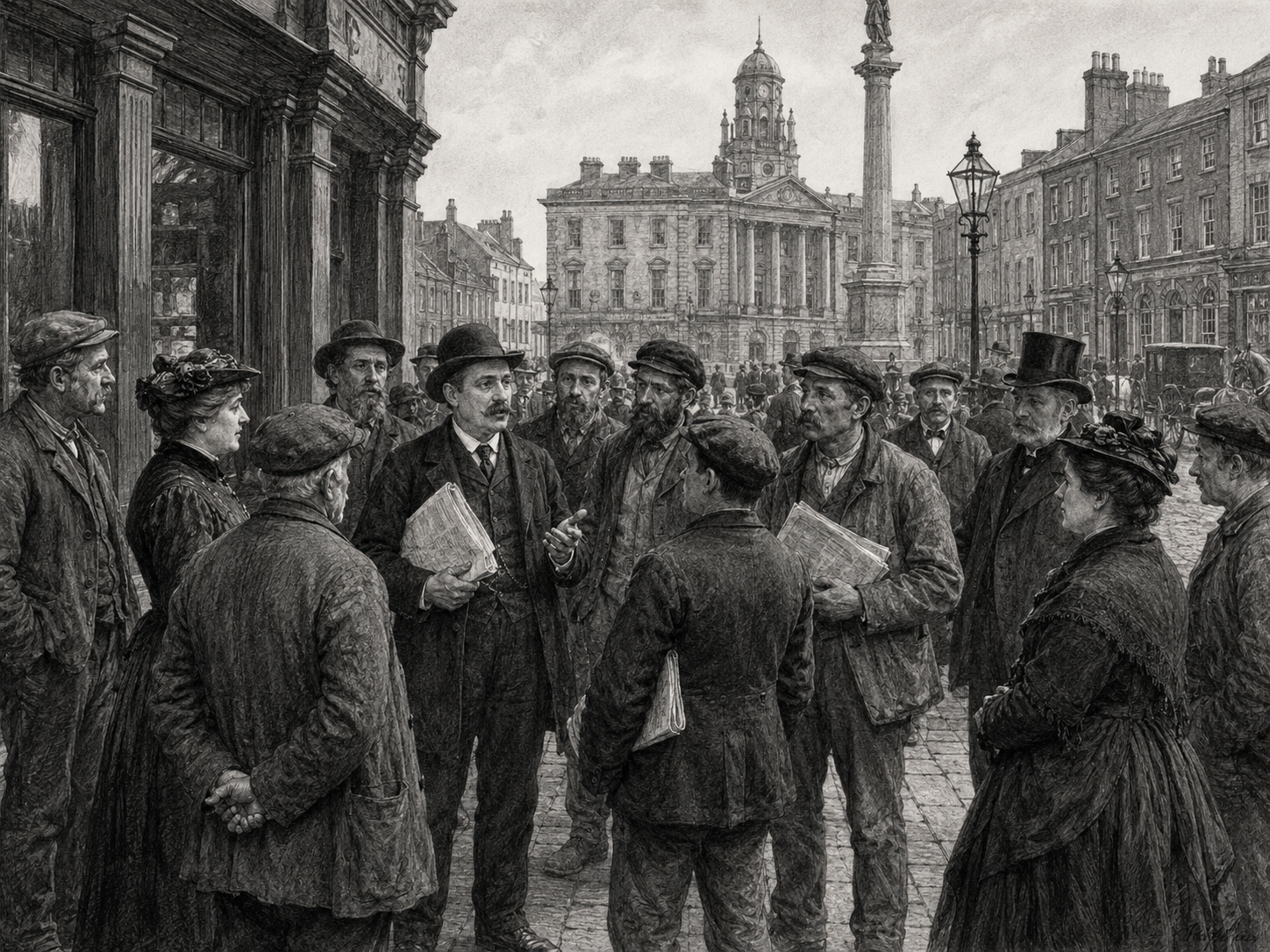
Read Article: Redmond ChosenNationalists throughout the city and county are today considering the election of John Redmond as chairman of the reunited Irish Parliamentary Party. His appointment follows the agreement that brought Parnellites and anti-Parnellites together after almost ten years of damaging division. Local supporters of Home Rule hope the choice will restore authority, discipline and purpose to Ireland’s representation at Westminster. Redmond, long identified with the Parnellite cause, now assumes responsibility for men who recently stood in opposing camps. His success will depend upon persuading Limerick voters and nationalists elsewhere that old quarrels can finally yield to common political action.
The new chairman is a barrister and seasoned parliamentarian who has represented Waterford City since 1891. He remained loyal to Charles Stewart Parnell during the crisis that destroyed the unity of Irish nationalism, later becoming leader of the smaller Parnellite group. That loyalty made him respected by one faction but mistrusted by some former opponents. His selection is therefore regarded as a compromise intended to prevent either side from claiming complete victory. Redmond must now balance the influence of John Dillon, William O’Brien, Timothy Healy and other prominent figures while rebuilding an organisation weakened by rivalry, contested elections and public disappointment.
The reunited party has renewed its commitment to securing Home Rule through constitutional and parliamentary methods. Its members intend to use their representation at Westminster to press Ireland’s claims while supporting land reform, tenant purchase and relief for impoverished rural districts. Redmond believes disciplined voting and careful negotiation can make Irish members an influential force in British politics. Critics question whether Parliament will concede self-government without pressure from Ireland. Supporters answer that a united party can achieve what divided factions could not, provided its MPs act together and local organisations maintain enthusiasm behind their programme during the coming political contests.
William O’Brien and the United Irish League have been instrumental in creating the conditions for reunion. The organisation has spread from County Mayo, drawing farmers, labourers and local activists into a campaign joining land reform with national self-government. League branches demanded that parliamentary leaders abandon personal hostility and restore a single movement. Their pressure made continued division difficult to defend before an impatient electorate. Redmond must now work with this organisation without allowing local agitation to overwhelm parliamentary strategy. The relationship between party leaders and League organisers may determine whether reunion becomes a lasting settlement or another temporary political arrangement.
In Limerick, attention will focus upon how Redmond’s leadership affects candidate selection, party discipline and demands for reform. Tenant farmers will expect progress towards land purchase, agricultural labourers will seek better cottages and conditions, while city workers and traders will judge whether national unity brings stronger representation. Memories of the Parnell split remain sharp, and personal loyalties cannot be erased by one meeting. Nevertheless, the appointment provides constitutional nationalism with a recognised leader for the first time since its organisation fractured. Redmond begins his chairmanship carrying hope, but also the burden of proving that reunion can survive its first disagreement.
- Freeman’s Journal, 7 February 1900 — contemporary reporting on the reunion of the Irish Parliamentary Party and John Redmond’s election as chairman.
- The Irish Times, 7 February 1900 — contemporary coverage of the parliamentary meeting, Redmond’s selection and the response of Irish political factions.
- The Times of London, 7 February 1900 — British newspaper reporting on the restored unity of the Irish nationalists at Westminster and Redmond’s appointment.
- Hansard, House of Commons Debates, February 1900 — the official parliamentary record of Redmond’s speeches and activity at Westminster immediately after becoming chairman. Redmond’s recorded contributions for 1900 include speeches on 6, 7, 8 and 9 February. (Parliament API)
- John Redmond Papers, 1878–1918, National Library of Ireland — Redmond’s surviving correspondence and political papers concerning colleagues, party organisation and contemporary political affairs. (catalogue.nli.ie)
- The first three newspaper dates should be checked against the digitised editions before quoting exact wording or assigning page and column numbers.
-
Party Reunited
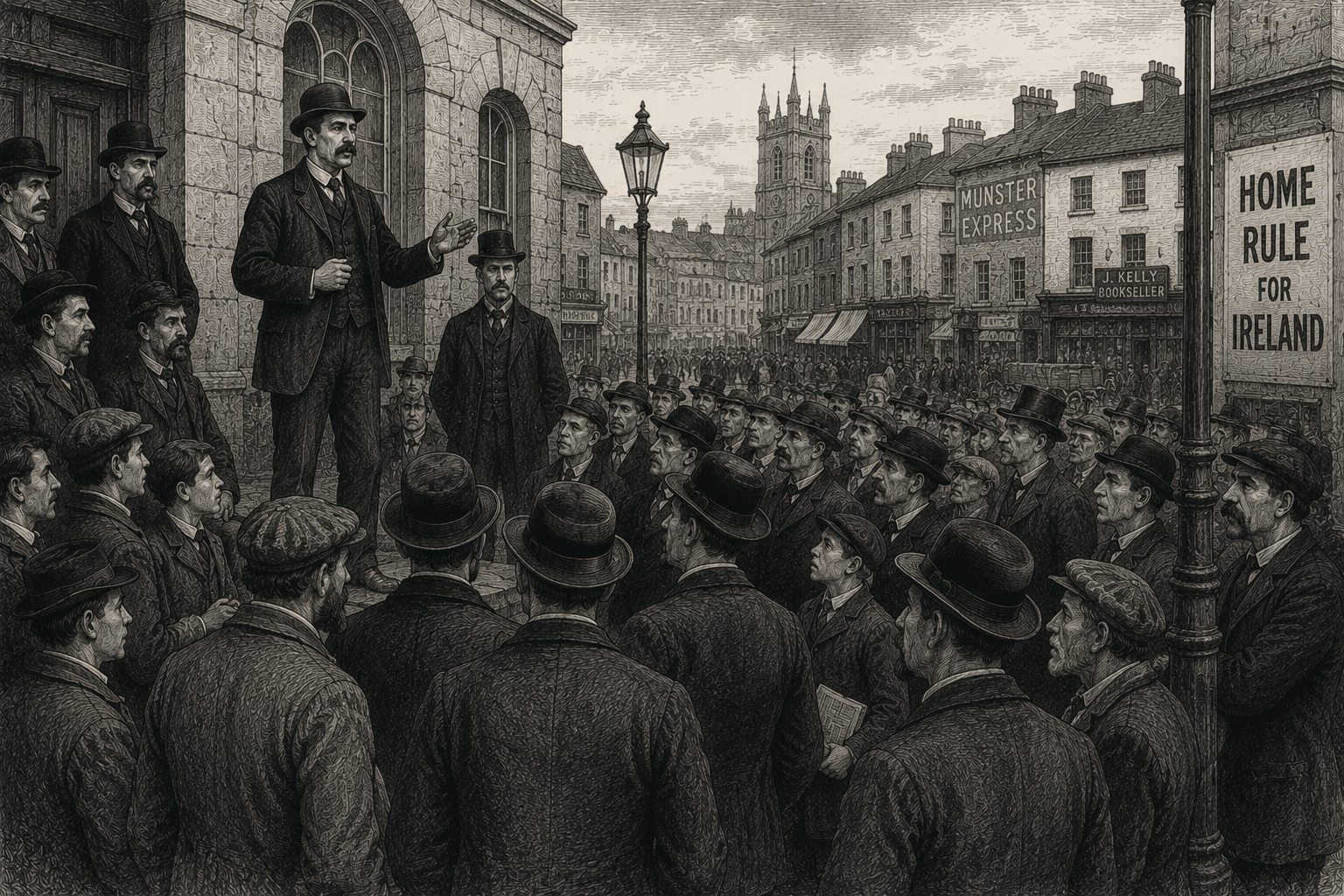
Read Article: Party ReunitedNews of the reunion of the Irish Parliamentary Party has been received with keen interest throughout the city and county, where nationalist divisions have long influenced public meetings, elections and local loyalties. Parnellites and anti-Parnellites have now agreed to end nearly ten years of hostility and restore a single parliamentary organisation. Supporters of Home Rule in Limerick believe the settlement may strengthen Ireland’s voice at Westminster and reduce the bitterness that has weakened nationalist politics since Charles Stewart Parnell’s fall. Local organisers are already discussing what the reunion may mean for future contests, land reform and national representation.
The split began in 1890, when controversy surrounding Parnell’s private life divided his followers and shattered the political unity that had brought Home Rule to the centre of British debate. Some members remained loyal to him, while others concluded that his continued leadership had become impossible. After Parnell’s death in 1891, the bitterness endured through rival organisations, disputed candidacies and personal feuds. In constituencies across Ireland, including Limerick, voters were repeatedly asked to choose between men who claimed the same national cause. The reunion therefore represents an attempt to repair both political machinery and damaged public confidence throughout Ireland.
William O’Brien and the United Irish League have played an important part in pressing the rival factions towards agreement. Founded in County Mayo in 1898, the League rapidly expanded by linking the demand for land reform with the wider struggle for national self-government. Its branches warned that ordinary supporters would no longer tolerate parliamentary leaders placing old grievances before Ireland’s interests. The movement has found a ready audience among tenant farmers, labourers and local nationalists who want stronger action on land purchase, evicted tenants and rural poverty. Its influence has made continued separation increasingly difficult for the parliamentary leaders concerned.
Attention will now turn to the choice of a chairman capable of holding together men whose loyalties were shaped by the Parnell crisis. John Redmond, leader of the smaller Parnellite group, is widely regarded as a possible compromise candidate. John Dillon, Timothy Healy, T. C. Harrington and William O’Brien remain influential figures whose cooperation will be essential. Agreement on organisation will not immediately remove differences over land agitation, parliamentary tactics, relations with British parties or the pace of the Home Rule campaign. Even so, the decision gives constitutional nationalism its strongest opportunity for political recovery since the division began.
For Limerick, the reunion may carry practical consequences as well as symbolic importance. Councillors, clergy, merchants, labourers, farmers and political clubs will watch closely to see whether unity produces firmer representation on tenant purchase, labourers’ cottages, congested districts and Irish legislative independence. Some will remain doubtful that old resentments can be set aside when candidates are selected or discipline is tested. Others believe the country has already lost too much influence through division. The first elections under the restored organisation will reveal whether yesterday’s agreement is genuine. For now, nationalist Ireland once more possesses a common parliamentary voice at Westminster.
- Freeman’s Journal, 31 January 1900 — contemporary Irish nationalist reporting on the agreement that reunited the Parnellite and anti-Parnellite parliamentary factions.
- Irish Daily Independent, 31 January 1900 — immediate newspaper coverage of the reunion settlement, the participating MPs and the proposed restoration of party unity.
- The Irish Times, 31 January 1900 — contemporary reporting and commentary on the reunited Irish Parliamentary Party and its implications for Home Rule politics.
- The Times of London, 31 January 1900 — British coverage of the conclusion of the reunion negotiations and the reorganisation of Irish nationalist representation at Westminster.
- John Redmond Papers, National Library of Ireland, 1878–1918 — contemporary correspondence and political documents relating to Redmond, the Parnellite faction, party organisation and the negotiations surrounding reunion. (National Library of Ireland)
The reunion agreement was concluded on 30 January 1900, following negotiations that had begun at a reunion conference on 17 January. (centenariestimeline.com)