-
Unionists Hold
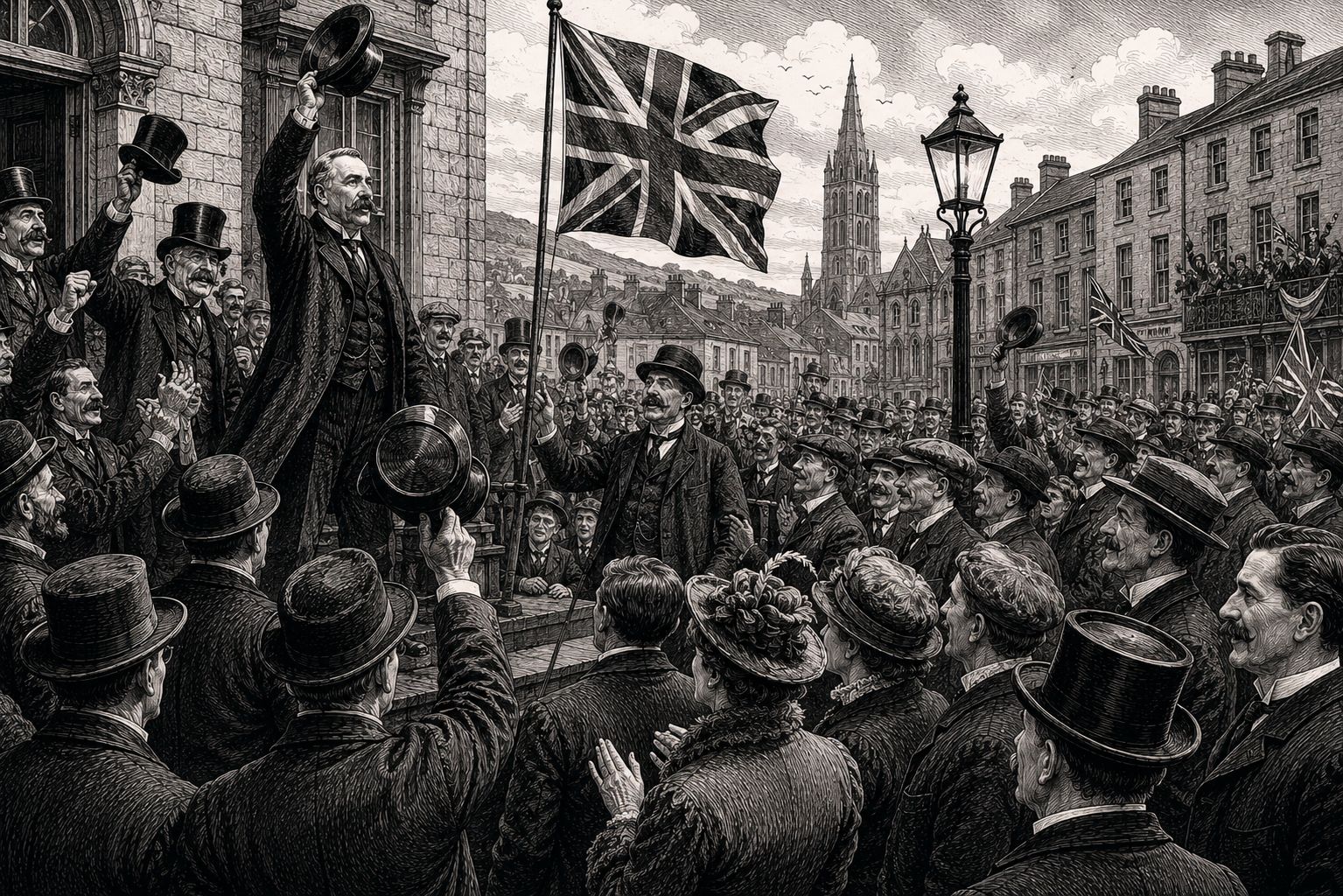
Read Article: Unionists HoldThe Irish Unionist Alliance has retained eighteen of Ireland’s 103 Westminster seats as the general election concludes, preserving its principal strength in Ulster despite the overwhelming national victory of the reunited Irish Parliamentary Party. The result will interest Limerick voters because it confirms that Ireland remains divided between two sharply opposed constitutional programmes. Nationalists demand an Irish legislature and land reform, while unionists insist that the political and economic union with Great Britain must remain intact. Although unionist representation is comparatively small across Ireland, its concentration in the north-east gives the movement considerable organisation, confidence and parliamentary influence.
The Irish Unionist Alliance was established to coordinate resistance to Home Rule among Conservatives, Liberal Unionists, landlords, merchants, professionals and Protestant organisations. Its support is strongest in Ulster, particularly within the industrial and commercial districts where many electors fear that an Irish parliament dominated by nationalists would endanger trade, employment, religious liberties and connections with Britain. Unionist candidates also retain influence in Dublin University and selected urban constituencies. Their position rests not merely upon attachment to the Crown, but upon a conviction that Ireland’s prosperity and security depend upon remaining fully represented within the Parliament of the United Kingdom.
Edward James Saunderson continues to provide the Alliance with prominent parliamentary leadership. Unionist candidates have defended the Government’s prosecution of the South African War and presented Irish military service as evidence of loyalty to the Empire. They accuse the Irish Parliamentary Party of encouraging hostility towards Britain while seeking concessions from Westminster. Nationalists answer that unionist power depends upon preserving political control against the expressed wishes of most Irish constituencies. The election has therefore returned two rival Irish delegations: a large nationalist bloc demanding self-government and a smaller, geographically concentrated unionist body determined to prevent it.
The eighteen Alliance seats are concentrated mainly in Ulster, where constituency boundaries, local organisation and religious and economic loyalties favour resistance to Home Rule. The party retained ten seats without opposition, demonstrating the security of several strongholds before polling occurred. Liberal Unionists secured three additional Irish seats, meaning that support for the Union extends somewhat beyond the Alliance’s official total. The figures nevertheless reveal its regional character. Across most of Munster, Connacht and Leinster, unionist candidates face electorates committed to constitutional nationalism, while north-eastern Ulster continues to return members who regard the Union as essential and non-negotiable.
In Limerick, where Unionist candidate Francis Kearney was heavily defeated by Michael Joyce, the Alliance possesses little electoral prospect but remains part of the city’s commercial, professional and religious life. Its supporters may take reassurance from the strength retained in Ulster and from the return of a Conservative-led government at Westminster. Nationalists, however, will interpret the wider Irish result as proof that unionist opposition represents a regional minority rather than the country as a whole. The election has strengthened both claims: Ireland’s majority has endorsed Home Rule, while organised unionism has shown that determined resistance remains firmly rooted in the northern counties.
- Parliamentary Election Returns, General Election of 1900, House of Commons Parliamentary Papers — official returns recording all Irish constituencies, candidates, vote totals and successful members, including the eighteen Irish Unionist Alliance seats. The exact command-paper number and relevant pages should be confirmed before formal citation.
- The Belfast News-Letter, 24–25 October 1900 — contemporary unionist reporting on the completed Irish results, Ulster representation and the political position of the Irish Unionist Alliance. Exact page and column should be confirmed before formal citation.
- The Northern Whig, 24–25 October 1900 — contemporary Belfast coverage of the election results, Unionist candidates and political opinion throughout Ulster. Exact page and column should be confirmed before formal citation.
- The Irish Times, 24–25 October 1900 — contemporary reporting and editorial analysis of Irish Unionist representation, the Westminster result and the continuing conflict over Home Rule. Exact page and column should be confirmed before formal citation.
- Irish Unionist Alliance election addresses and campaign literature, 1900, Public Record Office of Northern Ireland and National Library of Ireland collections — contemporary statements outlining opposition to Home Rule, defence of the Union and appeals to Ulster electors. The precise collection, item and archival reference should be identified before formal citation.
-
Redmond Returned
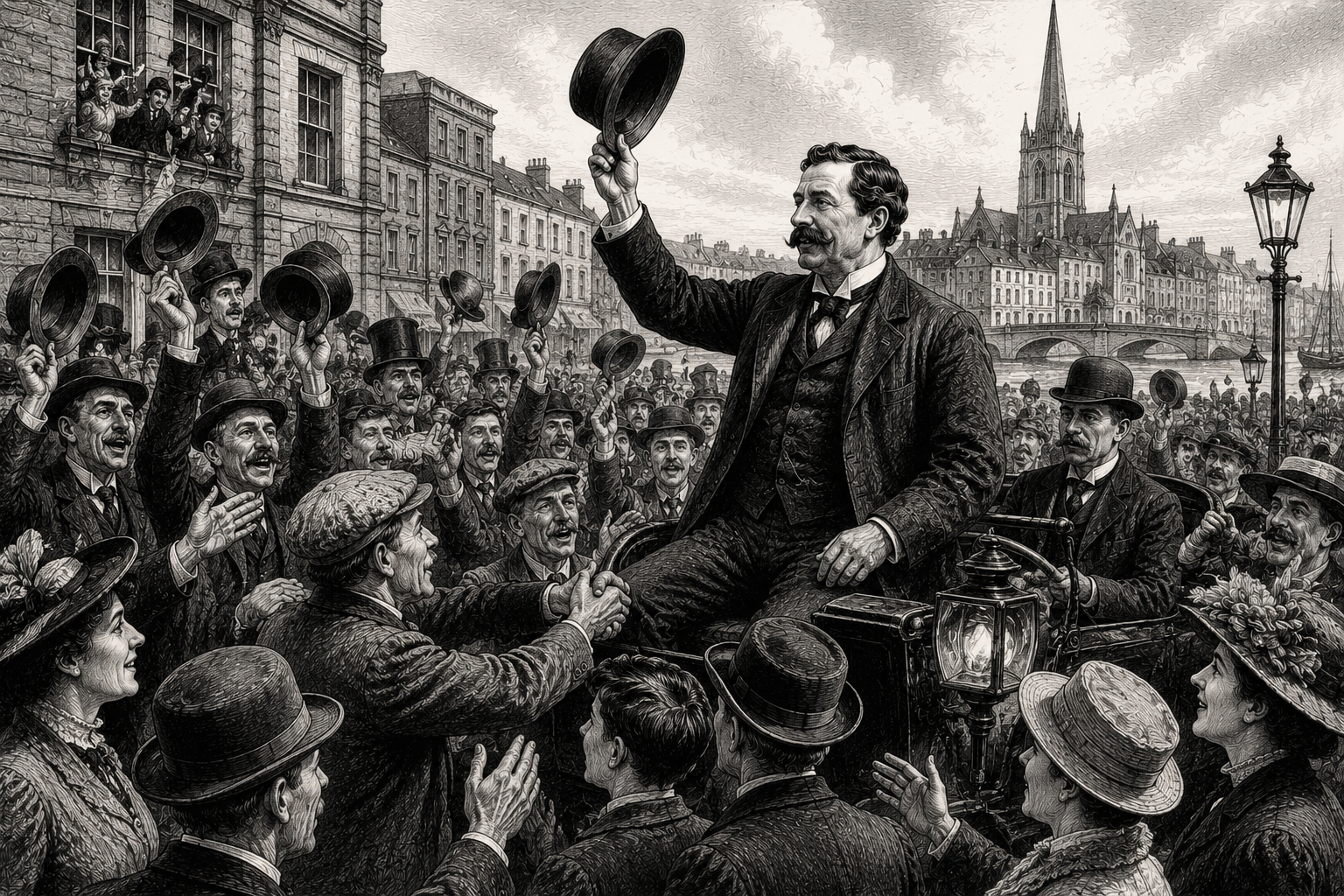
Read Article: Redmond ReturnedJohn Redmond has retained Waterford City in the general election, reinforcing his authority as chairman of the reunited Irish Parliamentary Party and strengthening his claim to speak for constitutional nationalism throughout Ireland. The result will be closely observed in Limerick, where nationalist supporters are judging whether reunion has truly ended the divisions that followed the fall of Charles Stewart Parnell. Redmond’s return from a strongly nationalist urban constituency gives him more than a Westminster seat. It provides a local electoral foundation from which he can direct a party attempting to restore discipline, confidence and influence after nearly a decade of internal conflict.
Waterford has supported Redmond since 1891, when he secured the constituency shortly after Parnell’s death. His continued representation of the city has allowed him to maintain a recognisable political base through years in which the nationalist movement was divided between Parnellites and anti-Parnellites. Waterford’s attachment to him rested partly upon loyalty to the Parnellite tradition, but it also reflected his close relationship with local organisations, workers and commercial interests. By retaining the seat in 1900, Redmond demonstrates that leadership of the reunited party has not separated him from the constituency that sustained him during the most difficult period of his political career.
Redmond was chosen chairman of the reunited Irish Parliamentary Party in February, placing a former leader of the smaller Parnellite faction at the head of men who had once opposed him bitterly. His selection surprised some observers and required cooperation from powerful figures including John Dillon, William O’Brien and Timothy Healy. The general election therefore serves as his first national test. A defeat or serious challenge in Waterford would have weakened his authority immediately. His return allows supporters to argue that he possesses both parliamentary experience and genuine popular backing, essential qualities for a leader expected to manage strong personalities and competing traditions within Irish nationalism.
The wider election remains shaped by the South African War, British imperial politics and the Conservatives’ appeal to military success. Irish nationalists have placed Home Rule, land reform and party unity at the centre of their campaign. Redmond’s criticism of the war has enabled him to express sympathy with the Boer republics while distinguishing opposition to imperial policy from hostility towards Irish soldiers. Advanced nationalists continue to question whether Westminster methods can deliver genuine independence. Nevertheless, Redmond’s position in Waterford confirms that constitutional politics still command considerable support among electors who want Irish self-government pursued through an organised parliamentary party.
In Limerick, the result strengthens expectations that the reunited party will emerge from the election with a disciplined body of members capable of pressing Ireland’s demands at Westminster. Local nationalists will look to Redmond for leadership on Home Rule, tenant purchase, labourers’ housing and economic hardship. His Waterford victory does not remove old suspicions or guarantee obedience from every Irish member, but it gives him a secure personal mandate at a crucial moment. Constitutional nationalism now possesses a recognised chairman who has retained the confidence of his own constituency. Redmond must prove that this local endorsement can be converted into national unity and effective parliamentary action.
- Parliamentary Election Returns, General Election of 1900, House of Commons Parliamentary Papers — official record confirming John Redmond’s return for Waterford City and identifying the members elected throughout Ireland. The exact command-paper number and Waterford page should be confirmed before formal citation.
- Waterford News, early October 1900 — contemporary local reporting on Redmond’s nomination or return, the political atmosphere in Waterford City and local support for his leadership. Exact issue, page and column should be confirmed before formal citation.
- Waterford Standard, early October 1900 — contemporary local coverage of the constituency, Redmond’s position and political reaction to the election. Exact issue, page and column should be confirmed before formal citation.
- Freeman’s Journal, 2 October 1900 — contemporary nationalist reporting on Redmond’s return for Waterford City and the progress of Irish Parliamentary Party candidates during the general election. Exact page and column should be confirmed before formal citation.
- John Redmond Papers, National Library of Ireland, 1878–1918 — correspondence and political papers concerning Waterford, party reunion, election organisation and Redmond’s leadership of the Irish Parliamentary Party. The precise manuscript item should be identified before formal citation.
-
Nationalist Victory
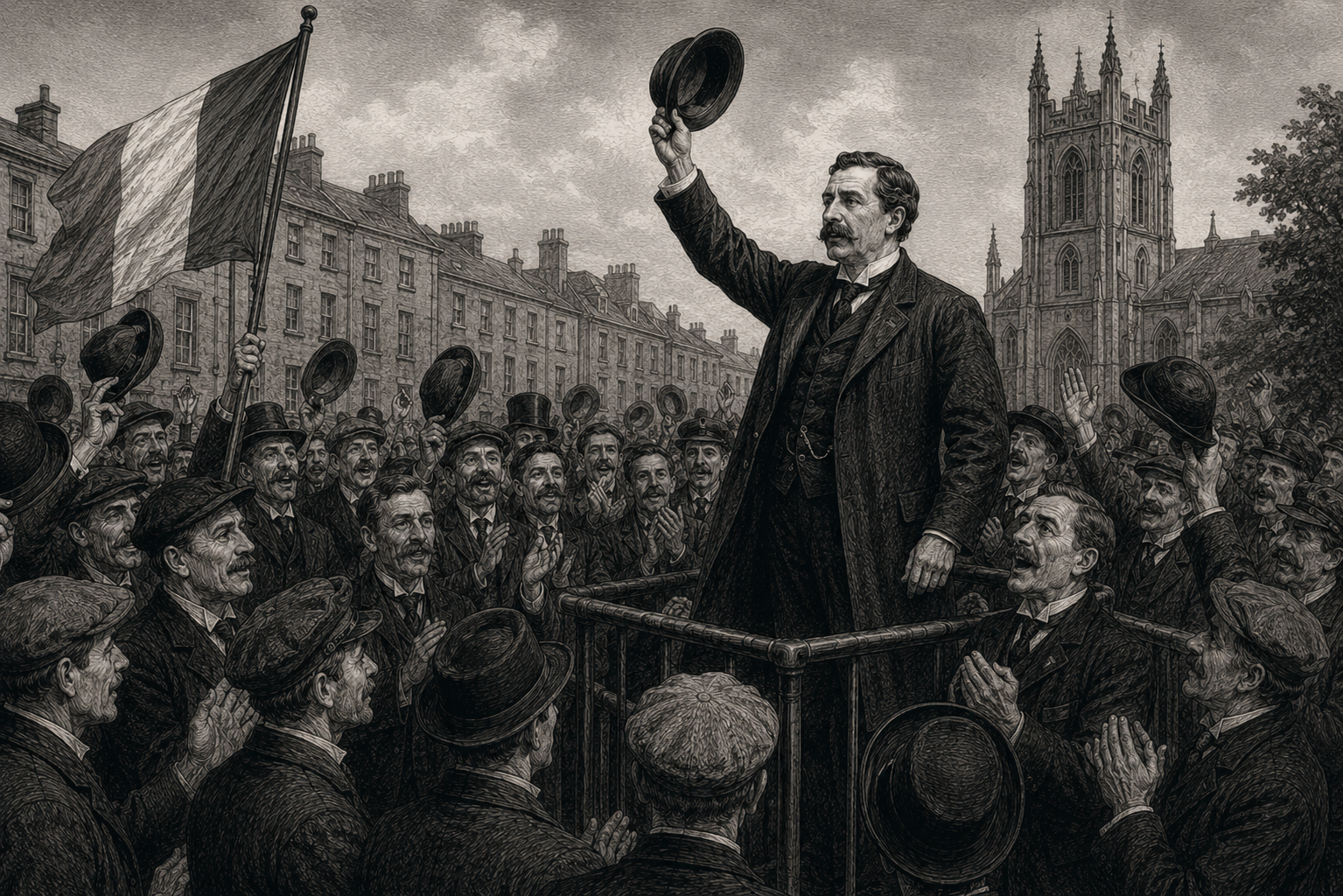
Read Article: Nationalist VictoryThe reunited Irish Parliamentary Party has emerged from the general election holding seventy-seven of Ireland’s 103 seats at Westminster, confirming constitutional nationalism as the country’s dominant electoral force. The result will be welcomed in Limerick, where Michael Joyce has captured the city constituency by a decisive majority and joined John Redmond’s restored parliamentary organisation. Although the Conservative and Liberal Unionist alliance retains power throughout the United Kingdom, Irish voters have again returned an overwhelming majority of representatives committed to Home Rule. The figures demonstrate that nearly a decade of nationalist division has not destroyed support for parliamentary self-government.
The election was the first held after the principal Parnellite and anti-Parnellite organisations formally reunited earlier this year. Their separation followed the political fall of Charles Stewart Parnell in 1890 and had produced rival candidates, personal hostility and weakened discipline. William O’Brien, the United Irish League and growing pressure from nationalist voters helped bring the factions together. Redmond was chosen chairman of the reunited party in February and entered the election promising renewed cooperation at Westminster. The campaign consequently became an important test of whether the agreement between former rivals possessed genuine electoral authority or represented only a temporary settlement among parliamentary leaders.
The party’s seventy-seven seats give it an overwhelming presence among Ireland’s Westminster representatives, though nationalist unity remains incomplete. Supporters of Timothy Healy have retained a smaller independent following, while unionists remain powerful in north-eastern Ulster and among sections of Dublin’s professional and commercial communities. The Irish Unionist Alliance secured eighteen seats, with Liberal Unionists and other candidates accounting for much of the remaining representation. Many constituencies were uncontested, reflecting the strength of established political organisations and the limited willingness of opponents to undertake expensive campaigns where the likely result appeared beyond serious doubt.
In Limerick City, Michael Joyce defeated Unionist candidate Francis Kearney by 2,521 votes to 474. Joyce’s victory carries particular local significance because he came from Merchant’s Quay, worked at sea and became a Shannon pilot before entering public life. His background allows nationalists to present the result as a triumph for a candidate rooted in the working and maritime life of the city. The wider county also remains firmly nationalist in parliamentary allegiance. Local supporters now expect their representatives to press for Home Rule, tenant purchase, labourers’ cottages and relief from poverty rather than allow renewed personal disputes to weaken Ireland’s parliamentary influence.
The election confirms that constitutional methods still command the allegiance of most Irish voters entitled to participate. Advanced nationalists may criticise dependence upon Westminster, but they possess neither the parliamentary representation nor the electoral organisation enjoyed by Redmond’s party. The reunited members must now demonstrate that numerical strength can be converted into political leverage against a government returned with a commanding British majority. Limerick’s electorate has endorsed that parliamentary strategy, but expectations will be high. The party has recovered unity, leadership and an imposing body of seats; its next challenge is to prove that these advantages can secure practical reforms and revive the campaign for Irish self-government.
- Parliamentary Election Returns, General Election of 1900, House of Commons Parliamentary Papers — the official returns recording every Irish constituency, candidate, vote total and elected member. The exact command-paper number and pages covering the complete Irish return should be confirmed before formal citation.
- Freeman’s Journal, 25 October 1900 — contemporary nationalist reporting and analysis of the completed election results, the strength of the reunited Irish Parliamentary Party and John Redmond’s leadership. Exact page and column should be confirmed before formal citation.
- The Irish Times, 25 October 1900 — contemporary reporting on the final Irish representation, Unionist results and the overall United Kingdom election outcome. Exact page and column should be confirmed before formal citation.
- Limerick Chronicle, 5 October 1900 — contemporary local reporting on Michael Joyce’s victory over Francis Kearney in Limerick City, including the declared vote totals and local reaction. Exact page and column should be confirmed before formal citation.
- John Redmond Papers, National Library of Ireland, 1878–1918 — contemporary correspondence and political records concerning party reunion, candidate organisation, the 1900 election and Redmond’s leadership of the Irish Parliamentary Party. The precise manuscript item should be identified before formal citation.
-
Ireland Votes
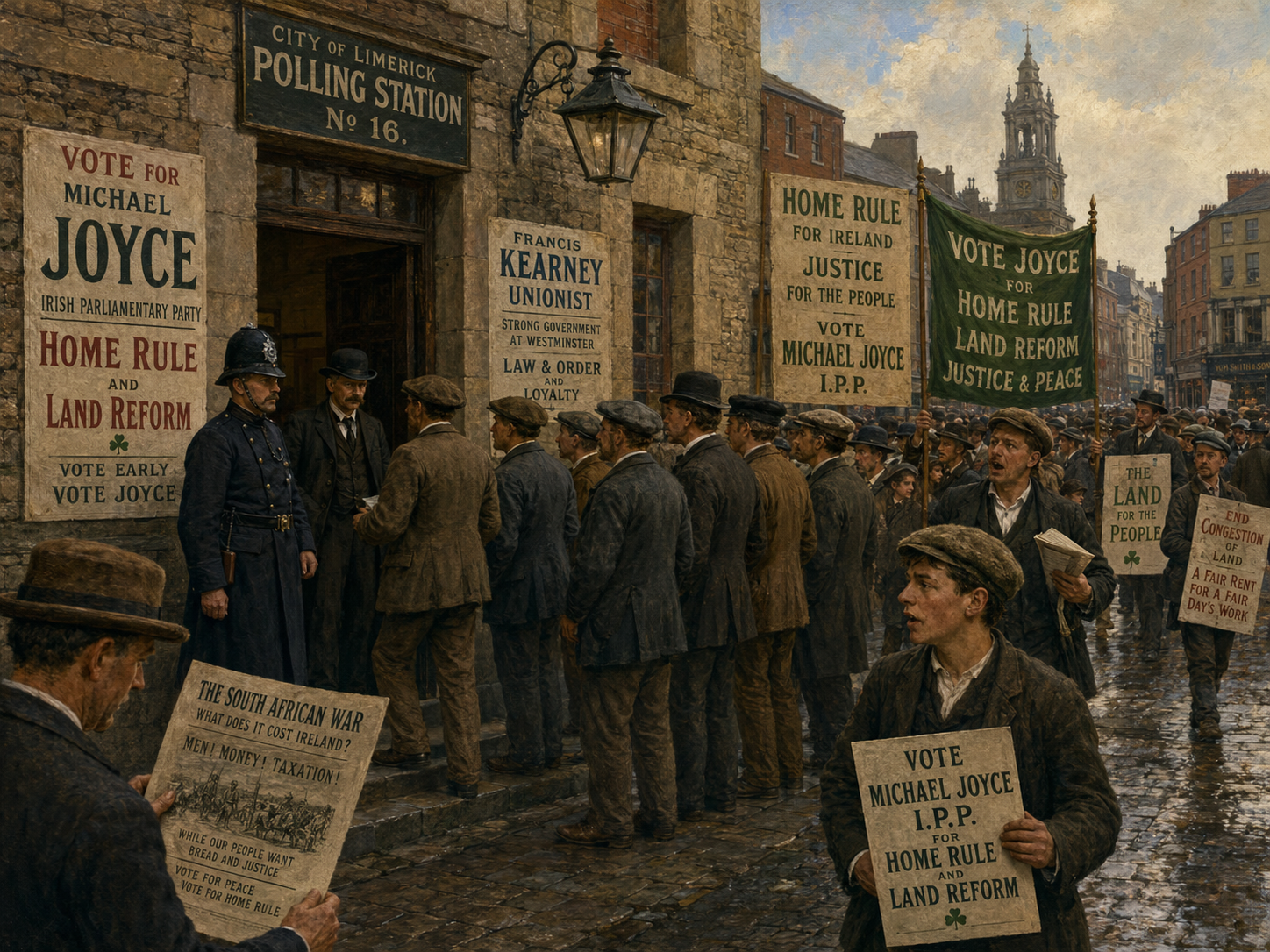
Read Article: Ireland VotesElectors in Limerick City are voting today as the United Kingdom general election continues across Ireland and Britain. The local contest places Michael Joyce of the reunited Irish Parliamentary Party against Francis Kearney, the Unionist candidate, and offers voters a direct choice between Home Rule nationalism and continued government from Westminster. Campaigning throughout the city has centred upon Irish self-government, land reform, the South African War and the ability of the newly reunited nationalist party to act with discipline. Across Ireland, polling is occurring on different days between late September and October rather than through one national election day.
The election follows the dissolution of Parliament on 25 September and has been called while the British Government expects public support for its conduct of the war in South Africa. Conservatives and Liberal Unionists are appealing to imperial confidence and military success, leading opponents to describe the contest as a “Khaki Election.” Irish nationalists approach it from a different direction. Their principal concern is whether the reunited parliamentary movement can recover the authority lost during the long division between Parnellites and anti-Parnellites. The vote therefore tests not only competing British governments but also the strength and credibility of constitutional nationalism throughout Ireland.
John Redmond leads the restored Irish Parliamentary Party into its first general election since reunion. Its candidates promise renewed pressure for Home Rule, tenant purchase and reforms benefiting impoverished rural communities. Unionists, strongest in north-eastern Ulster and among sections of the commercial and professional classes elsewhere, defend the Union and warn that Home Rule would threaten economic security and Protestant interests. A smaller number of nationalist candidates remain outside Redmond’s discipline, including followers of Timothy Healy. Although many Irish constituencies are uncontested, hard-fought campaigns in Limerick, Dublin and several provincial districts reveal that political reconciliation has not removed every rivalry or ideological division.
The Limerick City contest has particular local significance because Joyce is closely associated with the port, labour and civic life. Born at Merchant’s Quay and employed as a Shannon pilot, he presents himself as a representative familiar with the working lives of the electorate. Kearney’s candidacy ensures that the city’s unionist minority retains a parliamentary voice during the campaign, although nationalists expect a decisive victory. Public meetings, canvassing, newspaper appeals and personal influence have shaped the contest. Most women and many working-class men remain excluded from the parliamentary franchise, leaving political decisions in the hands of a limited male electorate meeting existing property qualifications.
Results from across Ireland will emerge gradually as constituencies complete their nominations and polls. The reunited Irish Parliamentary Party is expected to remain the country’s dominant political organisation, while Irish unionism should retain its strongest representation in Ulster. In Limerick, today’s result will show whether nationalist reunion has translated into electoral confidence and whether a candidate rooted in the city’s maritime and labouring life can secure its Westminster seat. Whatever the local outcome, Ireland will return 103 members to a Parliament sitting in London. The election therefore renews representation without resolving the central nationalist argument that Irish affairs should ultimately be decided in Ireland.
- Limerick Chronicle, 4–5 October 1900 — contemporary local reporting on polling in Limerick City, the candidacies of Michael Joyce and Francis Kearney, campaign meetings and the declared result. Exact page and column should be confirmed before formal citation.
- Freeman’s Journal, 4–5 October 1900 — contemporary nationalist coverage of the Limerick contest and general-election results from constituencies across Ireland. Exact page and column should be confirmed before formal citation.
- The Irish Times, 4–5 October 1900 — contemporary reporting on Irish polling, Unionist and nationalist campaigns, constituency results and the wider United Kingdom election. Exact page and column should be confirmed before formal citation.
- Parliamentary Election Returns, General Election of 1900, House of Commons Parliamentary Papers — official returns recording candidates, votes, constituencies and elected members throughout Ireland. The exact command-paper number and page for Limerick City should be confirmed before formal citation.
- Royal Proclamation dissolving Parliament, 25 September 1900, The London Gazette — official notice initiating the general election and the issue of writs for new parliamentary elections. The exact Gazette issue and page should be confirmed before formal citation.
-
Irish Commandos
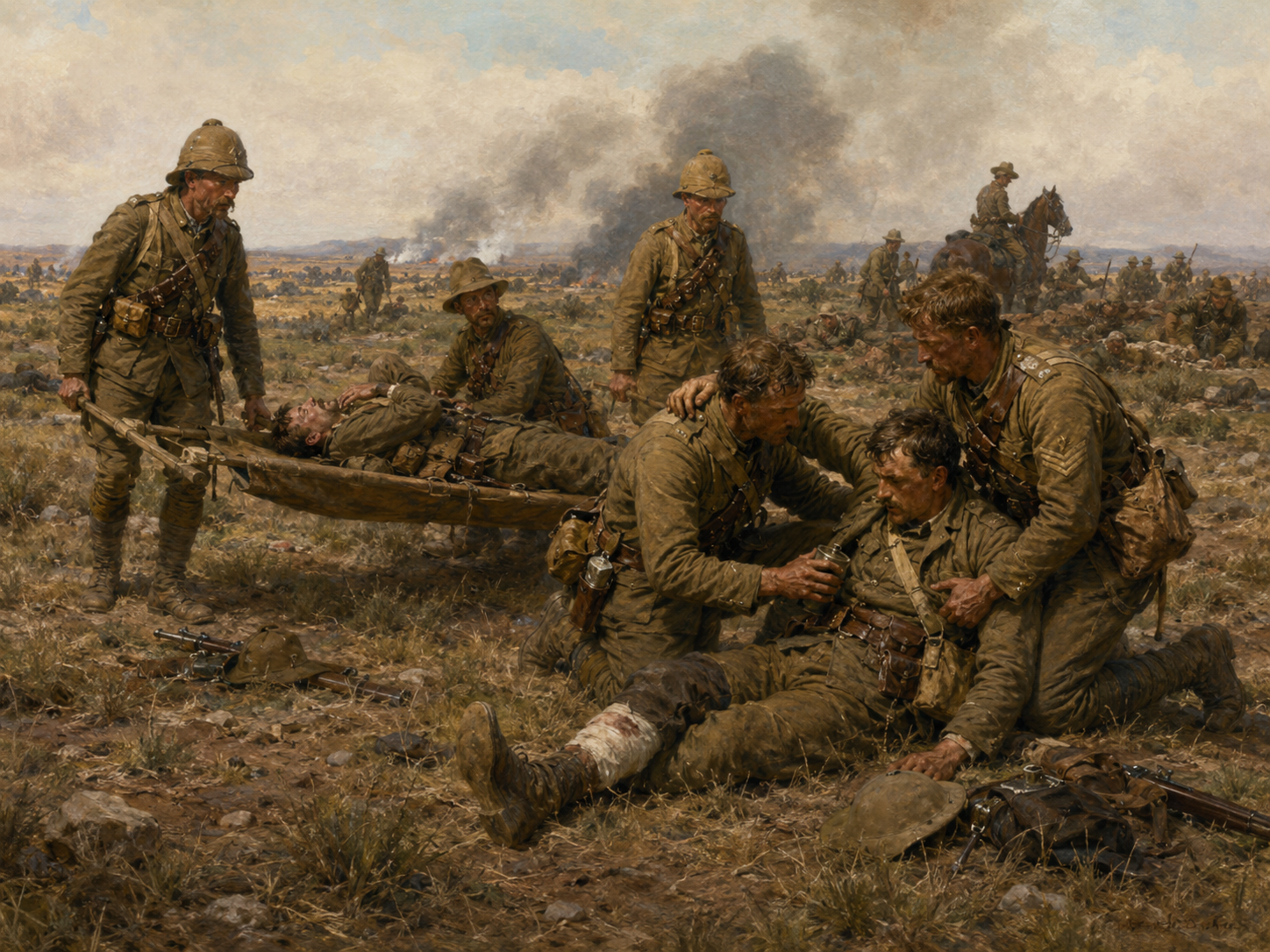
Read Article: Irish CommandosIrish volunteers are continuing to fight beside the Boer commandos in South Africa, creating a remarkable contrast with the thousands of their countrymen serving in British uniform. Reports of the Irish Transvaal Brigade have attracted considerable interest among Limerick nationalists, who regard its members as practical supporters of a small nation resisting imperial conquest. Others question the wisdom of Irishmen taking arms against British forces containing regiments recruited heavily throughout Munster. The conflict has therefore placed Irish soldiers on opposing sides of the same war, each claiming that duty, loyalty or national principle justifies his presence on the battlefield.
The original Irish Transvaal Brigade was established shortly before war began in October 1899. Many of its recruits were Irish miners, railway workers and labourers already living in the South African Republic, although Irish-Americans and men arriving from elsewhere also joined its ranks. The Transvaal Government recognised the unit as part of the Boer forces and granted citizenship to foreign volunteers who entered its service. Unlike a conventional British regiment, the brigade operated as a mounted commando, whose members supplied much of their own equipment and adapted themselves to the mobile warfare practised by the Boer republics across the open South African countryside.
Command initially rested with Colonel John Blake, an Irish-American and former United States cavalry officer. John MacBride of County Mayo served as his deputy and later assumed greater responsibility after Blake was injured. The brigade guarded Boer artillery, took part in operations around Ladysmith and fought during the Battle of Colenso. Its members became celebrated in nationalist newspapers, which presented them as Irishmen translating sympathy for the Boers into armed action. A second Irish unit associated with the Irish-Australian Arthur Lynch was also organised, although rivalry and disagreement divided the volunteers and prevented them from operating as one unified Irish force.
Supporters at home have treated the commandos as evidence that Ireland’s hostility towards British imperial policy extends beyond speeches and parliamentary amendments. Michael Davitt, who resigned his Commons seat over the war, visited South Africa and met Irish volunteers serving with the Boer forces. Advanced nationalists praised MacBride and his comrades as men willing to risk their lives for the independence of another small nation. Critics answered that the volunteers were fighting against Irish soldiers in British regiments and might contribute directly to Irish deaths. The brigade consequently became both a nationalist symbol and a source of painful moral controversy.
In Limerick, where military employment and enlistment have long supported working-class households, the Irish brigade’s exploits are likely to inspire sharply divided reactions. Nationalists may admire men who rejected British authority and joined the Boer cause, while soldiers’ families may view them as enemies facing their own relatives abroad. Economic circumstance also separates the two groups: many Irishmen entered British service for wages and security, while numerous Boer volunteers were emigrants whose lives had already carried them far from Ireland. South Africa has turned Irish political disagreement into armed reality, placing men of the same country, and sometimes similar backgrounds, on opposite sides of an imperial war.
- John MacBride, The Irish Brigade in South Africa — MacBride’s first-hand account of his service with and later command of the Irish Transvaal Brigade, including its formation, personnel and military operations. The publication history and original article dates should be confirmed before formal citation.
- Minute Book of the Irish Transvaal Committee, 7 October 1899–6 March 1900, National Library of Ireland, MS 19933 — records the organisation of Irish sympathy with the Boers and includes references to Maud Gonne, Arthur Griffith, John O’Leary, T. O’Neill Russell and William Redmond.
- Michael Davitt Papers, Trinity College Dublin, Manuscripts and Archives Research Library, MS 9657 — contains notes, reports and draft material concerning the Boer War, Davitt’s South African journey and his encounters with Boer forces and Irish volunteers.
- Michael Davitt, The Boer Fight for Freedom, New York: Funk & Wagnalls, 1902 — Davitt’s contemporary first-hand account based upon his travels among the Boer forces, including discussion of the Irish brigades and their commanders.
- Freeman’s Journal, issues published during March and April 1900 — contemporary nationalist reporting on John MacBride, Arthur Lynch, Irish volunteers and the progress of the Boer campaign. Exact issue, page and column should be confirmed before formal citation.
-
Divided Loyalties
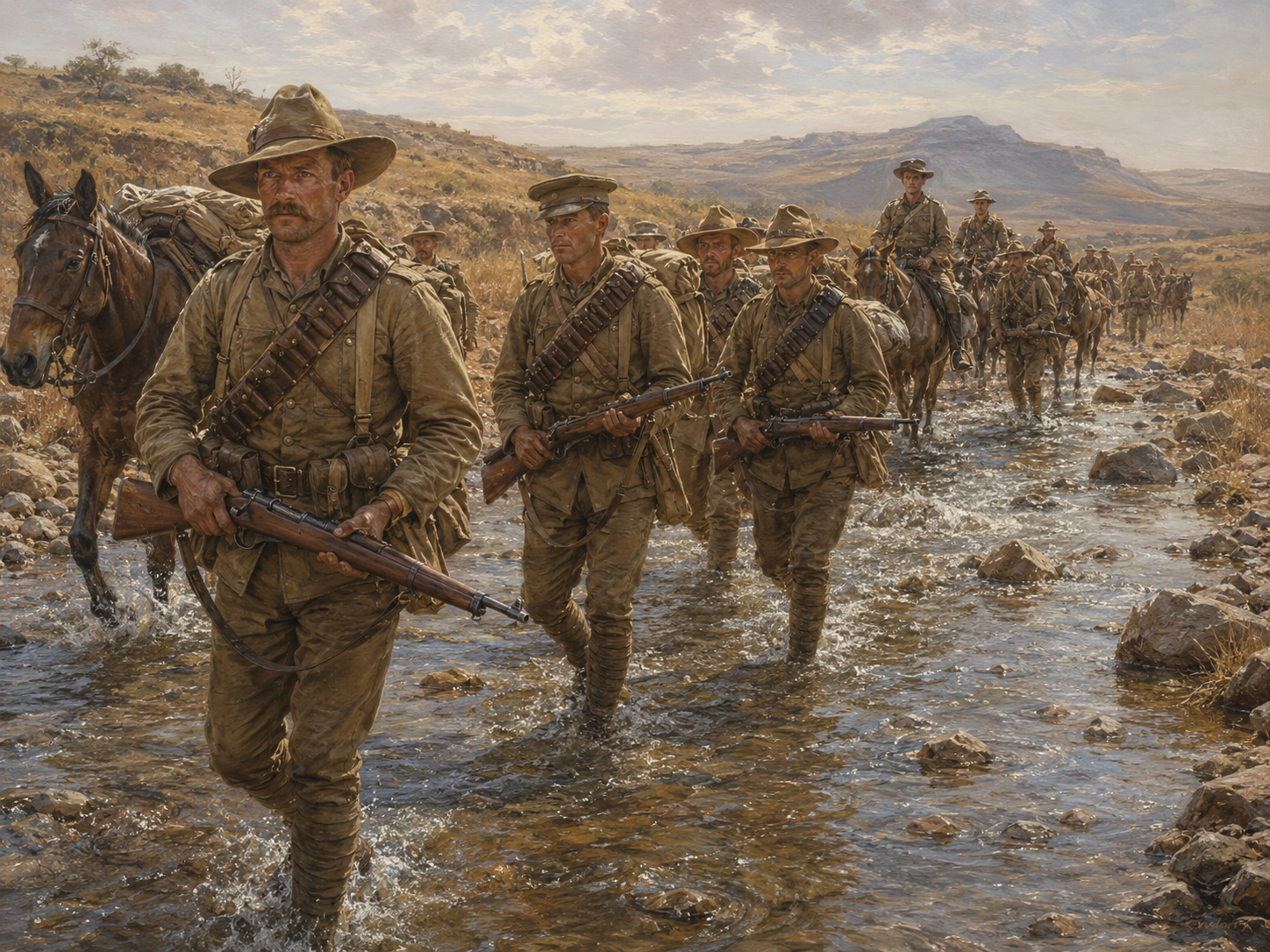
Read Article: Divided LoyaltiesIrish soldiers continue to fight with British forces in South Africa while nationalist opposition to the war grows increasingly vocal at home. The conflict has produced divided feelings across Limerick city and county, where military service has long provided wages, regular employment and support for working-class families. Some residents regard the soldiers as courageous representatives of Ireland within the Empire, while others condemn the campaign against the Boer republics as an act of imperial aggression. Many households occupy a more painful position, opposing British policy while anxiously awaiting news from relatives serving in distant regiments under British command.
Military service offered opportunities unavailable to many Irish labourers at the close of the nineteenth century. Regular pay, food, clothing and the prospect of a pension could make enlistment attractive amid rural poverty, insecure employment and limited advancement. The Royal Munster Fusiliers recruited men from Limerick, Cork, Kerry and Clare, binding the British Army closely to communities that often supported Irish nationalism. Soldiers did not necessarily enlist from imperial conviction. Economic necessity, family tradition, adventure and the absence of secure civilian work could all influence the decision. Their presence in South Africa therefore cannot be understood simply as an expression of political loyalty.
Unionists and imperial supporters have praised the contribution of Irish regiments, presenting their battlefield conduct as evidence that Ireland remains loyal to the Crown. Public reports of engagements, casualties and military honours encourage pride in Irish soldiers even among people who question the war itself. Nationalist representatives answer that respect for men performing their duty does not require approval of the Government that sent them overseas. John Redmond today acknowledged the bravery of Irish troops while condemning Britain’s attempt to destroy the independence of the Transvaal and Orange Free State. His distinction reflects the difficult position faced by numerous Irish families.
Advanced nationalists have adopted a more uncompromising attitude, urging Irishmen not to join an army being used against another small nation. Michael Davitt resigned from Parliament over the war, while pro-Boer campaigners have criticised recruitment and celebrated Irish volunteers fighting on the opposing side. Such arguments can cause resentment among soldiers’ relatives, especially when military wages support households at home. The Irishman in British uniform has consequently become a contested figure: honoured as a disciplined soldier, pitied as a victim of poverty or denounced as an instrument of empire. These interpretations reveal deep disagreements about service, survival, patriotism and national allegiance.
In Limerick, the South African campaign enters daily life through barracks, recruiting offices, newspaper casualty lists, soldiers’ letters and payments reaching dependent families. A political speech against the war may be applauded in the same neighbourhood where a mother waits for news of her enlisted son. Imperial loyalty, economic necessity and nationalist opposition are not always separated into different households; they may exist beneath one roof. The conflict has exposed the complicated place of Irish soldiers within British power. Their service does not settle Ireland’s political loyalties, but instead shows how poverty, employment, family duty and national conviction can pull ordinary people in opposing directions.
- Hansard, House of Commons Debates, 7 February 1900, volume 78, “Seventh Day’s Debate” — records John Redmond’s opposition to the South African War, his support for the independence of the Boer republics and his acknowledgement of the courage displayed by Irish soldiers serving in British forces.
- Hansard, House of Commons Debates, 5 February 1900, volume 78, “Fifth Day’s Debate” — records parliamentary arguments defending the war and invoking the service and loyalty of Irish soldiers in South Africa.
- Limerick Chronicle, issues published during February 1900 — contemporary local reporting on the South African campaign, Irish regiments, recruitment, casualties and political reactions in Limerick. Exact issue, page and column should be confirmed before formal citation.
- Royal Irish Fusiliers Soldiers’ Letters, 1899–1907, National Library of Ireland — letters written from South Africa by Private Edward Byrne, Corporal Michael Byrne and other soldiers describing military life, campaigning and communication with families at home. The precise manuscript reference should be confirmed before formal citation.
- Papers concerning the band of the Royal Munster Fusiliers at Kimberley during the Boer War, National Library of Ireland, 1901 — contemporary regimental material connected with Munster soldiers serving in South Africa. The precise collection and manuscript reference should be confirmed before formal citation.
-
New Nationalism
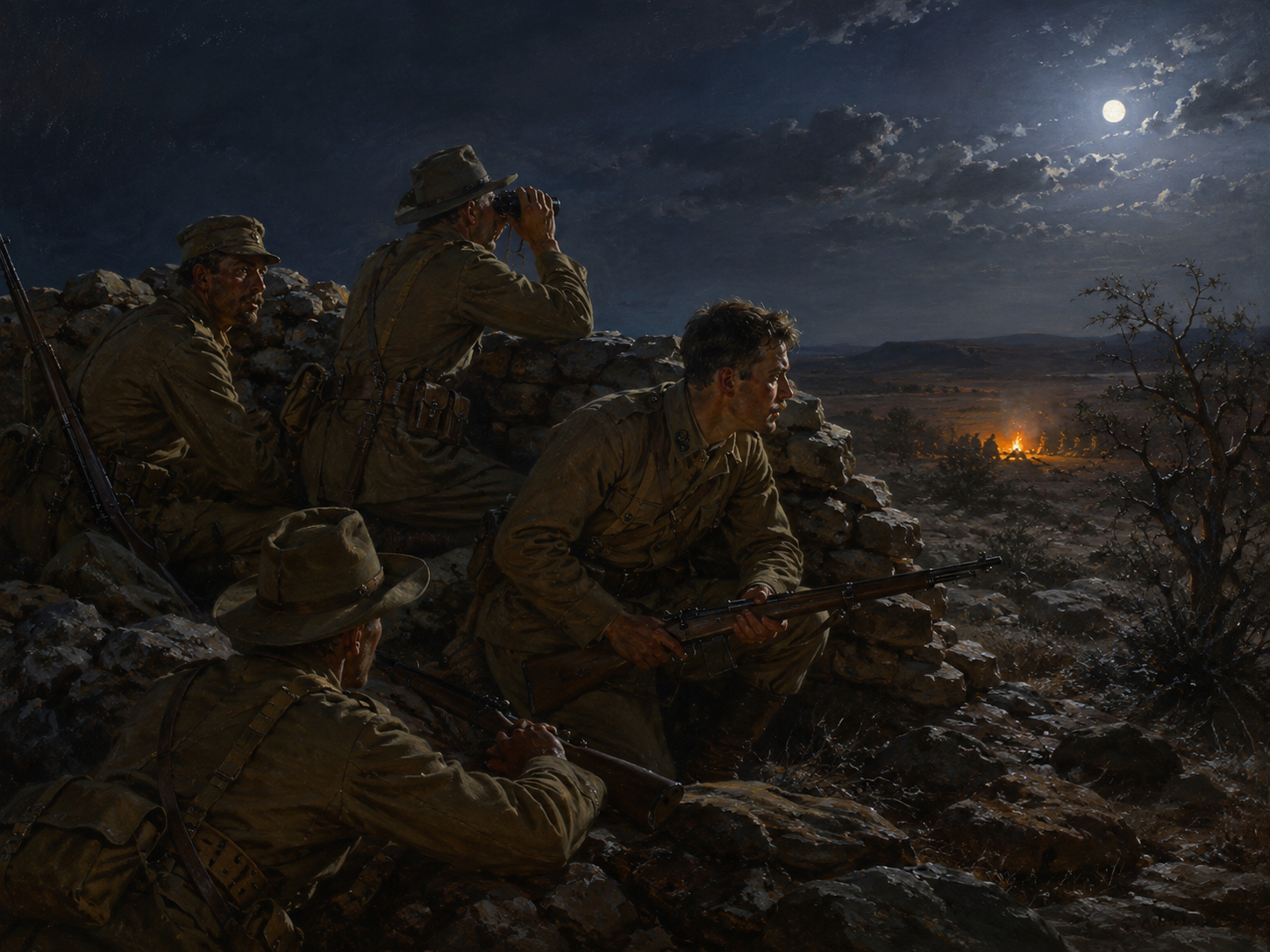
Read Article: New NationalismPro-Boer feeling is giving renewed confidence to younger Irish nationalists who have grown dissatisfied with the pursuit of Home Rule solely through the British Parliament. In Limerick, admiration for the resistance of the Transvaal and Orange Free State has entered political meetings, newspaper discussions and conversations among cultural revivalists. Many continue to support the reunited Irish Parliamentary Party, yet others ask whether speeches and negotiated concessions can secure genuine national freedom. To these younger activists, the Boer struggle appears to show that a small nation must cultivate its own institutions, resources and determination rather than depend upon imperial goodwill.
The war has provided advanced nationalists with a living example more immediate than memories of earlier Irish rebellions. Britain’s campaign against the two Boer republics is presented as evidence that imperial power will not surrender control merely because a smaller people demands political rights. Constitutional nationalists condemn the conflict while continuing to seek an Irish legislature within the United Kingdom. Their separatist critics draw a more sweeping conclusion, arguing that Ireland should abandon dependence upon Westminster and develop independent cultural, economic and political strength. The South African struggle has therefore widened an old disagreement about the methods by which Irish freedom might eventually be secured.
Arthur Griffith’s United Irishman has become an important forum for this emerging argument. Griffith and his associates link support for the Boers with resistance to Anglicisation, encouragement of Irish industries and the recovery of national confidence. Cumann na nGaedheal, whose programme is published today, proposes to advance Irish national independence through history, language, literature, music, native games and economic self-reliance. The organisation does not yet rival the parliamentary movement in numbers or electoral influence. It nevertheless offers younger nationalists a programme extending beyond Home Rule and provides cooperation between separatists, cultural organisations and activists disappointed by repeated reliance upon British political parties.
The Irish Transvaal Committee has already united figures such as Maud Gonne, Arthur Griffith, John O’Leary and William Redmond in organising sympathy for the Boer cause. Michael Davitt’s resignation from Parliament and subsequent journey to South Africa added moral authority to opposition against the war. Major John MacBride and the Irish Brigade supplied separatists with a more militant example by fighting alongside the Boers. Their actions are celebrated by advanced nationalists as proof that Irish sympathy need not be confined to parliamentary protest. Women associated with Inghinidhe na hÉireann have also connected anti-imperialism with cultural revival, social work and the demand for complete independence.
Constitutional nationalism remains the strongest organised force in Limerick, and most voters are unlikely to abandon parliamentary representation suddenly. The Boer conflict has nonetheless altered the language in which younger activists discuss Ireland’s future. They can now point to events abroad when arguing that nationality requires self-reliance, organisation and a willingness to resist political dependence. Advanced nationalism remains fragmented, and its supporters disagree over tactics, social questions and the place of physical force. Yet South Africa has furnished them with an international cause, recognisable heroes and a powerful criticism of empire. Home Rule remains dominant, but it no longer defines every nationalist ambition.
- United Irishman, 6 October 1900, “Formation of Cumann na nGaedheal” — publishes the organisation’s programme for advancing Irish national independence through Irish history, language, literature, music, native games, industry and resistance to Anglicisation. Exact page and column should be confirmed before formal citation.
- Minute Book of the Irish Transvaal Committee, 7 October 1899–6 March 1900, National Library of Ireland — records the organisation of Irish sympathy with the Boers and contains references to Maud Gonne, Arthur Griffith, John O’Leary, T. O’Neill Russell and William Redmond. The exact manuscript call number should be confirmed before formal citation.
- Michael Davitt Papers, Trinity College Dublin, Manuscripts and Archives Research Library, MS 9657 — contains notes, reports and draft material concerning the Boer War and Davitt’s The Boer Fight for Freedom.
- James Connolly, resolution drafted for an Irish Socialist Republican Party public meeting, 27 August 1899, William O’Brien Papers, National Library of Ireland — expresses sympathy with the Boer republics and condemns British interference in the Transvaal. The exact manuscript call number should be confirmed before formal citation.
- United Irishman, issues published during 1900 — contemporary separatist reporting and commentary connecting the Boer struggle with Irish independence, anti-imperialism and criticism of parliamentary dependence. Exact issue, page and column should be confirmed before formal citation.
-
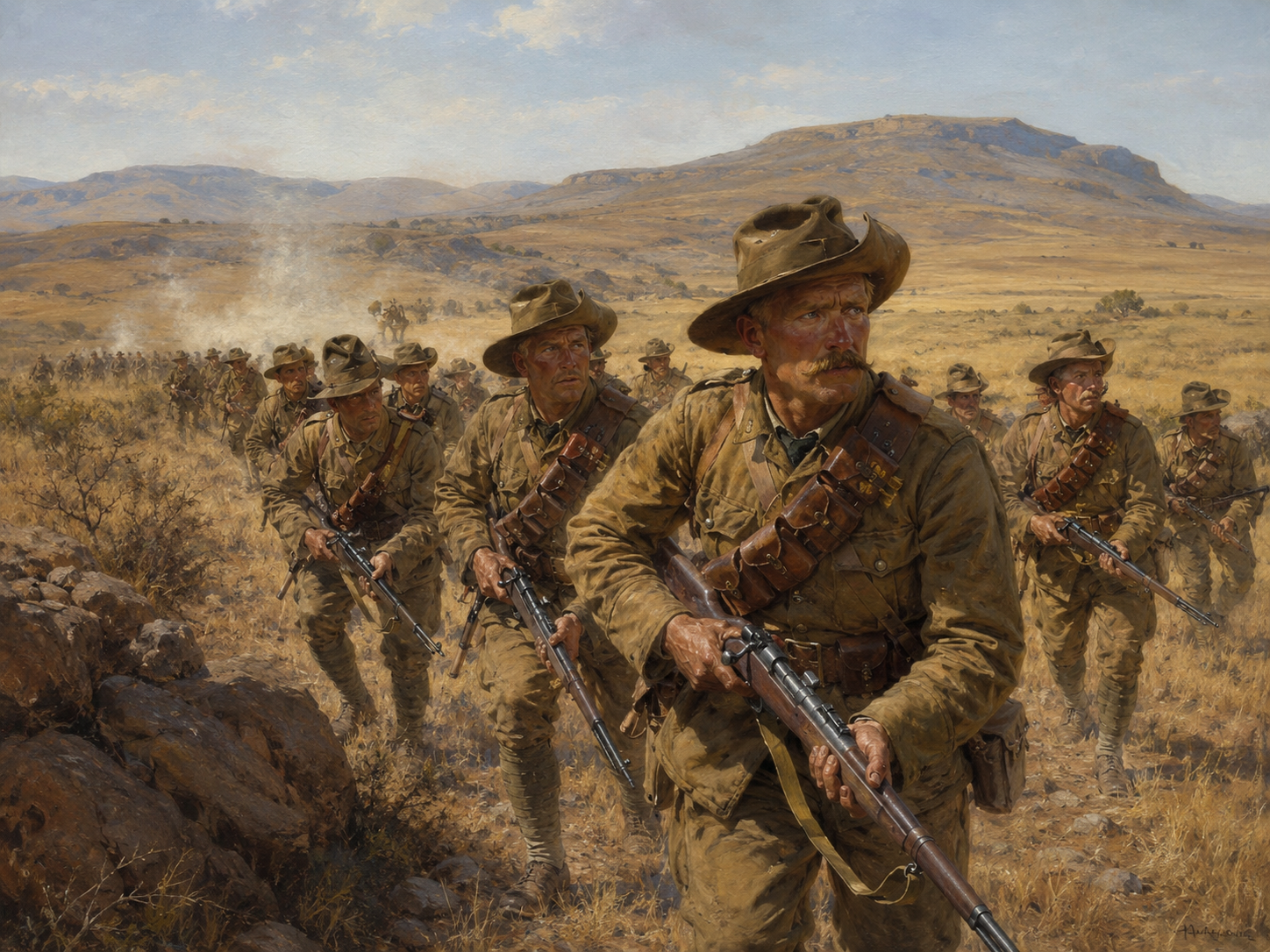
Boer Rallies
Read Article: Boer RalliesPublic support for the Boer republics has taken a prominent civic form in Limerick as the Corporation moves to confer the freedom of the city upon Paul Kruger, former president of the South African Republic. The decision reflects a wider succession of meetings, resolutions and demonstrations held in Irish towns against Britain’s war in South Africa. Nationalist audiences have repeatedly identified the Boers as a small people defending their independence against imperial conquest. In Limerick, the argument carries particular force, although many local families remain deeply concerned for Irish soldiers serving with British regiments overseas.
Since the war began in October 1899, gatherings in Dublin, Cork and numerous provincial centres have condemned British policy and praised the resistance of the Transvaal and Orange Free State. Organisers have included constitutional nationalists, advanced nationalists, labour activists and members of pro-Boer committees. Their political methods frequently differ, yet the South African conflict has provided them with a common platform. Speakers draw direct parallels between Boer resistance and Ireland’s continuing demand for self-government, portraying both as struggles by smaller nations against the authority of a powerful empire determined to control their political future and economic resources.
The campaign has been advanced through public speeches, newspaper reports, municipal resolutions and symbolic expressions of solidarity. Michael Davitt resigned his parliamentary seat in protest against the war and subsequently travelled to South Africa. John Redmond carried Irish opposition into the House of Commons, declaring that the sympathy of Ireland rested with the Boer republics. Maud Gonne and other nationalist activists also opposed military recruitment and organised public protest. In Limerick, Mayor John Daly and nationalist councillors have given the movement civic authority, turning sympathy expressed at public meetings into a formal declaration issued in the city’s name.
Not all Irish opinion supports the Boers. Unionists defend Britain’s campaign and point to the courage and sacrifice of Irish soldiers as evidence of Ireland’s place within the Empire. Even among nationalist families, opposition to the war is complicated by anxiety for relatives in uniform. Pro-Boer speakers generally distinguish between condemnation of British policy and respect for ordinary soldiers carrying out military duty. Nevertheless, recruiting drives, military celebrations and nationalist demonstrations have exposed sharply competing loyalties. The war has become an argument not only about South Africa, but also about Ireland’s identity, political rights and relationship with imperial government.
Limerick’s decision to honour Kruger places the city among the strongest civic expressions of Irish pro-Boer feeling. The award cannot alter events on the battlefield, but its political meaning is unmistakable. It presents the Boer leader as the representative of a smaller nation resisting conquest and allows Limerick nationalists to express their own opposition to British authority. Similar meetings across Ireland have transformed a distant colonial war into a domestic political question. Through speeches, resolutions and crowded halls, the Boer cause has become another language through which Irish people debate sovereignty, loyalty, military service and the right of nations to govern themselves.
- Limerick Corporation Minutes, 13 December 1900 — municipal record of the vote to confer the honorary freedom of Limerick upon Paul Kruger. The measure reportedly passed by twenty-two votes to two. The exact minute-book volume, folio and wording should be confirmed before formal citation.
- Hansard, House of Commons Debates, 7 February 1900, volume 78, “Seventh Day’s Debate” — records John Redmond’s statement that Irish sympathy rested with the Boer republics and that eighty Irish members would act together on the question. :contentReference[oaicite:0]{index=0}
- Freeman’s Journal, 14 December 1900 — contemporary nationalist reporting on Limerick’s decision to honour Kruger and Irish public sympathy for the Boer cause. Exact page and column should be confirmed before formal citation.
- The Irish Times, 14 December 1900 — contemporary reporting on the Limerick Corporation proceedings and political reactions to pro-Boer activity. Exact page and column should be confirmed before formal citation.
- Michael Davitt Papers, Trinity College Dublin, Manuscripts and Archives Research Library, MS 9657 — notes, reports and draft material concerning the Boer War and Davitt’s The Boer Fight for Freedom. :contentReference[oaicite:1]{index=1}
-
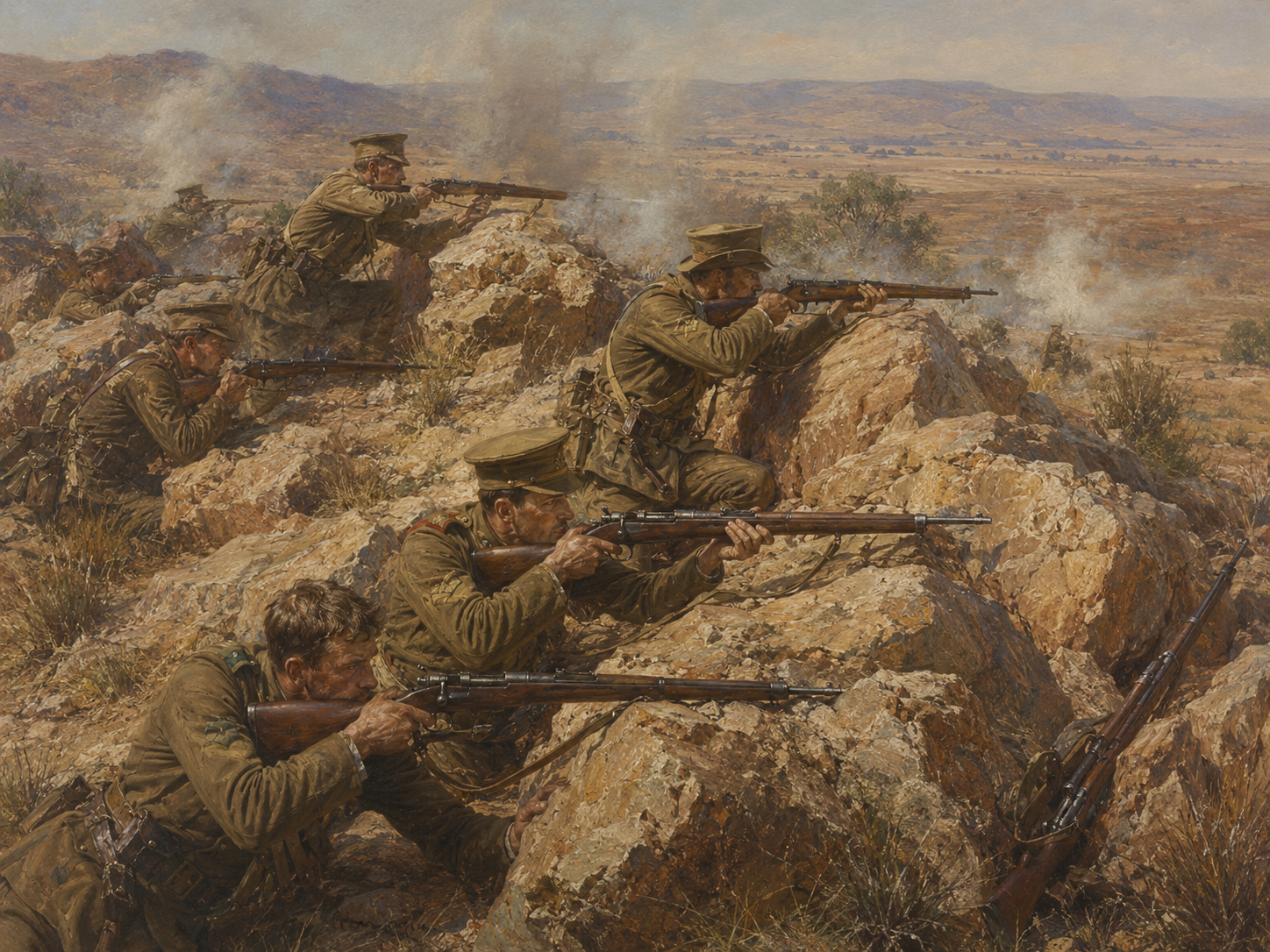
Boers Defended
Read Article: Boers DefendedNationalists throughout Limerick are following a forceful parliamentary protest against Britain’s continuing war in South Africa, where Irish representatives have declared their sympathy for the Boer republics. John Redmond told the House of Commons today that Ireland opposed the conflict and regarded the Transvaal and Orange Free State as small nations defending their independence against imperial power. The declaration carries particular weight in Limerick, where nationalist feeling exists beside the reality that local men serve in British uniform. Families may therefore condemn the Government’s policy while remaining deeply concerned for Irish soldiers facing death and injury overseas.
The war began in October following the failure of negotiations between Britain and the South African republics. British ministers presented the conflict as necessary to defend imperial interests and secure rights for foreign residents in the Transvaal. Irish nationalists viewed the dispute differently, seeing powerful Britain attempting to extinguish the independence of two smaller communities. Their resistance recalled Ireland’s own political grievances and continuing demand for self-government. The military setbacks suffered by British forces during the opening months strengthened admiration for Boer endurance, although thousands of Irish soldiers were simultaneously fighting within British regiments and sharing fully in the hardships and dangers of the campaign.
Redmond informed Parliament that eighty Irish members were prepared to act together against the Government’s policy. He moved an amendment calling for the war to end through recognition of the independence of the Transvaal and Orange Free State. His speech condemned both the origins and prosecution of the campaign, while acknowledging the courage of Irish soldiers required to perform their military duty. Redmond argued that Irish sympathy arose not merely from hostility towards England but from admiration for smaller nations resisting domination. His intervention also demonstrated how opposition to the war could provide newly reunited Irish parliamentarians with an immediate cause upon which to act collectively.
The nationalist position has drawn sharp criticism from Irish unionists, who point to the courage, recruitment and sacrifice of Irish soldiers as evidence of loyalty to the Crown and Empire. They contend that parliamentary support for the Boers misrepresents Ireland and dishonours men fighting in South Africa. Nationalists reject that accusation, distinguishing between respect for soldiers and opposition to the policy that sent them into battle. Michael Davitt had already resigned his parliamentary seat in protest against the war, while pro-Boer committees and public campaigns have kept the issue before Irish opinion. The conflict has consequently exposed competing understandings of Ireland’s place within the Empire.
In Limerick city and county, the debate cannot be treated as a distant quarrel conducted entirely at Westminster. Military connections, enlistment and family dependence upon army wages ensure that events in South Africa enter local homes, while nationalist organisations interpret Boer resistance through Ireland’s own struggle for political rights. News of battles is therefore received with divided emotions: anxiety for Irish soldiers, hostility towards imperial policy and admiration for the republics opposing conquest. Redmond’s amendment is unlikely to halt the war, but it gives constitutional nationalism a clear public position. Ireland’s parliamentary representatives have declared that the claims of empire must not outweigh a smaller nation’s independence.
- Hansard, House of Commons Debates, 7 February 1900, volume 78, columns 830–896, “Seventh Day’s Debate” — records John Redmond’s speech, his declaration of Irish sympathy with the Boer republics, and his amendment seeking an end to the war based upon recognition of their independence.
- House of Commons Division List, 7 February 1900, following John Redmond’s South African War amendment — identifies the MPs who voted upon the proposal and demonstrates the coordinated parliamentary position taken by Irish nationalist representatives. The division details are contained within the official parliamentary debate.
- Freeman’s Journal, 8 February 1900 — contemporary nationalist newspaper coverage of Redmond’s speech, the Irish amendment and parliamentary opposition to British policy in South Africa. Exact page and column should be confirmed before formal citation.
- The Irish Times, 8 February 1900 — contemporary Irish reporting on the Commons debate, nationalist sympathy for the Boers and unionist objections to Redmond’s position. Exact page and column should be confirmed before formal citation.
- John Redmond Papers, National Library of Ireland, 1878–1918 — contemporary correspondence and political papers relating to Redmond, Irish Parliamentary Party policy, Westminster activity and the South African War. The precise manuscript item should be identified before formal citation. The collection documents Redmond’s political career and leadership of the reunited party.
-
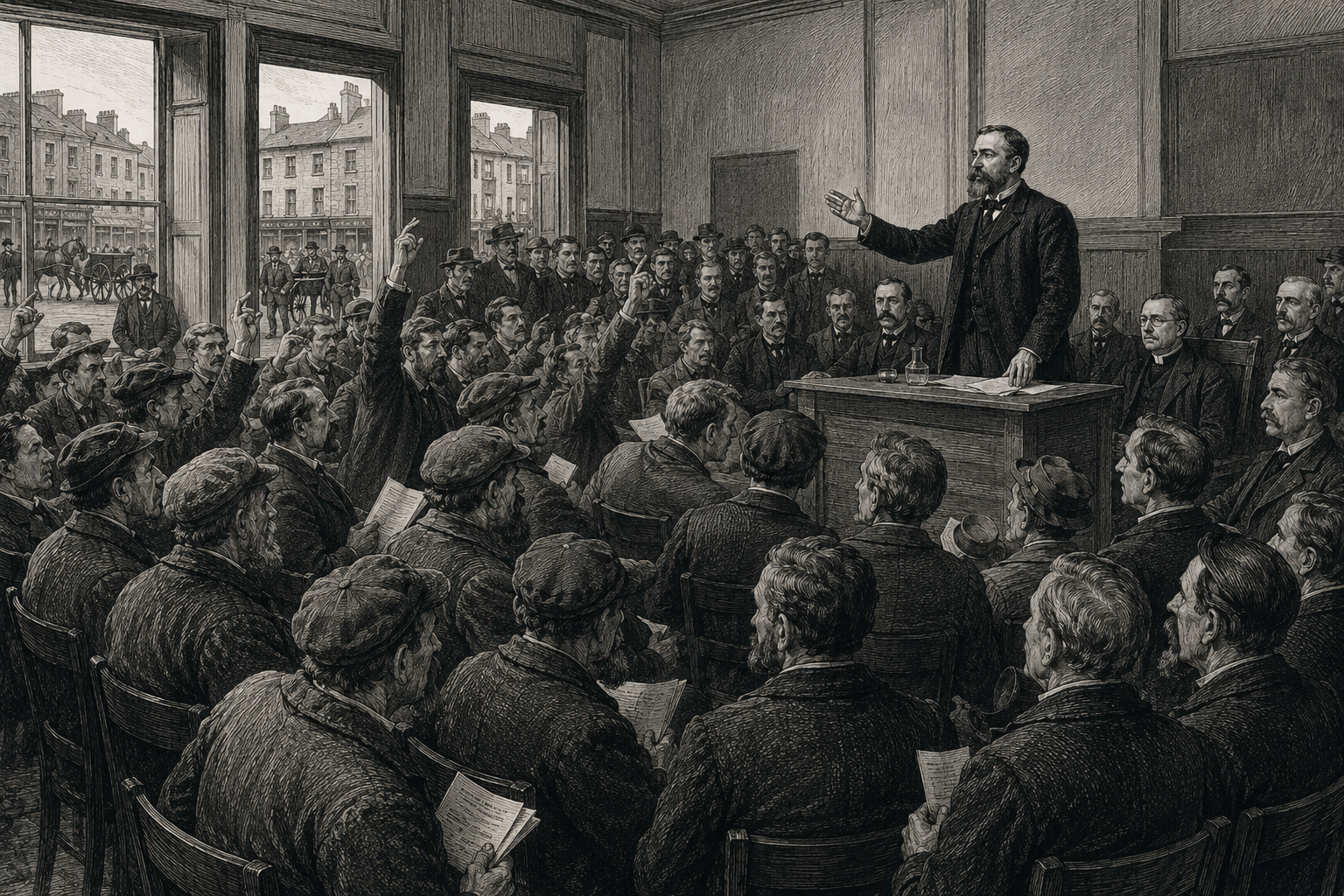
National Programme
Read Article: National ProgrammeThe reunited Irish Parliamenme Rule, land reform and the restoration of an Irish legislature responsible for domestic affairs. The programme places constitutional self-government and the condition of tenant farmers at the centre of nationalist politics following years of damaging division. In Limerick city and county, supporters are expected to welcome a policy connecting representation at Westminster with demands concerning land purchase, evicted tenants and overcrowded rural holdings. The agreement gives John Redmond’s leadership a defined political purpose while allowing the United Irish League to organise popular support through local branches, conventions and public meetings.
The nationalist movement entered the new century burdened by the divisions that followed Charles Stewart Parnell’s downfall in 1890. Rival parliamentary groups weakened electoral organisation and discouraged supporters who had previously regarded the Irish Party as a disciplined national force. Two Home Rule Bills had already been attempted at Westminster, in 1886 and 1893, but neither produced an Irish parliament. Meanwhile, the land question remained unsettled despite earlier legislation intended to improve tenant security and facilitate purchase. The rise of the United Irish League after 1898 restored popular activity by combining demands for political unity with agitation on behalf of small farmers, evicted tenants and landless families.
John Redmond now leads the reunited parliamentary party, while William O’Brien’s organisational work has provided it with a growing rural foundation. John Dillon, Timothy Harrington, Michael Davitt and other nationalist figures brought different traditions and personal loyalties into the settlement. Their agreement did not erase past disputes, but it restored a recognised parliamentary leadership capable of speaking for most constitutional nationalists. The United Irish League’s National Convention, meeting in Dublin on 19 and 20 June, established rules connecting local branches with national organisation. Home Rule remained the ultimate constitutional objective, supported by a renewed campaign to reform landholding and strengthen Irish control of domestic government.
The programme will face determined opposition from Unionists, who maintain that an Irish legislature would weaken the United Kingdom and place political and religious minorities under nationalist control. The government may consider limited Irish reforms while resisting any restoration of a parliament in Dublin. Differences could also develop within the nationalist movement over whether parliamentary leaders or League organisers should determine policy. Agrarian agitation has already produced allegations of intimidation in districts where disputed farms and grazing estates are contested. Party unity will therefore depend upon balancing constitutional action at Westminster with the demands of local supporters seeking immediate relief from economic hardship and unequal access to land.
In Limerick, the renewed policy could influence elections, local political associations and debates within county and district councils. Farmers seeking ownership of their holdings may look to the Irish Party for stronger land-purchase measures, while labourers and smallholders will judge whether reform reaches those with little property. Urban nationalists may regard an Irish legislature as a means of directing taxation, education, development and administration towards Irish needs. The programme gives Limerick supporters a common platform after a decade of factional conflict, yet its success will depend upon practical achievement. Home Rule, land reform and national unity have again been joined as the declared purposes of constitutional nationalism.
Primary Sources
- United Irish League, Constitution and Rules Adopted by the Irish National Convention, 19th and 20th June 1900, Dublin, Swan & Co., 1900; National Library of Ireland, Pamphlet Volume A17405; Thomas Bradley Papers, MS 33,561/2(12). This document verifies the Convention dates and the formal organisation adopted by the League.
- Freeman’s Journal and Daily Commercial Advertiser, 20 and 21 June 1900. Contemporary reports of the Irish National Convention can verify the speeches, resolutions and political programme discussed by nationalist representatives. Exact page and column should be confirmed before formal citation.
- The Irish Times, 20 and 21 June 1900. Contemporary reporting provides an alternative account of the Convention, nationalist reunion and the relationship between the parliamentary party and the United Irish League. Exact page and column should be confirmed before formal citation.
- John Redmond Papers, National Library of Ireland, correspondence concerning the United Irish League, the National Convention and parliamentary organisation during 1900, including MS 15,212/5. These papers can verify Redmond’s involvement in party reunion, League organisation and the development of nationalist policy.
- House of Commons Parliamentary Debates, 1900, speeches and questions concerning Irish government, land purchase, tenant grievances and nationalist organisation. These official parliamentary records can verify the positions expressed at Westminster by Irish members and government ministers. Exact volume, date and columns should be confirmed before formal citation.