O’Brien’S Organisation(c.1890s)
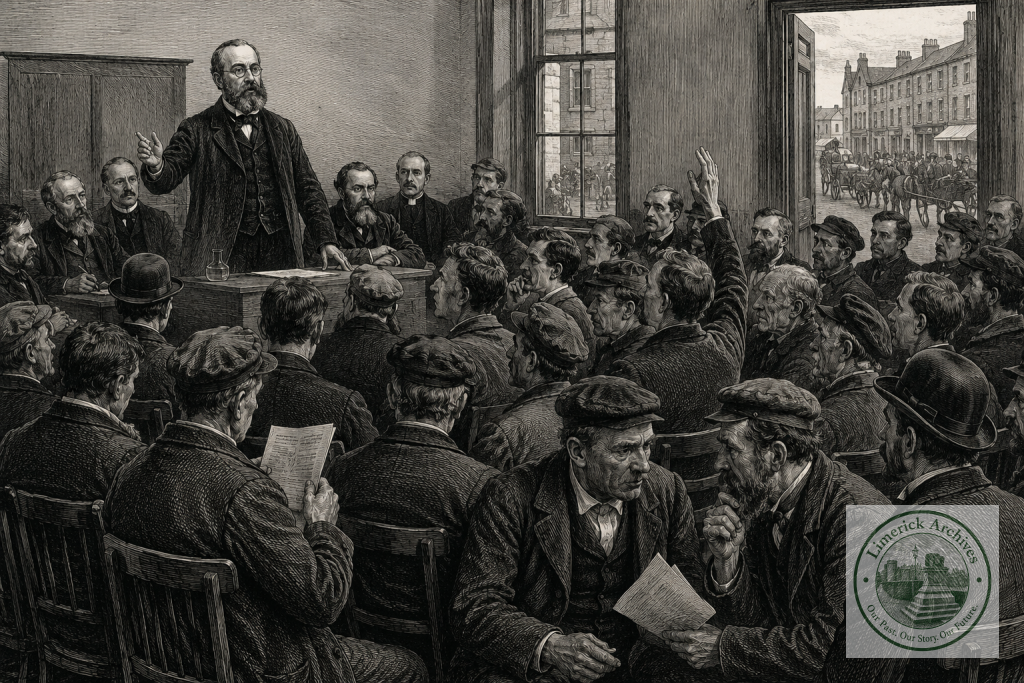
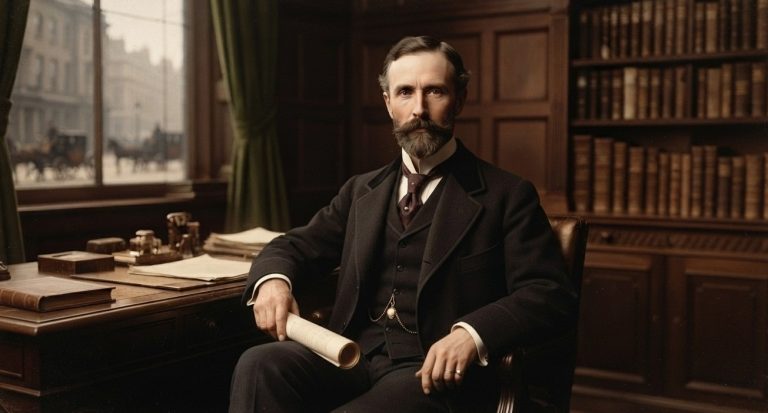
William O’Brien has emerged as the chief organiser behind the renewed strength of constitutional nationalism, using the United Irish League to rebuild political activity from the parish upwards. In Limerick city and county, where land grievances, tenant insecurity and memories of eviction remained powerful, the League offered nationalists more than occasional election meetings. Local branches could collect subscriptions, arrange public gatherings, promote approved candidates and carry agrarian complaints into the councils of the Irish Parliamentary Party. O’Brien’s method placed rural organisation beside Westminster representation, giving farmers, labourers, traders and clergy a practical part in the reunited nationalist movement.
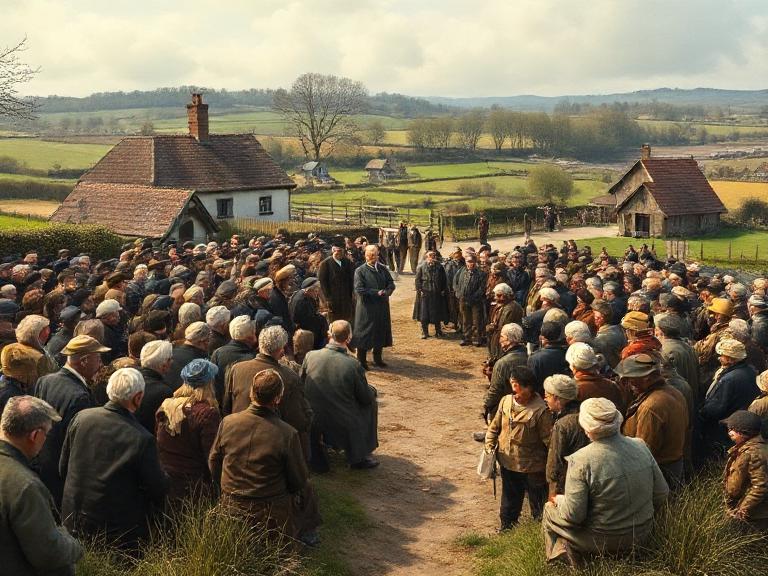
O’Brien founded the United Irish League at Westport, County Mayo, on 23 January 1898, while the parliamentary party remained divided by the bitter quarrels that followed Charles Stewart Parnell’s downfall. He concentrated first upon the congested western districts, where smallholders and landless families lived beside large grazing farms. The League demanded the restoration of evicted tenants, enlargement of uneconomic holdings and wider access to land. Its meetings and branch system rapidly supplied constitutional nationalism with a purpose that factional leaders had failed to provide. Agrarian organisation became the instrument through which O’Brien sought both social reform and political reunion.
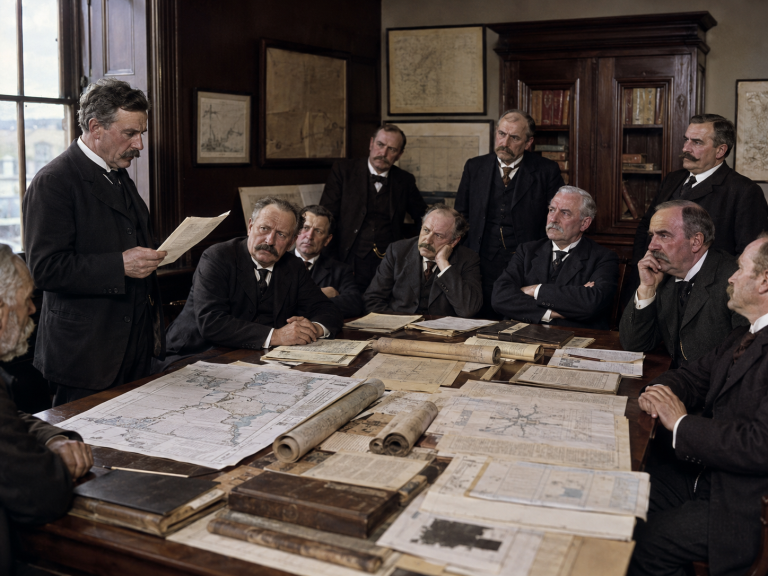
The League’s advance strengthened O’Brien’s hand in negotiations among nationalists and helped make continued parliamentary division increasingly difficult to defend. John Dillon, Michael Davitt, Timothy Harrington and other prominent figures became associated with the organisation, although they did not always agree upon its direction. In January 1900 the parliamentary factions reunited and selected John Redmond as chairman. O’Brien did not take the formal leadership of the party, but the movement he had constructed gave the reunion an organised popular foundation. The National Convention in Dublin on 19 and 20 June adopted rules that connected local branches with a national governing structure.
O’Brien’s achievement also created fresh tensions. He believed the reunited movement should remain answerable to organised nationalist opinion and should pursue the land question with determination. Some parliamentarians feared that League organisers, popular conventions and local campaigns might weaken the authority of elected members. Land agitation further exposed the organisation to accusations of intimidation, particularly where graziers, disputed farms or boycotts were involved. O’Brien’s supporters maintained that disciplined combination was necessary because parliamentary speeches alone had not relieved rural distress. The reunion therefore concealed an unresolved question: whether the League existed chiefly to serve the parliamentary party or to direct its programme.
For Limerick nationalists, O’Brien’s organisational design offered a way to connect local concerns with national policy without abandoning constitutional politics. Rural branches could bring pressure concerning holdings, rents, evicted families and land purchase, while city supporters could assist fundraising, elections and public meetings. The League’s success rested upon its ability to make national politics visible in ordinary communities rather than confining it to Westminster. O’Brien had converted agrarian dissatisfaction into a disciplined political network, but its durability would depend upon cooperation between local activists and parliamentary leaders. In Limerick, as elsewhere, reunion now required organisation as well as declarations of unity.
Primary Sources
- United Irish League, Constitution and Rules Adopted by the Irish National Convention, 19th and 20th June 1900, Dublin, Swan & Co., 1900; National Library of Ireland, Pamphlet Volume A17405; Thomas Bradley Papers, MS 33,561/2(12). This four-page document verifies the Convention dates, the League’s formal rules and its relationship with the Irish Parliamentary Party. (catalogue.nli.ie)
- William O’Brien Papers, University College Cork, correspondence from Edward Haviland Burke to William O’Brien, 31 January 1900, references AKA.57–62. The letters can verify contemporary negotiations and reactions surrounding nationalist reunion and the developing political authority of the United Irish League. (Cambridge University Press & Assessment)
- Correspondence from Timothy McCarthy to William O’Brien, 22 January 1900, University College Cork, William O’Brien Papers, reference AKA.45; together with Michael Davitt to William O’Brien, 23 January 1900, National Library of Ireland, MS 914, folios 785–788. These documents illuminate political manoeuvring immediately before the parliamentary factions reunited. (Cambridge University Press & Assessment)
- Irish People, 23 June and 30 June 1900. These contemporary newspaper issues reported upon the United Irish League and the National Convention held in Dublin, providing evidence of the organisation’s programme and reception. Exact page and column should be confirmed before formal citation. (Cambridge University Press & Assessment)
- William O’Brien, An Olive Branch in Ireland and Its History, London, 1910, particularly pages 123–124. O’Brien’s own account provides a primary retrospective statement of his intentions, his understanding of the League and his role in nationalist reunion, though it should be read alongside contemporary correspondence and newspapers. (Cambridge University Press & Assessment)