Now Sharing: Articles: 202 Images: 652 Total Items Archived: 854

Dutch Billy Houses, Mary Street

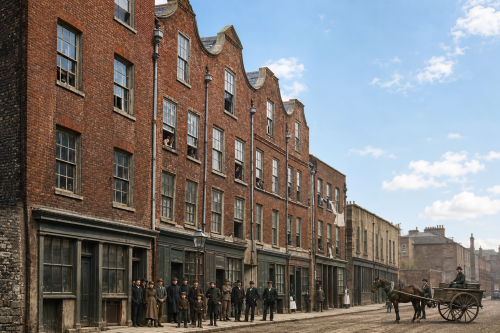
Dutch Billy houses were once a distinctive feature of Limerick’s Englishtown and Irishtown districts. Characterised by narrow brick façades, steeply pitched gables and tall windows, the style developed in Irish towns during the late seventeenth and early eighteenth centuries. Many examples survived along Mary Street into the early twentieth century, preserving the appearance of Limerick’s merchant quarters. Their name is traditionally associated with King William III, although the term was applied broadly to gabled urban houses of the period. By around 1900, these buildings stood as reminders of the city’s commercial growth, architectural character and changing streetscape across previous centuries.
Republican Patrols in Limerick

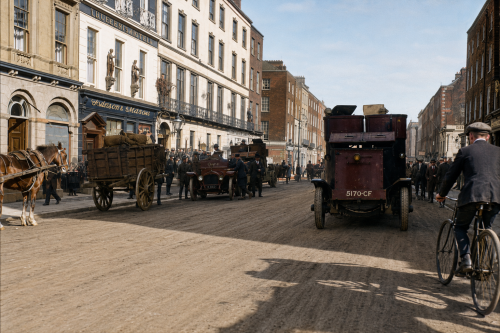
During the Irish Civil War, armoured cars operated by Republican forces patrol a Limerick street as civilians watch cautiously from the roadside. The arrival of troops has created a tense and uncertain atmosphere, with local people anxious to avoid any action that might provoke violence or heavy bloodshed. The vehicles move through the city as a visible display of military control, while horse-drawn transport and early motor traffic share the roadway. This striking scene records the growing presence of armed forces in Limerick and the apprehension felt by residents as conflict reached the streets and disrupted ordinary daily urban life.

Postal Conditions

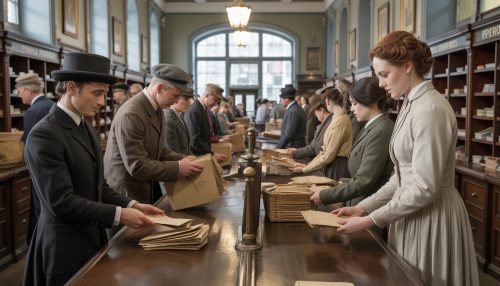
News of parliamentary scrutiny into conditions and staffing arrangements at Cork Post Office on 1 February 1900 was of considerable relevance to Limerick, where similar issues faced local postal workers and administrators. Limerick’s post office, an important hub for communication and commerce, operated within the same national system and often shared the challenges of overcrowding, long hours, and limited advancement opportunities that prompted concern in Cork. Reports from the House of Commons were closely followed in Limerick, with local staff unions and civic leaders attentive to the implications for their own working conditions.

Mount St. Alphonsus Church

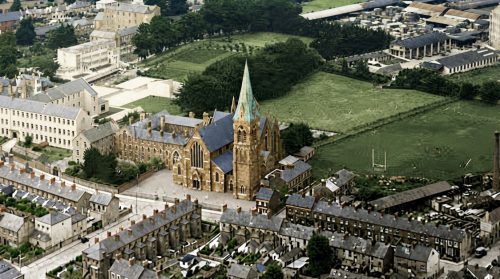
Mount St. Alphonsus Church on Limerick’s South Circular Road is one of the city’s most impressive Gothic Revival landmarks. Designed by English architect Thomas Hardwick, it opened for worship in December 1862, with its commanding bell tower added in 1876. Built from dark Limerick limestone, the church contains a richly decorated interior featuring a Carrara marble high altar, Venetian mosaics and stained-glass windows by Meyer of Munich. Administered by the Redemptorist Order, it is also Ireland’s National Shrine of Our Lady of Perpetual Help. Its celebrated annual novena continues to attract thousands of worshippers from across the country each year.