Now Sharing: Articles: 202 Images: 623 Total Items Archived: 825

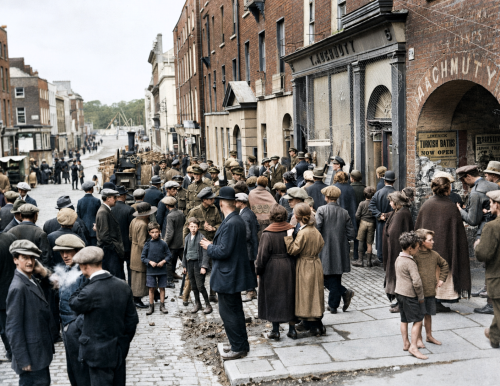
National Army in Limerick

This scene depicts civilians and National Army soldiers gathering openly in a Limerick street after a period of siege, fighting and local unrest. With the Free State forces now controlling the city, residents move freely among the troops and appear calm, curious and cooperative. Men, women and children fill the roadway and pavements, while soldiers maintain an orderly presence beside the surrounding shops and buildings. The image reflects a fragile return to normal life as the population supports efforts to restore law, security and civic stability. It captures an important moment of transition during Ireland’s revolutionary and Civil War era.
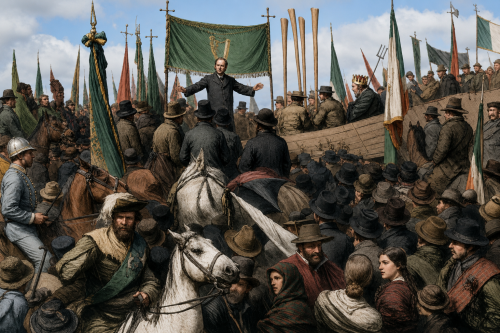
Limerick Land League Demonstration

This 1880 illustration depicts a Land League demonstration in Limerick, organised to advance the rights and welfare of Irish tenant farmers. Large crowds gathered to protest against insecure tenancies, excessive rents and the threat of eviction under the landlord system. Speakers and organisers promoted sweeping land reform, including tenant protection and the transfer of land ownership from landlords to those who worked it. Such demonstrations formed part of the wider Irish Land War, combining public meetings, political pressure and organised resistance. The scene reflects the growing strength of rural agitation and nationalist politics in late nineteenth-century Limerick and Ireland nationally.

Limerick Stone Cottage, 1937

This February 1937 photograph shows a weathered stone cottage in Limerick, with children gathered at its doorway and along the narrow street outside. The rough masonry, patched walls, boarded upper windows and low, sloping roof reveal the building’s age and modest condition. Electrical wires cross above the house, suggesting the gradual arrival of modern services within an older urban landscape. The children’s presence brings warmth and life to the scene, contrasting with the severe exterior and surrounding ruins. The image provides a valuable record of working-class housing, childhood and community life in pre-war Limerick during a period of social change.

Elm Hill, Co Limerick

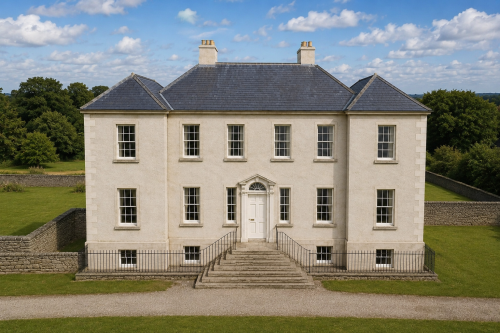
Elm Hill, County Limerick, was built around 1790 for the Studdert family as an elegant Georgian country residence. The six-bay, two-storey house stood over a raised basement and contained spacious reception rooms, nine bedrooms, servants’ quarters, kitchens, cellars and service rooms. Following the Great Famine, it was offered for sale and described as being in excellent repair. The property remained substantial for generations but gradually fell vacant and deteriorated. A 2008 architectural survey praised its limestone doorcase, carved timber entrance, slate-hung elevations, fireplaces and decorative plasterwork. Its recognised importance led to designation as a protected structure under Irish planning legislation.

Contracts Shortened

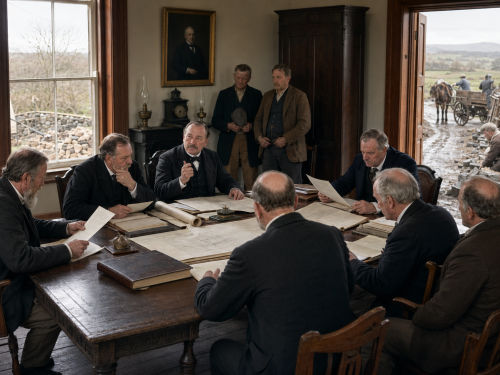
Limerick No. 1 District Council altered the system governing maintenance and repair contracts for public roads when members decided that future agreements would run for twelve months rather than the four-and-a-half-year term previously used. The decision followed an adjourned quarterly meeting held under the chairmanship of William Noonan and reported on 18 January 1900. Road tenders rejected at an earlier sitting had been referred to Limerick County Council, which declined to consider them and returned the entire question to the District Council. Members were therefore required to reconsider both the tenders and the basis upon which future road work would be awarded.