Archived: 25 October 2026
Abstract
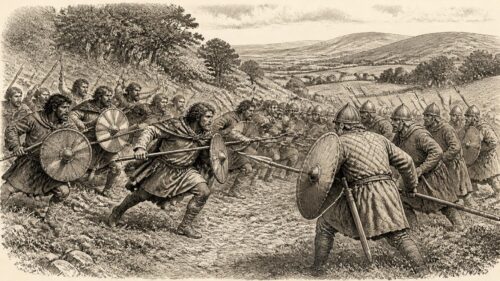
In 1237 Fedlim mac Cathail Chrobdeirg Ua Conchobair led a Connacht coalition against rival Ua Conchobair claimants, defeating troops linked to the Justiciar at Drumrat and devastating opponents’ lands. His forces briefly controlled Magh Luirg and Lough Key, where land was granted to a Holy Trinity community, while Fedlim later executed hostages. He subsequently made peace with the Justiciar, receiving the Five King’s Cantreds free of tribute, as Irish barons began castle-building in Connacht. Church reform advanced through Archbishop Máel Muire Ó Lachtáin’s Athlone synod. Clarus Mac Máelín founded a canons’ monastery on Trinity Island, while several prominent clerics died.
Read Article
Archived: 25 October 2026
Abstract
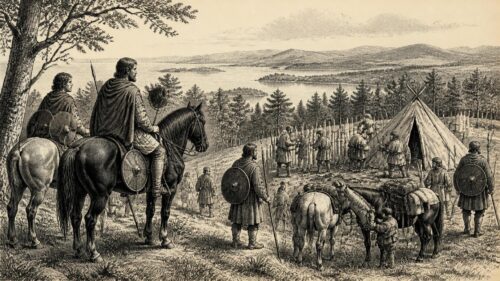
In 1233 Feidlimid mac Cathail Chrobderg Ua Conchobair regained Connacht after his coalition, assembled with Cormac Mac Diarmata at Druim Grecraige, routed and killed his cousin Áed mac Ruaidrí and leading supporters. The victory displaced Ruaidrí Ua Conchobair’s descendants, despite Anglo-Norman involvement on both sides. Annalists interpreted Áed’s defeat through alleged crimes against churches, but their accounts also record political propaganda. Feidlimid destroyed four rival castles, including Bun Gaillme and Dunamon, asserting territorial control and imposing praised order. In Breifne, Cathal Ua Ráigillig’s forces defeated William de Lacy’s raiders. Obituaries illuminate church households’ roles in landholding, hospitality, mediation and welfare.
Read Article
Archived: 25 October 2026
Abstract
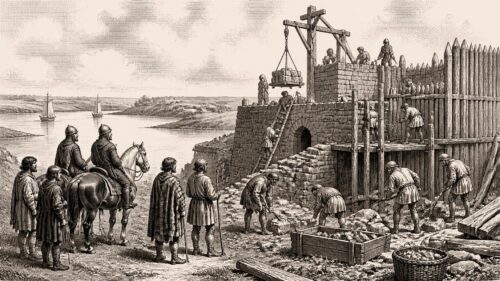
In 1232, Connacht’s contested kingship linked local dynastic rivalry to English royal politics. Richard de Burgh released Fedlimid Ó Conchobair after his patron Hubert de Burgh’s fall, while Áed mac Ruaidrí retained a precarious restoration. De Burgh’s castle at Bun Gaillme and Adam Staunton’s at Dunamon embodied efforts to secure enduring authority. Conchobar, Áed’s son, died invading the Three Tuatha, weakening his dynasty. Elsewhere, chieftains fought, hostages were taken, crops destroyed and coastal warfare continued. Yet churches were consecrated, regular canons organised, and religious figures were praised for learning, hospitality and care, showing warfare and institution-building advancing together across Ireland.
Read Article


