Archived: 2 November 2026
Abstract
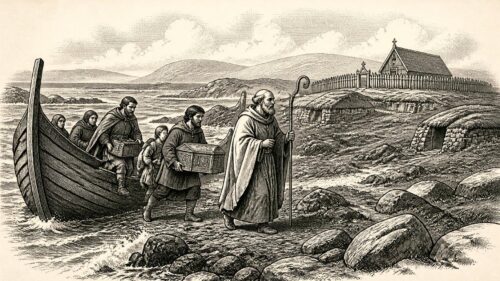
In 668 CE, the surviving Irish record brings together a northern battle, a western monastic foundation and evidence of continuing movement across the Irish Sea. These are not events with securely known days or seasons. They are annalistic notices, preserved in texts copied long after the seventh century and subject to differing chronological systems. The year is nevertheless conventionally associated with the battle of Fertas between the Ulaid and the Cruithin, and with Bishop Colmán’s journey to Inis Bó Finne, where he founded a church. The Annals of Ulster place both under their entry U668, although that manuscript’s calendrical heading
Read Article
Archived: 2 November 2026
Abstract
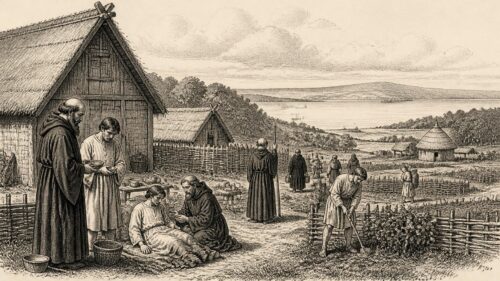
In 667 CE, Ireland was still living through the human consequences of a great mortality that had begun several years earlier. The clearest annalistic entry assigned to this year records a plague in which four abbots of Bangor—Berach, Cuimíne, Colum and Aedán—died. It also records fighting at Áine between the Araid and the Uí Fhidgeinti, in which Eógan son of Crunnmael was killed, and the slaying of Bran Finn, king of the Déisi of Munster. These brief notices are unusually revealing: disease could strike centres of authority as well as households; local warfare continued amid loss; and Ireland remained a
Read Article
Archived: 2 November 2026
Abstract
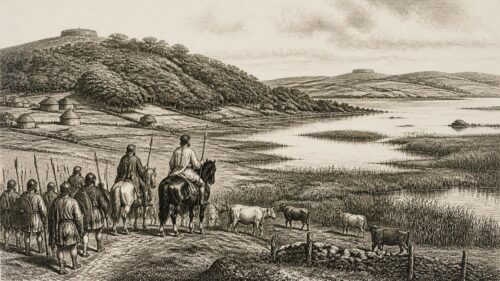
In 665 CE, Ireland stood in the shadow of a grave mortality while conflict still continued between powerful regional groups. The clearest event placed directly in this calendar year is the battle of Loch Fén, recorded by the Annals of Inisfallen as a fight between the men of Munster and Connacht in which Talamnach, son of Laidcenn, was killed. The notice is stark: it supplies neither a victor nor a cause. Yet its very brevity is revealing. Even amid epidemic loss, kings and war-bands remained able to mobilise, cross regional boundaries and contest territory or political influence. The battle also
Read Article


