Archived: 2 November 2026
Abstract
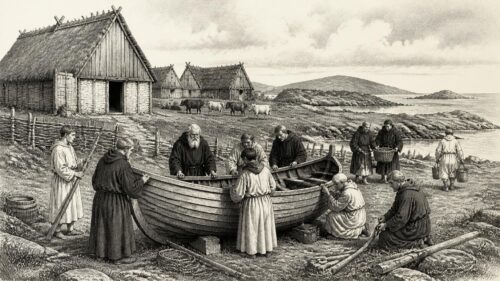
In 679 CE, Ireland’s annalists record a year defined less by a single island-wide crisis than by the passing and testing of influential people and institutions. The securely dated core consists of the death of Fáilbe, abbot of Í or Iona; the death of Cenn Fáelad, styled “the learned”; and a clash in which Fínnechta Fledach, the dominant Uí Néill king of Tara, defeated Bécc Bairrche. These concise notices are unusually revealing. Together they show a country of many competing dynasties, in which armed expeditions, ecclesiastical leadership and learned reputation all carried political weight. A Year in Difficult Calendars The
Read Article
Archived: 2 November 2026
Abstract
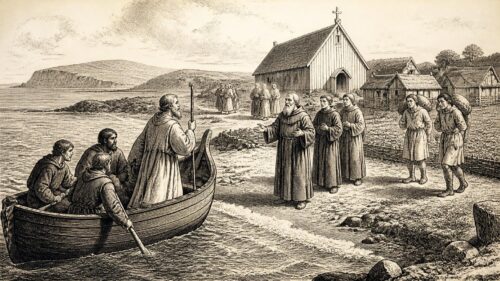
In 673 CE, the Irish annals conventionally group together a small but revealing set of notices: the killing of Domangart, king of Dál Riata; the burning of Mag Luinge; the capture of two named men; the death of Cormac son of Máel Fothartaig; and the voyage to Ireland of Fáilbe, abbot of Iona. None is supplied with a month, day or full narrative. Even the year requires care: the Annals of Ulster preserve these entries under their annal 673 while displaying an Anno Domini equivalent of 672, whereas the Annals of Tigernach place the closely corresponding material under 673. Modern
Read Article
Archived: 2 November 2026
Abstract
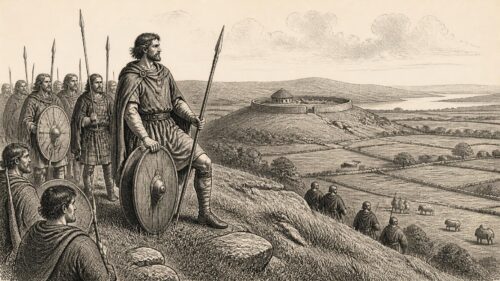
In 672 CE, Ireland’s annalistic record places a local northern battle, a royal succession, a destructive fire at Armagh and an unusually plentiful woodland harvest within the same year. None of these notices offers a full narrative, and none is dated to a particular month or day. They are brief entries preserved in chronicles copied much later, whose year-numbering is not perfectly uniform: the Annals of Ulster’s entry conventionally assigned to 672 even carries an internal AD 671 heading. The safest conclusion is therefore that these events belong to the annalistic year 672, rather than that their exact modern calendar
Read Article
