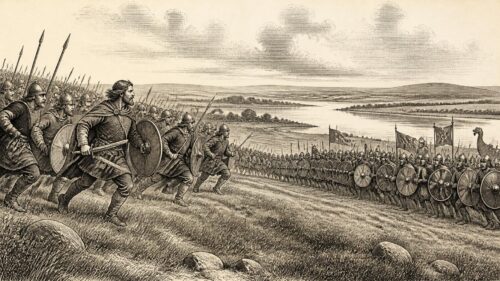
Archived: 28 October 2026
Abstract
In 868, Áed Findliath, king of Tara, defeated a coalition of Brega, Leinster and Scandinavian fighters at Cell Ua nDaigri, probably near Killineer. Dated to 6 September by Chronicon Scotorum, the battle killed Flann of Brega and many allies, while Áed’s forces also suffered serious losses. It demonstrated both Tara’s contested authority and Vikings’ role as participants in Irish dynastic politics. Annals also recorded deaths of abbots and scribes, including leaders at Clonmacnoise, Glendalough and Tallaght, revealing monastic institutions’ importance. A water event in Sliab Cualann and a Martinmas windstorm completed a year marked by conflict, ecclesiastical change and uncertainty.
Read Article
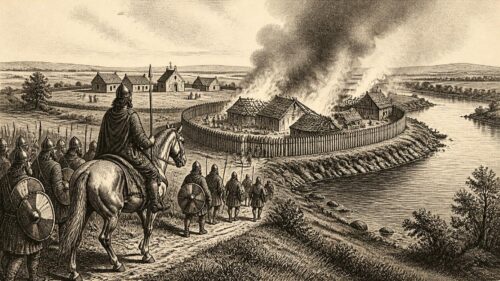
Archived: 28 October 2026
Abstract
In 867, Cennétig mac Gaíthéne of Loígis and Máel Ciaráin son of Rónán burned Amlaíb’s fort at Clondalkin, near Viking Dublin, reportedly killing one hundred foreign leaders. The attack, recorded with chronological variation in Irish annals, followed or coincided with dynastic division among Dublin’s Scandinavian rulers after Auisle’s killing. It checked, but did not end, Viking power; Dublin remained active and any subsequent assault is uncertain. Clondalkin’s monastic setting illustrates competition for resources and communications. The year also saw Gaelic succession conflicts and clerical deaths, while churches, literacy, trade, craft production and maritime networks endured amid political fragmentation and warfare.
Read Article
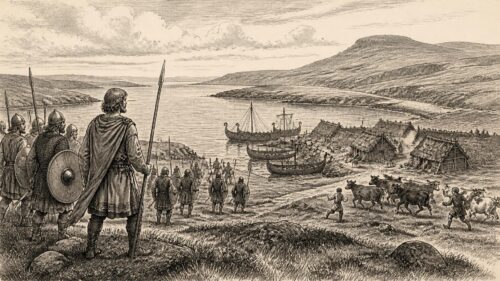
Archived: 28 October 2026
Abstract
In 866, Áed Findliath, king of Tara, attacked Scandinavian longphuirt in Cenél nÉogain and Dál Araidi, defeated their forces at Lough Foyle, seized livestock and claimed 240 deaths. The campaign damaged northern maritime bases connected to wider Irish Sea networks, though its scope remains uncertain. Meanwhile, Dublin-associated rulers Amlaíb and Auisle raided Pictish Fortriu, taking hostages. In the west, jarl Tomrar plundered Clonfert, exposing monastic vulnerability despite later miraculous accounts of his death. Ecclesiastical notices underline church institutions’ importance. These events portray Ireland as a politically fragmented, interconnected maritime society, where warfare, trade, religious centres and agricultural resources shaped power.
Read Article
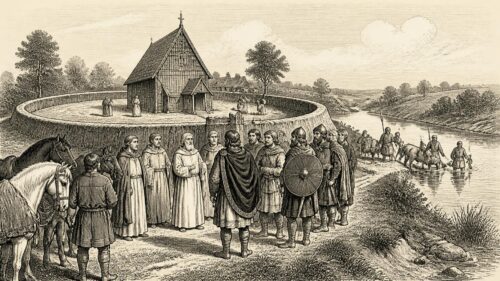
Archived: 28 October 2026
Abstract
In 864, Ireland’s fragmented politics were marked by coercion, shifting alliances and Scandinavian involvement. Áed Findliath consolidated authority by blinding Lorcán of Mide, while Amlaíb of Dublin drowned Conchobor at Clonard, demonstrating foreign rulers’ influence in inland dynastic struggles. Áed and Flann of Brega defeated the Ulaid, whereas Cerball of Osraige pursued raids, devastation, cattle seizures and hostages across Leinster and Munster. Annals also record ecclesiastical deaths and appointments at Louth, Terryglass and Kildare, alongside a Clare king’s death. Differing annal dates and partisan later narratives require caution, but collectively portray interconnected regional powers, churches and communities vulnerable to warfare.
Read Article
Archived: 28 October 2026
Abstract
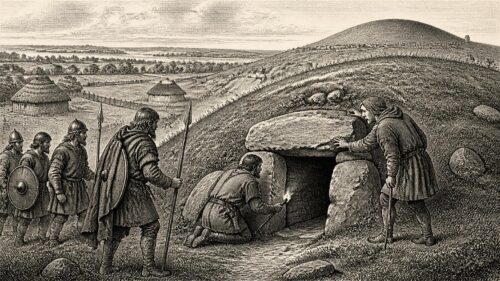
In 863, Scandinavian rulers Amlaíb, Ímar and Auisle, allied with Lorcán of Mide, plundered Flann son of Conaing’s Brega lands and searched named souterrains at Cnogba, Dubad and elsewhere. The unprecedented searches exposed underground refuges as stores or shelters within the contested Boyne landscape. The year also saw Norsemen kill Muirecán of Nás, reshaping Leinster politics, while Muiredach, prior of Armagh and king of the Airthir, died in dynastic violence. Later Fragmentary Annals report Cerball of Osraige defeating foreigners and recovering booty. Together, these notices portray shifting Irish-Scandinavian alliances, politically entangled churches, and insecurity reaching concealed spaces broadly across Ireland.
Read Article

