The Caves of Cnogba863 CE
In 863, Scandinavian rulers Amlaíb, Ímar and Auisle, allied with Lorcán of Mide, plundered Flann son of Conaing’s Brega lands and searched named souterrains at Cnogba, Dubad and elsewhere. The unprecedented searches exposed underground refuges as stores or shelters within the contested Boyne landscape. The year also saw Norsemen kill Muirecán of Nás, reshaping Leinster politics, while Muiredach, prior of Armagh and king of the Airthir, died in dynastic violence. Later Fragmentary Annals report Cerball of Osraige defeating foreigners and recovering booty. Together, these notices portray shifting Irish-Scandinavian alliances, politically entangled churches, and insecurity reaching concealed spaces broadly across Ireland.
Dateline
In 863, the violence of Viking-age Ireland reached beneath the ground. The year is remembered above all because a Scandinavian force searched the underground refuges of Brega, including those at Cnogba, modern Knowth, and near Dubad, modern Dowth, in the Boyne valley. The Annals of Ulster calls this unprecedented. Its terse notice does not say what was found, who was hiding, or how much was carried away. Yet its very emphasis on the searching of the ‘caves’ gives an unusually close view of insecurity: people in a rich and contested district had places below ground worth seeking out, and raiders knew where to look.
The surviving annals do not provide day-by-day coverage, and their year-headings can be offset by one year in modern editions. The events discussed here are conventionally assigned to 863. They should not be treated as occurring on any particular day or in a known sequence within the year. Even so, the notices taken together reveal a political landscape in which Irish rulers, churchmen and Scandinavian commanders all pursued power through alliances, killings and plunder rather than along a simple Irish-versus-Viking divide.
Brega’s Underground Refuges
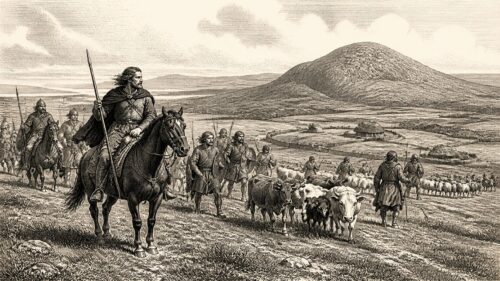
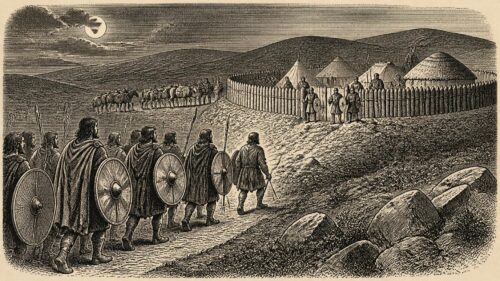
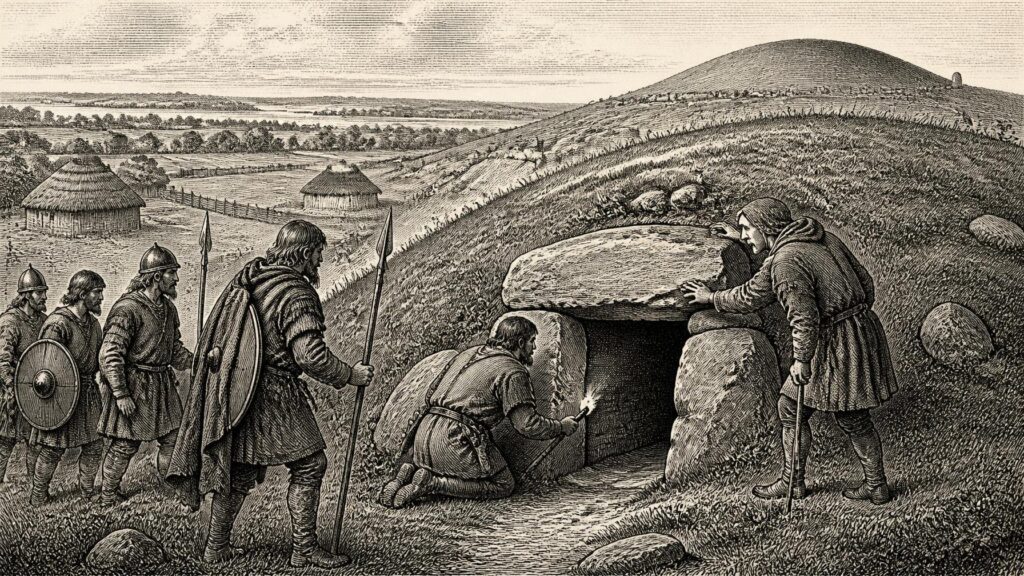
The best-attested event is the plundering of the territory of Flann son of Conaing, ruler of north Brega and a leading member of the Síl nÁedo Sláine. Three kings of the foreigners—Amlaíb, Ímar and Auisle—were said to have led the attack. Their target was not merely exposed farms, churches or royal sites. They searched the caves of Achad Aldai, Cnodba, Boadán’s Mound above Dubad, and the cave of Óengoba’s wife. The annalist added that such a thing had never previously been done.
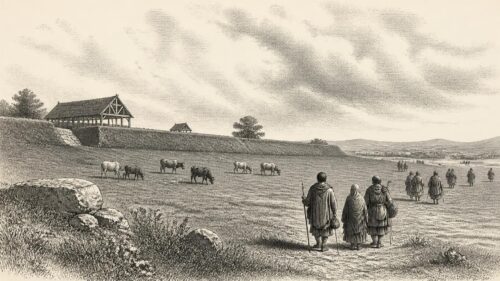
‘Caves’ in this context are generally understood as souterrains: deliberately made underground passages and chambers, commonly entered through concealed or restricted openings. They could serve for storage and short-term refuge, although they were no impregnable shelter. Archaeology makes clear why the annal’s wording matters. Cnodba and Dubad lay in the ancient ceremonial and settlement landscape now called Brú na Bóinne, dominated by the much older passage tombs of Knowth and Dowth. By the ninth century this was not a deserted prehistoric relic but a lived-in, politically valuable landscape along the Boyne, close to routes linking Brega, Mide and the Irish Sea.
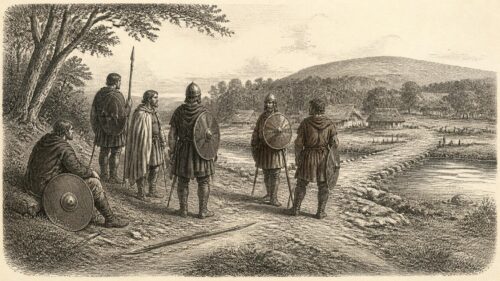
It would be unsafe to imagine a single dramatic scene of fugitives being dragged from every chamber. The record says only that the places were searched. It does, however, show deliberate intelligence and persistence. The attackers did not stumble upon isolated hiding places: several named underground sites were sought during a raid on Flann’s lands. That hints at the value people attached to subterranean shelter, whether for goods, food, livestock-related wealth or vulnerable members of a household. It also demonstrates that a Scandinavian army operating from the Dublin region could penetrate far inland and act with local knowledge.
Allies in a Raid
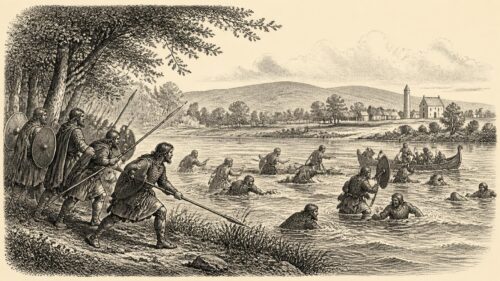
The political significance of the expedition is sharpened by the presence of Lorcán son of Cathal, king of Mide, among the raiders. His participation is expressly recorded alongside Amlaíb, Ímar and Auisle. This was therefore not a foreign assault imposed on a united Irish population. Lorcán had reasons of his own to damage Flann of Brega, while the Scandinavian rulers gained an Irish ally, supplies and access through the midlands. Such partnerships were practical and changeable. They did not imply cultural merger or permanent loyalty, but they could be decisive in a particular campaign.
The attack was especially striking because Flann and his wider kin had recently been involved in a different alignment. In 862, Áed Findliath of the northern Uí Néill, Flann son of Conaing and unnamed ‘kings of the foreigners’ had raided Mide. Máel Sechnaill son of Máel Ruanaid, king of Tara, died late that year, and Áed succeeded to the kingship of Tara in 862/3. Thus, in 863, the new holder of Ireland’s most prestigious secular kingship presided over a world in which yesterday’s military associates might swiftly become targets or collaborators of another faction.
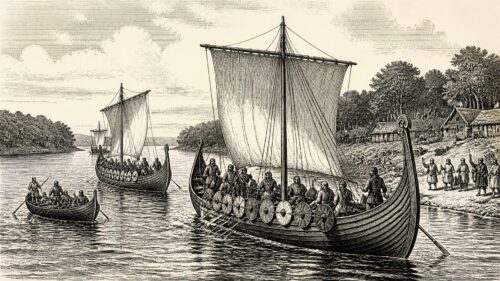
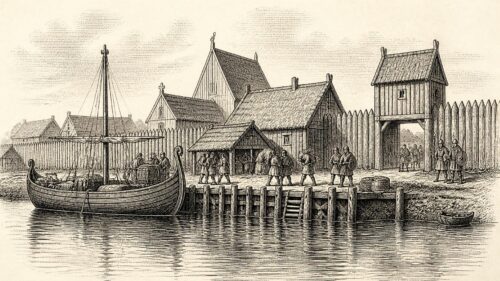
Amlaíb and Ímar were already powerful joint rulers among the Scandinavians of Dublin, while Auisle appears here as their fellow king. Their presence together gives the Brega raid exceptional weight. Dublin was not simply a raiding camp by this stage: it was a defended maritime base, a centre from which armed groups could move through Leinster and into the midlands, and a growing point of exchange connecting Ireland to the Irish Sea world. Nevertheless, the annal for 863 records plunder, not commerce. The year’s evidence should not be used to invent a market transaction or a particular shipment of goods; it shows the political and military reach that made later urban trade possible.
Deaths in Leinster and Armagh
Two killings recorded in the same annal reveal how exposed local kingship could be. Muirecán son of Diarmait, king of Nás and eastern Life, was killed by the Norsemen. Nás, modern Naas, and the eastern Liffey plain were central to northern Leinster. The wording of the Annals of Ulster gives Muirecán a regional title rather than unequivocally calling him king of all Leinster; later annalistic tradition presents him more grandly. What is firm is that his death removed a major Uí Fháeláin ruler at a moment when Leinster was under pressure from Dublin-based forces and from ambitious neighbouring dynasties.
The consequences were political rather than merely personal. Dúnlaing of the rival Uí Muiredaig line was able to advance in Leinster after Muirecán’s death, though no surviving source permits a precise reconstruction of the succession during 863 itself. This is a useful reminder that Viking attacks could alter Irish politics even when the attackers did not annex territory. The killing of one ruler changed the calculations of his rivals, dependants and marriage allies.
Further north, Muiredach son of Máel Dúin was killed by Domnall son of Áed son of Niall. Muiredach held the dual description of prior of Armagh and king of the Airthir. Armagh was both a great ecclesiastical centre associated with Patrick and the focus of substantial local interests. The Airthir were a people and polity in its surrounding region. Muiredach’s offices show that religious authority and secular lordship could overlap in a single person; a senior churchman was not necessarily detached from dynastic competition. The annal does not explain Domnall’s motive, nor does it prove that Áed Findliath ordered the killing. It does demonstrate that the new political order around Tara and the northern Uí Néill was contested close to Ireland’s foremost Patrician church.
Cerball’s Reported Counterstroke
A later, more expansive source, the Fragmentary Annals of Ireland, adds a counterpoint to the Brega raid. Under 863 it reports that Cerball son of Dúngal, king of Osraige, inflicted a slaughter on foreigners at Fearta Cairech and recovered their booty. This is a valuable tradition, but it requires care. The Fragmentary Annals survives in a later compilation and often supplies narrative detail absent from the concise principal annals. Its account should therefore be presented as its own report, not as a securely corroborated description of a battle’s precise location, numbers or course.
Even cautiously used, it fits the wider pattern. Cerball was a formidable ruler whose career included both fighting Scandinavians and cooperating with them when it suited Osraige. His reported success in 863 is not evidence of a united national response; it is evidence that raiding forces could be resisted, defeated and stripped of their gains by an Irish king with local military strength. Across the island, loyalties were situational, and the same rulers might become enemies or allies as immediate advantage changed.
A Year of Exposure
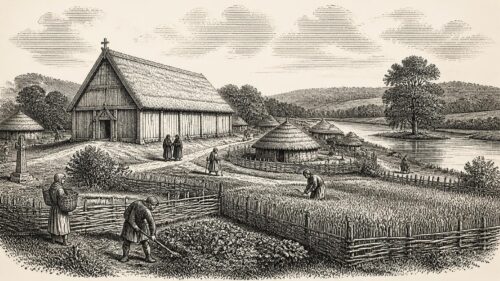
No annal for 863 offers a broad survey of harvests, weather, household routines or religious learning. Silence matters: it would be wrong to fill it with a fictional picture of universal famine, a general collapse of monastic life or a newly settled Scandinavian countryside. What can be said is narrower and more revealing. Brega’s underground shelters were searched; a Leinster ruler was killed by Norsemen; a churchman-king associated with Armagh was slain in an Irish dynastic conflict; and one later source remembered an Osraige victory over foreigners.
These events expose the practical realities of power. Kings depended on kin, territory, armed followings and alliances. Churches were embedded in those arrangements, their senior officers sometimes bearing political as well as spiritual rank. Scandinavian leaders were not remote sea-raiders but active players within Irish rivalries, capable of joining Irish kings, killing them, or being defeated by them. The caves of Cnogba became the year’s most memorable symbol because they show conflict reaching into the concealed spaces where communities tried to preserve security and wealth. In 863, even the ground beneath Brega could not be assumed safe.
Primary Sources
- The Annals of Ulster, Year U863
- Fragmentary Annals of Ireland, Part 16
- Fragmentary Annals of Ireland
- Chronicon Scotorum
- Annals of the Four Masters, Annal M863
- Annals of the Four Masters, Volume 1
- Áed Findliath
- Ímar (Ívaar)
- Cerball, Son of Dúngal
- Cerball, Son of Muirecán
- Dúnlaing
- Congalach Cnogba
- Early Medieval Ireland: Archaeological Excavations, 1930–2009
- Brú na Bóinne
- Brú na Bóinne National Park
- Heritage Ireland e-zine, Issue 6
- The Vikings in Ireland
- Viking Dublin
- Viking Age
- Viking Life in Dublin
- Viking Traders and Craftsmen
- Exploring the Irish Annals