Archived: 26 October 2026
Abstract
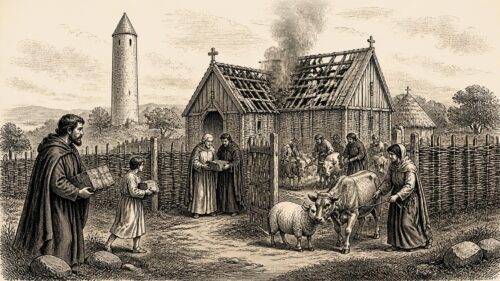
In 994, Ireland’s annals recorded political and ecclesiastical change. Sitriuc Silkbeard was expelled from Dublin during a brief Hiberno-Scandinavian dynastic takeover linked to Ímar of Waterford and his son Ragnall, whose rule soon collapsed. Máel Sechnaill, king of Tara, burned Swords, demonstrating his coercive influence near unstable Dublin. Elsewhere, regional rulers including Fogartach of Corcu Trí, Áed, heir of Ailech, and Conn of Uí Fhailgi were killed. The deaths of Armagh’s bishop Máel Muire and Scattery’s vice-abbot Fínnechta underline church institutions’ central public role. These scattered notices reveal local violence, competitive kingship, vulnerable ecclesiastical settlements, and interconnected Irish Sea politics.
Read Article
Archived: 26 October 2026
Abstract
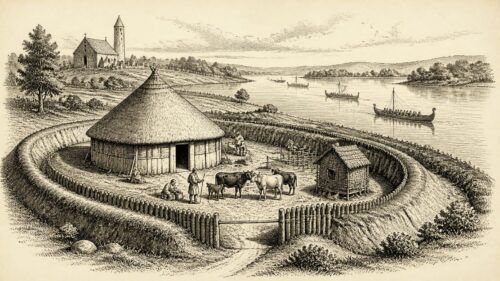
Annals conventionally place 993 amid a major mortality of people, cattle and bees, though its cause, scale and chronology remain uncertain. This crisis threatened subsistence, wealth and ecclesiastical resources. Political violence killed several local rulers in the midlands, Connacht and west, revealing fragmented lordship and Máel Sechnaill’s interventions. Brian of Munster led a naval expedition from Lough Ree towards Bréifne, while Mide suffered devastation and Dublin’s Norse-Gaelic politics remained unsettled. Meanwhile, Muirecán, Patrick’s successor, visited Cenél nÉogain and publicly affirmed Áed’s royal standing. The notices portray interconnected warfare, church authority, riverine mobility and vulnerable rural life throughout Ireland in 993.
Read Article
Archived: 26 October 2026
Abstract
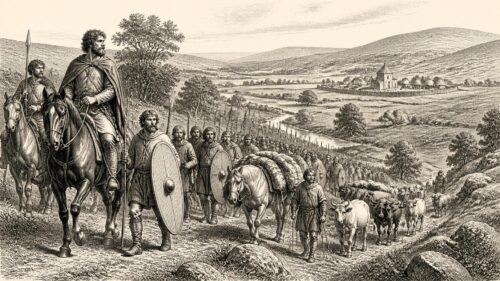
In 991, Brian son of Cennétig led an armed hosting from Munster into Leinster, where Tadc son of Donnchadh died and Cerrán Cnámchaille was killed in vengeance. The campaign demonstrated Brian’s expanding reach, although no conquest or settlement is recorded. Annals also report the treacherous killing of a prominent Tara-centred heir, but differ over his identity and the perpetrators, reflecting contested midland politics. Domnall Ua Dúngalaig died, as did Scandlán son of Tadc, erenagh of Cell Dá Lua, or Killaloe. These notices reveal power exercised through warfare, kinship, tribute, ecclesiastical offices and regional rivalries, rather than a unified Irish state.
Read Article

