Membership is completely free, giving members unlimited access to all available resources, services, features, and benefits without any restrictions or fees.
Welcome back. Sign in to continue enjoying unlimited access to all available resources, services, features, and member benefits at no cost.
The Kingdom of Ireland had its own parliament in College Green, its own executive administration and a distinct revenue, but it was neither representative of the whole population nor constitutionally independent. Roman Catholics, who formed the great majority of the people, could not vote or sit in parliament. Presbyterians and other Protestant dissenters also faced civil disabilities. Political power was concentrated among Anglican landowners, office-holders and borough patrons. Moreover, under Poynings’ Law, proposed Irish legislation had to pass through the Irish and British privy councils before it could be presented to parliament, leaving the British government substantial scope to amend or block it.
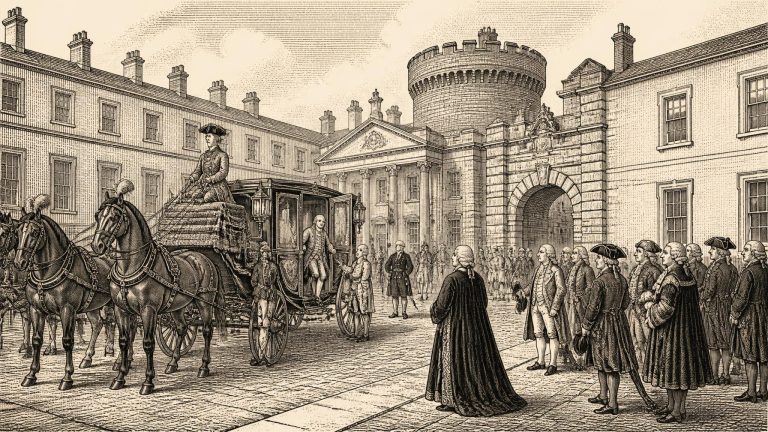
Francis Seymour-Conway became lord lieutenant in August 1765. His arrival followed a decision by the British ministry, taken earlier that year, that future viceroys ought to reside continuously in Ireland. The intention was administrative as well as political. For decades, the lord lieutenant had generally come over for a parliamentary session and then departed, leaving government to lords justices and to powerful Irish figures who could “undertake” to manage votes in parliament in return for offices, pensions and influence. A resident representative of the Crown, ministers hoped, would restore authority to Dublin Castle and curb this expensive arrangement.
On 10 February 1763, the Treaty of Paris ended the Seven Years’ War between Britain, France and their allies. Ireland was not a separate party to the treaty: George III appeared in it as king of Great Britain, France and Ireland, and Irish people experienced the settlement as subjects within a widening British empire. Yet the peace mattered directly. Irish merchants, shippers, provision dealers and manufacturers operated within imperial routes whose risks and opportunities had been altered by war. The end of fighting brought prospects of more regular trade, while Britain’s enlarged territories and continuing military commitments ensured that imperial finance and administration remained pressing concerns.
The parliamentary election was an unavoidable result of the crown’s change, but it did not amount to a broad popular renewal. Ireland’s House of Commons represented counties and boroughs under a restrictive political order dominated by Protestant landowners, corporations and powerful families. There was no uniform polling day: returning officers set dates locally, and many seats were settled without contest. The election was nevertheless important because it followed more than three decades without a general election and occurred amid a growing argument that parliaments ought not to endure merely for the life of a monarch.
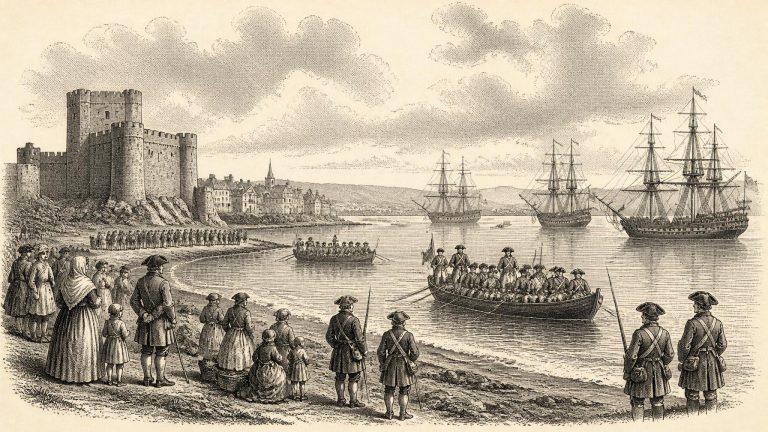
The best-dated event of the year began on 21 February, when three French frigates under the privateer and naval commander François Thurot entered Carrickfergus Bay. Their force numbered about 600 men. It was a fragment of a wider French wartime enterprise, not the advance guard of a successful conquest of Ireland. Nevertheless, Carrickfergus was a fortified port with a long military history, and its capture made an immediate impression. The town stood close to the route into Belfast Lough and possessed a castle which, though old and inadequately maintained, could not simply be ignored by an invading force.