Membership is completely free, giving members unlimited access to all available resources, services, features, and benefits without any restrictions or fees.
Welcome back. Sign in to continue enjoying unlimited access to all available resources, services, features, and member benefits at no cost.
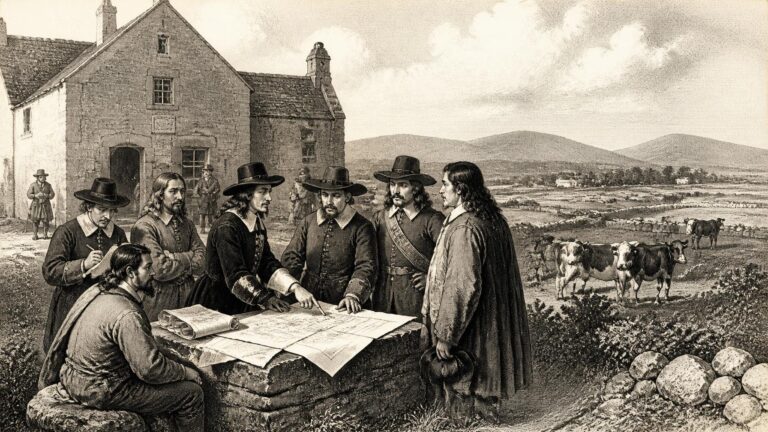
The word “transplanter” carried a long and painful history. Under the Cromwellian settlement of the 1650s, many Catholic landholders and their dependants had been compelled, or pressured, to leave lands in Leinster, Munster and Ulster for assignments in Connacht and County Clare. The slogan commonly associated with that policy, “To Hell or Connacht”, oversimplifies a complicated process, but it captures the coercive geography behind it. Families had to establish rights to new holdings, while soldiers, adventurers, Protestant purchasers, restored royalists and old proprietors advanced overlapping interests elsewhere.
The most pressing date was 1 May 1654. Under the Commonwealth settlement, persons judged liable to transplantation were required to remove themselves, their families, dependants, livestock and movable goods to Connacht or County Clare by then. The policy was rooted in the Act for the Settlement of Ireland of August 1652 and instructions issued during 1653; it was not an order born suddenly in 1654. Yet the arrival of the deadline made its implications acute in communities across Leinster, Munster and Ulster. Catholic proprietors and others classed by the regime as transplantable faced the prospect of abandoning inherited estates east of the Shannon for allotted land in the designated western zone.