Irishtown

Materials Wanted

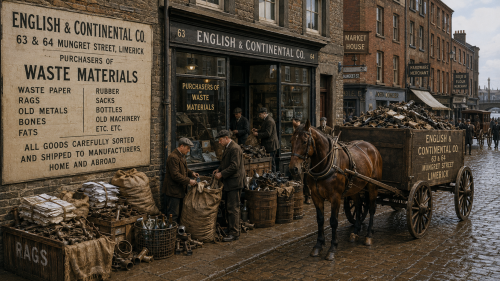
Long before recycling became a familiar part of everyday life, the English and Continental Company invited Limerick residents to recognise the commercial value hidden in unwanted materials. Operating from 63 and 64 Mungret Street in 1900, the firm advertised for discarded goods that could be purchased, sorted and returned to productive use. Its premises stood within a busy commercial district close to the city’s markets, workshops and riverside trade. The advertisement reveals an organised local business in recovered materials, connecting household remnants and industrial offcuts with merchants prepared to sell them into wider manufacturing and export networks.
Surrender Refused

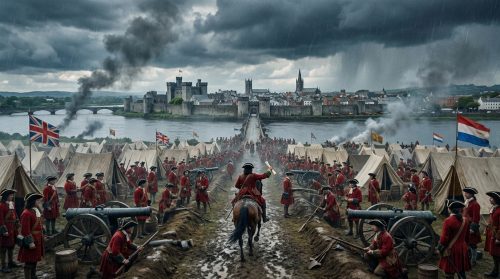
Limerick formally entered a state of siege on 9 August 1690 when William III’s army moved from its camp near Cahirconlish and established itself before the city. William sent a summons demanding surrender to Alexandre de Rainier de Droué, Marquis de Boisseleau, the French officer entrusted with commanding the Jacobite infantry within Limerick. The decision placed the city’s inhabitants, soldiers and defences at the centre of the war following the Boyne. William expected the remaining Jacobite resistance to collapse, but Limerick’s position behind the Shannon and the presence of a substantial garrison offered the defenders a final opportunity to continue the campaign.