Membership is completely free, giving members unlimited access to all available resources, services, features, and benefits without any restrictions or fees.
Welcome back. Sign in to continue enjoying unlimited access to all available resources, services, features, and member benefits at no cost.
Sir William Petty’s Down Survey lay at the centre of that process. Commissioned to provide a detailed measurement of lands available to satisfy the arrears owed to the Commonwealth army, it was an extraordinary administrative enterprise. Petty’s teams measured land at local level, recording baronies, parishes, townlands, boundaries and the distinction between profitable and unprofitable ground. Maps and accompanying books turned complicated local landscapes into information which Dublin and Westminster could use for allocation.
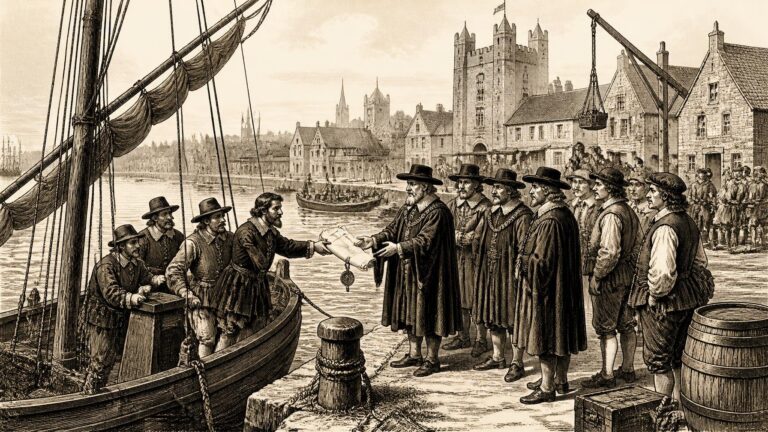
On 26 May 1626 Charles I issued Waterford with a new charter, restoring privileges which the city had lost under James I. Waterford’s earlier charter had been taken into royal hands after the city’s leading officers repeatedly refused the oath of supremacy, the oath which acknowledged the monarch rather than the pope as head of the church. From 1618, the loss of the charter had meant an unsettled municipal administration and a sharp reminder that corporate self-government could be made conditional upon religious conformity.
Charles’s accession did not bring an Irish parliament or an immediate remaking of policy. The previous Irish parliament had last met in 1613–15, and none sat in 1625. Government instead proceeded through the lord deputy, privy council, courts, county officers and the military establishment. Falkland had held office since 1622 and retained it. His administration was already troubled by faction: he was on poor terms with Adam Loftus, lord chancellor of Ireland, while Sir Francis Annesley, the vice-treasurer, was another powerful and sometimes obstructive figure. These rivalries were not merely personal. They concerned patronage, judicial authority, revenue and access to the king’s ministers.
On 21 January the Dublin government issued a proclamation ordering Jesuits, seminary priests and other Catholic ecclesiastics to leave Ireland within forty days. It was a familiar instrument of Jacobean policy: the crown regarded clergy trained in continental colleges, and especially those exercising authority independent of the established Church of Ireland, as both religious opponents and potential political agents. The order was therefore directed at a clerical network rather than merely at private belief.
Falkland had been sworn in as lord deputy in Dublin in September 1622, arriving as an investigating commission was completing its examination of Irish government. That inquiry had exposed administrative weakness and encouraged demands in London for retrenchment. In 1623 the deputy had to run an Irish administration whose military establishment, offices and pensions depended on money from England, while the crown expected Ireland to become less expensive. The problem was political as much as financial. Savings made from a distance could reduce the resources available to maintain order, reward service and sustain the institutions through which the crown exercised authority.