
Archived: 8 October 2026
Abstract
In 1951, Noel Browne’s resignation over the Mother and Child Scheme exposed conflicts between social reform, Catholic authority, medical interests and governmental caution. The inter-party government then fell amid agricultural disputes; May’s election returned Fianna Fáil as largest party, enabling Éamon de Valera to lead a minority administration. The census recorded 2,960,593 people, as emigration largely offset natural increase amid economic insecurity. Welfare pensions rose, agricultural workers gained half-holidays, and electrification and peat development continued. The Arts Act established An Chomhairle Ealaíon. In Northern Ireland’s Westminster poll, Unionists retained dominance despite Nationalist victories and a narrowly contested West Belfast seat.
Read Article
Archived: 8 October 2026
Abstract
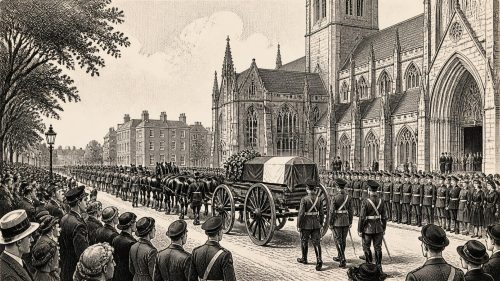
In 1949 Ireland became a republic, ending the Crown’s remaining external role, while Britain’s Ireland Act reinforced Northern Ireland’s constitutional position within the United Kingdom. Southern political leaders united publicly against partition, but efforts to link reunification with NATO membership failed. Post-war recovery remained uneven, with shortages, emigration, rural poverty and extensive state regulation continuing alongside electrification, statistical development and welfare administration. Housing, health and public services expanded gradually. Douglas Hyde’s funeral honoured a founder of cultural nationalism whilst exposing denominational divisions in public ceremony. The year combined republican assertion with enduring partition, social constraints, institutional growth and cultural ambition.
Read Article

Archived: 8 October 2026
Abstract
In 1948, Fianna Fáil lost its Dáil majority after sixteen years, enabling John A. Costello to lead the First Inter-Party Government, supported by Clann na Poblachta, Labour and others. The coalition addressed post-war housing, welfare, health, employment and agricultural trade, while Ireland joined European recovery co-operation and concluded a British trade agreement. Costello’s September Canadian announcement preceded the Republic of Ireland Act, enacted in December. Although effective only in 1949, it repealed the External Relations Act, ended the Crown’s remaining external role and authorised presidential functions. Partition remained unchanged, while An Taisce’s foundation and Olympic return suggested national civic renewal.
Read Article

