landlords

Rural Unrest

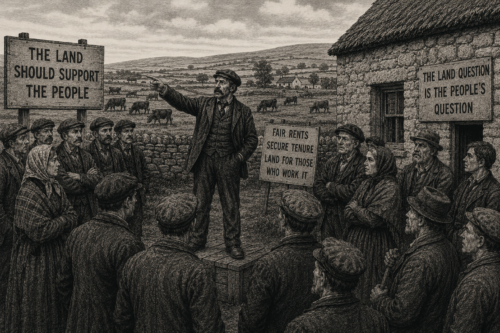
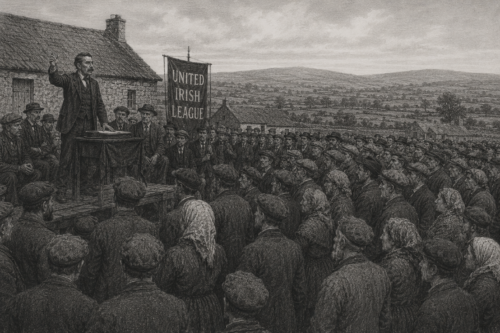
Agrarian agitation has become especially influential across Connacht and parts of Munster, where tenant farmers, smallholders and agricultural labourers continue to demand a fairer distribution of Irish land. County Limerick has not escaped the dispute. Rural families living on cramped or uneconomic holdings have watched substantial grazing farms occupy fertile ground while labourers struggle to secure cottages, gardens and dependable employment. Meetings connected with the United Irish League have provided an organised outlet for grievances concerning rents, evicted tenants, disputed farms and the slow progress of land purchase under legislation already introduced by Westminster.
Purchase Delayed

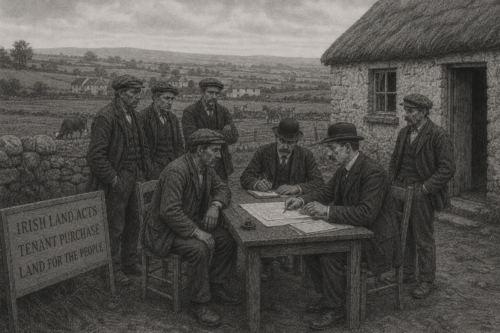
Tenant purchase continues under the existing Irish Land Acts, allowing some farmers to replace rent payments with annual instalments towards ownership of their holdings. The principle has won broad support among tenants who believe possession of the soil would provide greater independence, security and confidence in improving their farms. Yet the number of completed sales remains insufficient to satisfy many rural communities. In County Limerick, farmers continue to wait upon negotiations between landlords, tenants, the Irish Land Commission and the Treasury, while political organisers argue that a reform intended to settle the land question is proceeding far too slowly.

Boycott Pressure

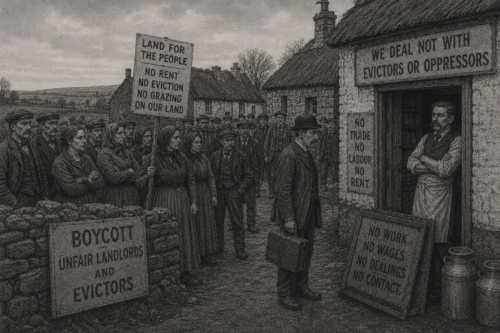
Boycotting and organised public pressure are being employed in some Irish districts against landlords, graziers and tenants whose conduct is considered hostile to the land campaign. The methods range from public condemnation and refusal of ordinary dealings to the withdrawal of labour, trade and social contact. Supporters describe such action as a peaceful means of enforcing communal discipline where legal and parliamentary remedies appear ineffective. Opponents call it intimidation imposed upon people who may have broken no law. In County Limerick, the practice carries particular force wherever eviction, disputed holdings or the occupation of grazing land has divided neighbours.

Land Dominates

The land question remains the dominant economic and social issue across rural Ireland, shaping political organisation, family security and relations between landlords and tenant farmers. In County Limerick, holdings vary greatly in quality and size, while rents, arrears, grazing land and the prospect of tenant purchase remain constant subjects of discussion. Earlier Land Acts granted greater protection and introduced limited purchase schemes, but they did not complete the transfer of ownership sought by many farmers. Rural households continue to measure political promises against the practical questions of who owns the soil, who works it and who benefits from its produce.