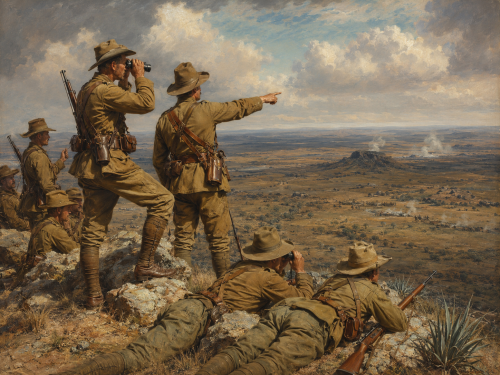
Limerick recruitment

Roberts Arrives

Field Marshal Lord Roberts arrived at Cape Town on 10 January 1900 and assumed supreme command of British forces in South Africa. He travelled aboard the Dunottar Castle with Lord Kitchener, who became his chief of staff. Their appointment followed the defeats of “Black Week,” when British reverses at Stormberg, Magersfontein and Colenso exposed serious weaknesses in command, intelligence and battlefield preparation. Roberts received a formal welcome at the harbour, but the ceremony could not conceal the gravity of his task. British garrisons remained besieged, casualties were rising and reinforcements arriving from across the Empire required organisation.
Divided Loyalties

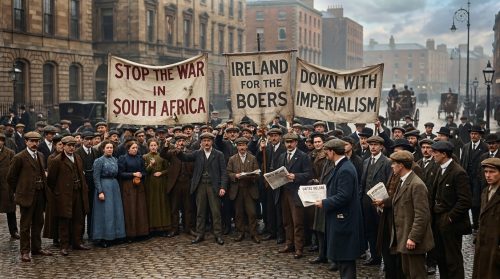
Irish public opinion during the South African War was divided in a manner that exposed the complicated relationship between nationalism, empire and military service. Nationalist newspapers and political organisations frequently expressed sympathy for the Boer republics, presenting their resistance to British expansion as a struggle resembling Ireland’s own opposition to imperial rule. Boer victories were sometimes welcomed as humiliations for a government that continued to deny Irish self-government. Public meetings, songs, newspaper commentary and street demonstrations gave the pro-Boer cause considerable visibility, making Ireland one of the strongest centres of anti-war and pro-Boer feeling in Europe.