Membership is completely free, giving members unlimited access to all available resources, services, features, and benefits without any restrictions or fees.
Welcome back. Sign in to continue enjoying unlimited access to all available resources, services, features, and member benefits at no cost.
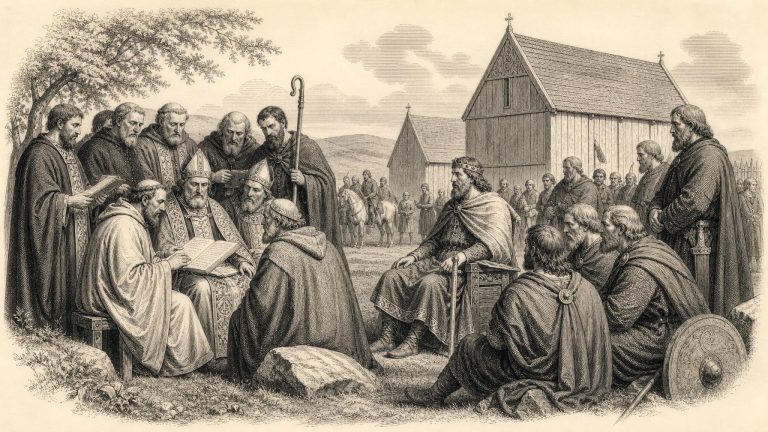
Ireland had no single monarch exercising uniform government. Tairdelbach Ua Conchobair, king of Connacht, remained one of its strongest rulers, but Muirchertach Mac Lochlainn of Cenél nÉogain had emerged as a formidable northern claimant to the high-kingship. Provincial kings, lesser dynasties, Hiberno-Norse towns and major churches retained their own interests. Authority depended upon alliances, hostages, tribute and repeated military expeditions rather than permanent control. Agreements could be confirmed before clergy and relics, yet political necessity might soon overturn them.
Tairdelbach Ua Conchobair remained the most energetic overking in Ireland. His authority had been strengthened by military engineering, fleets and fortifications, including a stronghold at Bun Gaillimhe and bridges across the Shannon. In 1141 he led what the Annals of the Four Masters call a great plundering army into Fotharta Airbrech, a territory associated with the borderlands of Meath and Uí Failge. His forces despoiled people of Meath, the Fotharta and the church settlement called Regles Uí Dhúnáin. This was more than undirected destruction. Predatory expeditions removed cattle and provisions, punished resistance and demonstrated an overking’s ability to enter contested country.
The dominant political rivalry remained that between Muirchertach Ua Briain, king of Munster and the leading ruler in the southern half of Ireland, and Domnall Ua Lochlainn, king of Cenél nÉogain and the strongest ruler in the north. Some contemporary annalists called Muirchertach king of Ireland, but that title expressed a claim to supremacy rather than uncontested government. Domnall had repeatedly resisted him, while lesser kings negotiated between the two powers, changed allegiance or defended their own regional interests.