Archived: 11 October 2026
Abstract
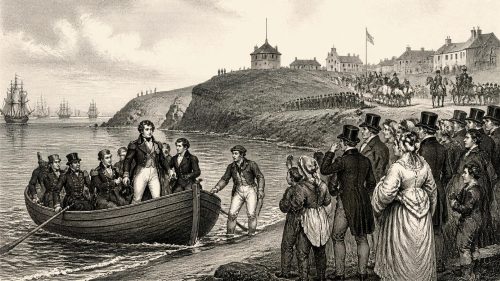
In 1821, Ireland experienced population growth, economic hardship, political exclusion and royal pageantry. The first comprehensive census recorded about 6.8 million people, exposing dependence on insecure rural livelihoods; most detailed returns were later destroyed in 1922. Post-war depression, rents, tithes and scarce employment contributed to Munster’s emerging Rockite disturbances. Westminster’s Catholic Disability Removal Bill passed the Commons but failed in the Lords, preserving Catholic exclusion from Parliament. George IV’s August landing at Howth inspired displays of loyalty, including Daniel O’Connell’s conciliatory participation, but brought no reform. Administrative changes and cultural activity highlighted tensions between Union, equality, rural insecurity and identity.
Read Article

Archived: 12 October 2026
Abstract
In 1750, George II chartered the Dublin Society for Promoting Husbandry and Other Useful Arts, formalising an elite-led body that encouraged agricultural, industrial and artistic improvement through premiums, advice and practical education. Its drawing-school association, though imprecisely dated, reflected efforts to train craftsmen. In December, the Duke of Dorset returned as lord lieutenant, reshaping political expectations before later conflicts over revenue and executive authority. Charles Lucas, writing from London, advanced civic arguments in print. Beneath these institutional developments lay restricted representation, Anglican privilege, penal disabilities, unequal commerce and rural insecurity, despite population growth, agricultural adaptation, and Ulster’s expanding linen economy.
Read Article


