
Archived: 26 September 2026
Abstract
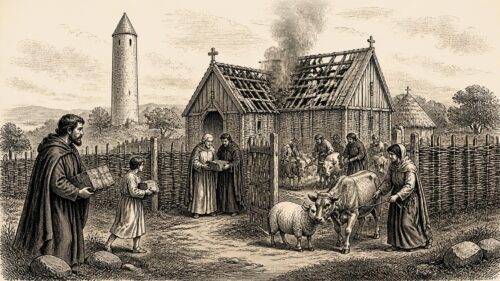
In 1042, Leinster underwent a decisive political upheaval when Murchad mac Dúnlainge, king of Leinster, was killed at Mag Muilchet. His defeat ended the Uí Dúnlainge dynasty’s effective provincial claim and enabled Diarmait mac Máel na mBó of Uí Chennselaig gradually to establish supremacy, supported by Osraige. Conflict included the burning of Ferns and destructive retaliation at Glenn Uissen, illustrating warfare’s assault on ecclesiastical centres. In Mide, Flann mac Máel-Sechnaill was murdered amid dynastic rivalry. Sitriuc Silkbeard died, symbolising Dublin’s changing Hiberno-Norse era. Church deaths, pilgrimage to Rome, and Ailill of Muckno’s death in Cologne demonstrate Ireland’s European religious connections.
Read Article
Archived: 26 September 2026
Abstract
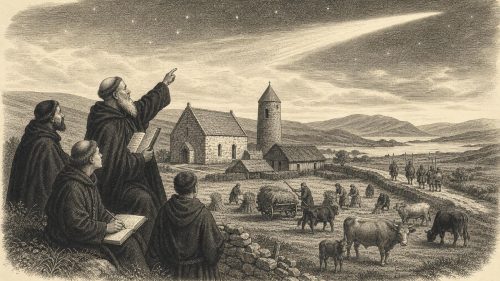
In 1018, four years after Clontarf, Ireland remained fragmented, as rival dynasties, Hiberno-Norse towns and local peoples pursued power through raiding, treachery and alliance. Máel Sechnaill’s authority in Mide was challenged when his steward and an allied king died during conflict in Fir Chell. Sitriuc Silkbeard of Dublin treacherously blinded Braen, son of Leinster’s Máel Mórda, ending his capacity to rule. Northern Uí Néill forces mobilised, while killings and plundering affected Gailenga, Tuatha Luigne and Óentreb. Ecclesiastical deaths reflected churches’ political and cultural importance; Waterford’s Norse king died. Annalists also recorded an autumn comet, revealing learned religious observation amid instability.
Read Article
Archived: 26 October 2026
Abstract
In 994, Ireland’s annals recorded political and ecclesiastical change. Sitriuc Silkbeard was expelled from Dublin during a brief Hiberno-Scandinavian dynastic takeover linked to Ímar of Waterford and his son Ragnall, whose rule soon collapsed. Máel Sechnaill, king of Tara, burned Swords, demonstrating his coercive influence near unstable Dublin. Elsewhere, regional rulers including Fogartach of Corcu Trí, Áed, heir of Ailech, and Conn of Uí Fhailgi were killed. The deaths of Armagh’s bishop Máel Muire and Scattery’s vice-abbot Fínnechta underline church institutions’ central public role. These scattered notices reveal local violence, competitive kingship, vulnerable ecclesiastical settlements, and interconnected Irish Sea politics.
Read Article

