Archived: 28 September 2026
Abstract
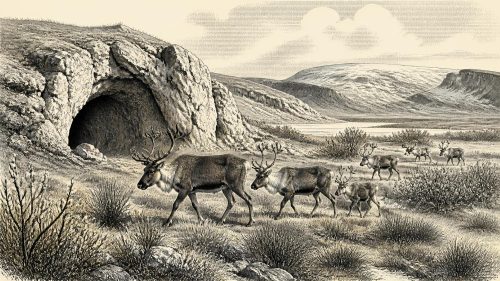
Around 30,544 BCE, Ireland lay in an unstable later Pleistocene environment, before maximum glaciation, with changing climates, exposed continental shelves and expanding ice. Waterford red-deer bones show large grazers occupied parts of the island during this broad period. Cave collections, especially Castlepook in Cork, preserve mammoth, reindeer, giant deer, bears, wolves, Arctic foxes, lemmings and hyenas, indicating varied open and wet tundra habitats. A marked reindeer femur may record Upper Palaeolithic butchery, but its old excavation context prevents firm conclusions about human presence. No settlements, political systems, trade or ritual are known. Subsequent glaciation destroyed or buried much fragile evidence.
Read Article
Archived: 23 September 2026
Abstract
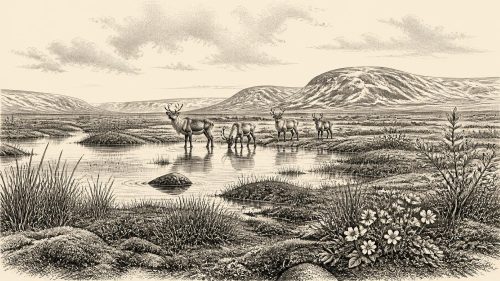
Around 30,809 BCE, Ireland lay within the unstable cold conditions of Marine Isotope Stage 3, not a precisely datable historical year. At Derryvree, County Fermanagh, freshwater sediments between glacial tills record an ice-free interval with treeless, periglacial wetlands, sparse vegetation and shallow pools. Castlepook Cave, County Cork, preserves remains of mammoth, giant deer, reindeer, hyena, wolves and other Ice Age animals, though deposits represent different episodes. A marked reindeer femur may indicate Upper Palaeolithic butchery, but cannot prove settlement or sustained occupation. Later glaciation and erosion obscured evidence. The period is chiefly understood through fragmented environmental and faunal archives alone.
Read Article

Archived: 19 September 2026
Abstract
Around 31,176 BCE, Ireland experienced unstable Late Pleistocene conditions rather than a datable historical year. Derryvree, County Fermanagh, preserves organic sediments between glacial tills, indicating episodic ice-free cold wetlands with tundra vegetation, freshwater and insects. Castlepook Cave, County Cork, accumulated mixed animal remains over millennia, including mammoth, reindeer, giant deer, wolves and spotted hyenas, demonstrating changing links to wider European faunas. A reported stone-tool incision on a reindeer femur, approximately 33,000 years old, may indicate brief human butchery, but remains unconfirmed. No settlements, institutions or continuous population are evidenced. Later ice expansion substantially reshaped and obscured this fragile prehistoric record.
Read Article
Archived: 19 September 2026
Abstract
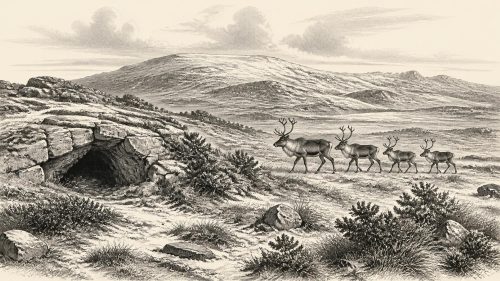
The modern label 31,207 BCE denotes a broad, uncertain MIS 3 horizon rather than a recoverable Irish year. Radiocarbon ranges and cave deposits show that southern Ireland supported, at different times, brown bears, mammoths, reindeer, giant deer, wolves, Arctic foxes, lemmings and spotted hyaenas. Castlepook Cave, County Cork, preserves notable hyaena remains, but mixed sediments cannot establish contemporaneous communities or behaviour. Ireland’s shifting ice, periglacial terrain, low sea levels and variable vegetation connected it intermittently with north-west Europe. Northern organic deposits indicate occasional milder habitats. No secure human occupation dates to this period; a possibly cut-marked reindeer bone remains inconclusive.
Read Article