
Archived: 23 September 2026
Abstract
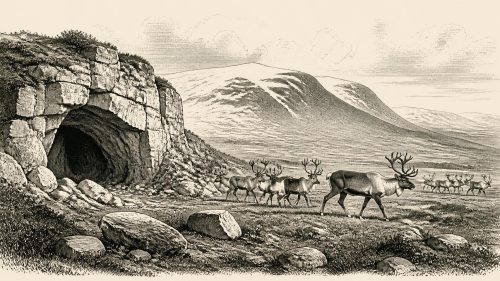
30,827 BCE is a label, not an identifiable Irish event. During Marine Isotope Stage 3, Ireland contained variable ice, permafrost and open tundra wetlands. Derryvree, County Fermanagh, preserves freshwater sediments dated broadly to 36,900–31,700 years before present, indicating cold, treeless, harsh conditions before later glaciation. Castlepook Cave, County Cork, contains Late Pleistocene fauna, including reindeer. A reindeer femur, roughly 33,000 years old, bears a possible stone-tool butchery mark, suggesting a brief human visit. However, no associated tools, hearths, settlements or burials prove occupation. Changing coasts and ice complicated access, while later ice destroyed evidence. Ireland remained a volatile European frontier.
Read Article
Archived: 9 September 2026
Abstract
31,919 BCE is a modern label for a Late Pleistocene period, not a recoverable Irish historical year. Before the Last Glacial Maximum, deposits in Fermanagh indicate that some Irish landscapes were intermittently ice-free, although conditions varied regionally. Castlepook Cave in County Cork preserves a chronologically mixed fauna including reindeer, mammoth, giant deer, hyaena and other cold-stage animals, demonstrating habitable environments. A cut-marked reindeer femur may indicate human butchery around 33,000 BCE, but disturbed deposits, alternative explanations and absent artefacts prevent confirmation. Later glaciation created a vast gap; securely dated human activity appears only over twenty millennia later in County Clare.
Read Article

Archived: 8 September 2026
Abstract
Castlepook Cave, County Cork, contains a reindeer femur reportedly cut with a stone tool about 31,000 BC, potentially Ireland’s earliest evidence of human activity. The date is approximate, and disturbed cave deposits, lacking associated tools, hearths or settlements, prevent firm conclusions beyond a possible brief hunter visit. During Marine Isotope Stage 3, Ireland was cold, seasonal and variably glaciated, supporting open habitats and fauna including reindeer, mammoth, giant deer, bears, wolves and hyaenas. Low sea levels may have aided access, though routes remain unknown. Later glaciation probably destroyed evidence. The find suggests mobile hunter-gatherers, not permanent occupation, culture or organisation.
Read Article


